%20scale(1.05)%20translate(-12,-14.25)'%3e%3cpath%20d='M12%2021s-7.5-4.7-7.5-10.2A4.3%204.3%200%200%201%2012%207.5a4.3%204.3%200%200%201%207.5%203.3C19.5%2016.3%2012%2021%2012%2021Z'%20fill='%23F0384A'%3e%3c/path%3e%3c/g%3e%3c/svg%3e)
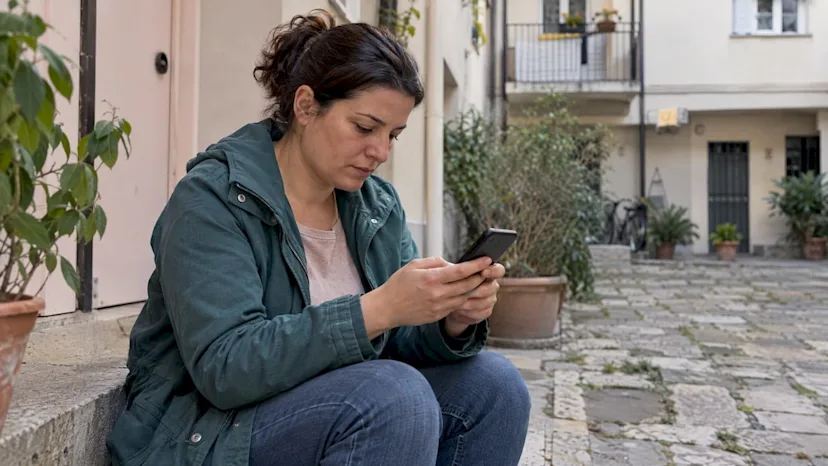
If you found a strange app on your partner’s phone, your stomach probably dropped. You’re not overreacting. Cheaters often rely on a few predictable app types: dating apps, disappearing-message apps, vault or disguise apps, burner-number apps, private messengers, stalkerware, and location-spoofing tools. But finding one of these apps is a clue, not proof. Search their name now before you confront anyone.
TL;DR:
- A dating app alone proves little: Pew found about 30% of U.S. adults have used one, so look for recent profile updates or activity.
- Check App Store purchase history, Screen Time, Battery, and Settings before opening anything; hidden or locked iPhone apps still appear in those records.
- Treat repeated patterns as stronger clues than isolated notifications, and record app names, dates, and locations before raising concerns, if it feels safe.
- Never install stalkerware or alter a device to investigate; if you fear violence or monitoring, stop checking and prioritize your safety.
Quick checklist: app types and what each one hides
Before you dig through a phone or spiral at 2 AM, scan this list. It will help you figure out what you’re actually looking at and whether it means anything.
- Calculator vaults: look like a math app but hide photos, videos, or messages behind a PIN.
- Photo vault apps: create a hidden gallery separate from the regular camera roll.
- Ephemeral messaging: Snapchat and Instagram vanish mode delete messages after they’re seen.
- Private messengers: Signal, Telegram, and WhatsApp encrypt chats, which is normal for many people.
- Burner numbers: Burner, TextNow, and Hushed create a second phone number for texts and calls.
- Dating apps: Tinder, Bumble, Hinge, OkCupid, Badoo, and Ashley Madison let someone build a profile away from their main identity.
- Private browsers: incognito mode hides local history but leaves other traces behind.
- Location spoofing: fake GPS apps make it look like someone is somewhere they’re not.
- Stalkerware: covert monitoring software installed on a device without consent.
- Fake contacts: a name saved under a coworker or delivery service to disguise who’s really texting.
None of these prove cheating by themselves. Treat this as a starting point, not a verdict, and check their profile today if a dating app is your main concern.
What each app type really does and how it hides
Here’s the part most people get wrong: they see one suspicious app and assume the worst, or they see nothing and assume everything’s fine. Neither reaction is reliable. Each app type works differently, and each one leaves (or doesn’t leave) different traces.
Calculator and disguise apps, like Calculator Pro+, look exactly like a working calculator. Type a secret code into the number pad and it opens a hidden vault of photos, videos, or chats instead of doing math. These apps rarely show up with an obvious name on the home screen, which is the point. The traces they leave are indirect: an app icon that looks like a calculator but was downloaded recently, or shows up in App Store purchase history even though your partner already has a calculator built into the phone.
Photo vault apps work the same way but focus on images. They pull photos out of the regular camera roll and store them in a separate, locked gallery. If you notice photos missing from a shared album, or you spot an app with a generic name like “Gallery Lock” or “Private Photos” in App Store purchases, that’s worth a second look.
Disappearing-message tools, including Snapchat and Instagram’s vanish mode, delete content automatically after it’s viewed. People use these for all kinds of reasons that have nothing to do with cheating, from inside jokes to sending embarrassing selfies. The absence of message history is normal for these apps by design, so it can’t be read as a red flag on its own.
Private and encrypted messengers such as Signal, Telegram, and WhatsApp protect message content so even the app makers can’t read it. Millions of people use these every day for ordinary conversations with family, friends, and coworkers. What raises an eyebrow isn’t the app itself, it’s the pattern around it: a contact renamed to something vague, messages that only arrive late at night, or a sudden switch from texting to one of these apps for someone your partner didn’t talk to much before.
Secondary-number services like Burner, TextNow, and Hushed give someone a second phone number that runs through an app instead of a SIM card. These are marketed for privacy, selling items online, or keeping a work number separate from a personal one. The giveaway is usually behavioral: a second number nobody else knows about, paired with calls or texts your partner steps away to take.
Dating apps remain one of the most common signals people search for. Pew Research Center found that about 30% of U.S. Adults have used a dating site or app at some point, which means having one installed is common and not evidence of anything by itself. Tinder, Bumble, and Hinge all let someone limit who sees their profile and hide their activity status. Ashley Madison was built specifically around discretion for people already in relationships. OkCupid and Badoo work more like traditional dating apps but still let users control visibility. What matters more than the app’s existence is recent activity: updated photos, a changed bio, or a profile that still shows as active.
Private browsers and incognito mode erase local browsing history on the device, but they don’t erase everything. App Store purchases, account sign-ins tied to an Apple ID or Google account, and app usage logged in Screen Time all exist outside the browser. Someone can clear their search history and still leave a trail elsewhere on the phone.
Location-spoofing apps let a person fake their GPS coordinates, which means a “shared location” that says someone is at the office could be manufactured. These tools are usually marketed for gaming or privacy, but they can also be used to fake a location to a partner.
Stalkerware and covert monitoring software work differently. Instead of hiding something on your partner’s phone, this is software secretly installed to monitor someone else. The FTC warns that stalkerware can track location, read texts and emails, view photos, and monitor activity, sometimes even through a microphone. Installing it typically requires physical access to a phone and changing security settings, especially on Android. This isn’t something we’d ever recommend you install or have installed on you, and if you suspect someone has done this to your phone, your safety comes first.
Fake contacts and profile masking round out the list. A cheater might save a secret contact under a plain name like “Pharmacy” or “Dry Cleaner,” use a different profile photo on a dating app than the one they use everywhere else, or keep a second email tied to an app purchase. Checking Contacts, Message threads, App Store purchase history, Screen Time, and Battery usage can reveal inconsistencies, like an app draining battery that nobody admits to using.
Pro Tip: Before you confront anyone, write down exactly what you saw, including the app name, the date, and where you found it. Specific details hold up better than a vague feeling.
For more on reading these clues without jumping to conclusions, see our guide on dating app activity clues to check before you panic.
How to check safely without making things worse
If you’re going to look into this, do it carefully. Here’s a safer order of operations.
- Pause and think about your safety first. If you have any fear that your partner might react violently or that you’re being monitored yourself, stop and prioritize your own safety before checking anything.
- Start with non-invasive checks. Look at App Store purchase history, Screen Time app usage, and, on newer iPhones, the App Privacy Report, which shows which apps have accessed data and contacted other servers once it’s turned on.
- Write down patterns, not single incidents. One late-night notification means nothing. A repeated pattern over weeks is more meaningful.
- Never install covert monitoring software and never jailbreak or root a device. Beyond the trust issues, the FTC’s stalkerware guidance makes clear this kind of surveillance carries real legal and safety risks, and it can escalate a tense situation into a dangerous one.
- If you find something, preserve it calmly. A screenshot with a timestamp is more useful later than a confrontation in the moment.
Apple’s guidance on hidden apps confirms that even hidden or locked apps still show up in Settings, Screen Time, Battery, and purchase history, which is exactly why these checks work without needing to open a locked app at all.
Adults have used a dating app**, according to Pew Research Center. That number matters because it means a dating app on someone’s phone, by itself, tells you very little. Context and patterns matter far more than the presence of any single app.
For a deeper, step-by-step version of this process, read how to check if someone is on a dating app.
What a private scan can actually tell you
Checking App Store history and Screen Time only gets you so far, especially if your partner is careful. This is where a focused dating app scan can save you hours of guessing.
We provide a service that can scan major dating apps for a partner’s presence without installing anything on their phone or sending them any notification. You give us minimal information, like a name, photo, or details you already have, and we cross-reference it against profiles on platforms like Tinder, Bumble, Hinge, OkCupid, and Plenty of Fish.
Our services include various scanning options for when you have a suspicious photo and want to see where else it appears. A finished report can include photo matches, activity timestamps, and a confidence score so you’re not left guessing what a match actually means. The process runs through an anonymous, encrypted scan, so your partner is never alerted.
If a dating app is your main concern, start with our Partner Check to see what we can find.
Can a VPN or proxy hide where your partner really is?
Yes, and this is one of the harder signals to catch. A VPN or proxy app reroutes someone’s internet connection through a different server, which can make it look like their phone is connecting from another city or even another country. Some people use these apps for ordinary reasons, like watching a show not available in their region or protecting their connection on public WiFi.
But a VPN can also mask which websites or apps someone is actually using when network activity is checked, and it can make location-based features on dating apps show a different area than the person’s real one. If your partner suddenly has a VPN app they can’t explain, or their shared location doesn’t match what a VPN-masked app would show, that’s a pattern worth noting rather than ignoring.
The tricky part is that VPNs themselves aren’t suspicious. Plenty of privacy-conscious people run one constantly. What matters is whether the explanation for having one lines up with how it’s actually being used, which is often hard to tell from the outside without something like a dedicated dating app search.
How do cheaters run more than one dating profile at once?
Running two profiles on the same dating app usually takes a second email address and sometimes a second phone number, often one of the burner-number apps mentioned earlier. Some people also use a secondary Apple ID or Google account just to keep a dating app profile separate from their main digital life.
Others spread profiles across multiple apps instead of duplicating one: a public, “safe” profile on a mainstream app like Hinge, and a second, more private one on an app like Ashley Madison or a less commonly checked platform. Photos are often swapped or cropped differently between profiles so a reverse-image search won’t immediately connect them.
This is exactly why checking one app in isolation can miss the full picture. A reverse-image dating search that scans across multiple platforms at once catches a profile picture even if it’s been used on an app you didn’t think to check.
Beyond dating apps: where else do people connect?
Dating apps get most of the attention, but plenty of flirting and planning happens on platforms that aren’t dating apps at all. Direct messages on Instagram, comment threads on TikTok, and private Facebook groups all function as quiet meeting grounds. Someone can slide into a stranger’s DMs without ever opening a dating app.
Browser-based forums and classified sites, along with gaming platforms with built-in chat, can also serve this purpose. Discord servers, in particular, let people build private channels with strangers that never touch a traditional dating app.
Some people also look for connection through apps built around shared activities rather than profiles and swiping. If your partner has downloaded an app for meeting people to play tennis, work out, or grab coffee, that’s not inherently suspicious. Services like Conppi match people nearby for real-time activities without profiles, which is a legitimate alternative for plenty of people who are simply tired of swiping apps. The behavior around the app, not the app category itself, is what tells you more.

Are bots and AI changing how people cheat on dating apps?
Dating apps increasingly use automated matching and message suggestions, which can make conversations move faster and feel more frequent than they used to. Some people also use outside tools that write opening messages or keep multiple conversations going with less effort on their end.
This matters for two reasons. First, it means someone can run more conversations at once than they realistically could by typing every message themselves, so a high volume of matches or chats isn’t automatically a sign of more deception, just more efficiency. Second, it makes a dating profile look more active and polished, since AI-assisted photo selection and bio writing are common now, which can make older advice about “sloppy profiles” less reliable.
None of this changes the core fact: an active, recently updated profile is still a more meaningful signal than an old, dormant one, automated or not.
Why doubt is normal, and what to do with it
Here’s an honest take: most people who start Googling this aren’t being paranoid, they’re responding to something real they noticed, even if they can’t fully explain it yet. Trust your instincts enough to look, but not so much that you skip the step of actually checking before you act.
The uncomfortable truth is that an app on a phone will rarely hand you a clean answer. A Signal icon, a Snapchat streak, or a Tinder notification can mean almost anything. What tends to hold up is a pattern across multiple small things, which is exactly why a direct check, like seeing whether your partner’s name or photo turns up on a dating app, often tells you more in a few minutes than hours of staring at notifications ever will.
Whatever you decide to do next, do it in a way that keeps you safe and gives you real information instead of more guessing. If you want a clearer answer, check their profile today instead of waiting another week wondering.
— Matt
Get a clear answer with CheaterDetectorAI
Guessing is exhausting. If a dating app is part of what’s bothering you, we can check it for you quietly, without your partner ever knowing a search happened.
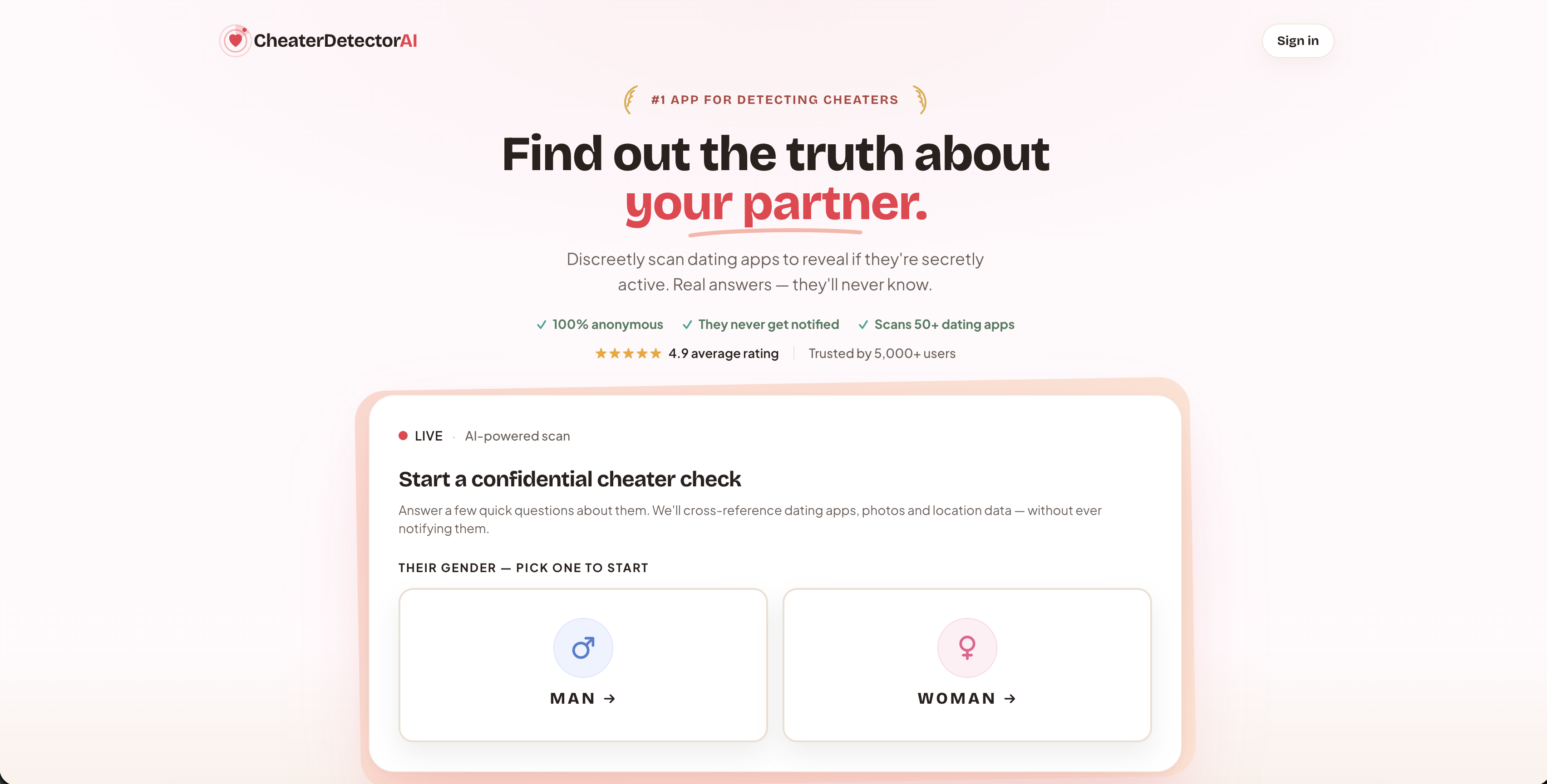
Here’s what we offer, depending on what you already know:
- Partner Check: a focused look at whether your partner’s name or details turn up on major dating apps.
- Deep Person Scan: a more thorough search across multiple dating platforms using the details you provide.
- Reverse-image dating search: upload a photo and we check where else it appears across dating apps.
- App-specific searches: dedicated searches for Tinder, Bumble, Hinge, OkCupid, and Plenty of Fish.
Scans run through an anonymous, encrypted process to keep searches confidential and discreet. Search their name now with our Deep Person Scan and get a clear report instead of another night of wondering.
FAQ
Is there a dating app specifically for affairs?
Yes, Ashley Madison was built specifically for people already in relationships who want to meet others discreetly. Other mainstream dating apps like Tinder and Bumble aren’t designed for this purpose but are sometimes used by people who are already partnered, since nothing on the app itself verifies relationship status.
What is the 80/20 rule in infidelity?
The idea is used informally to explain why someone might cheat even in a relationship that seems mostly satisfying, but it isn’t a formal statistic from a research study.
Is DuckDuckGo used for cheating?
DuckDuckGo is a privacy-focused search engine that doesn’t track searches the way some other browsers do, so some people use it to search for dating apps or affair-related topics without leaving an obvious history. Seeing DuckDuckGo installed isn’t evidence of cheating on its own, since many people use it simply for general privacy.
What apps are used for secret messaging on iPhone?
People sometimes use Signal, Telegram, or WhatsApp for encrypted conversations, along with Snapchat and Instagram’s vanish mode for messages that disappear after they’re seen. Apple’s guidance notes that even apps hidden from the home screen still appear in Settings, Screen Time, and App Store purchase history, which are good places to check.
How can I tell if an app on my partner’s phone is actually suspicious?
Look for patterns rather than single incidents, like an app that drains battery nobody explains, a contact saved under a vague name, or a dating profile that shows recent activity. A single app or notification is rarely proof by itself, so checking App Store purchases, Screen Time, and, if your main concern is dating apps, running a dedicated search gives you a clearer picture.
Sources
- Stalkerware: What to know | Consumer Advice – FTC
- Key findings about online dating in the U.S. – Pew Research Center
- Lock or hide apps on your iPhone – Apple Support