%20scale(1.05)%20translate(-12,-14.25)'%3e%3cpath%20d='M12%2021s-7.5-4.7-7.5-10.2A4.3%204.3%200%200%201%2012%207.5a4.3%204.3%200%200%201%207.5%203.3C19.5%2016.3%2012%2021%2012%2021Z'%20fill='%23F0384A'%3e%3c/path%3e%3c/g%3e%3c/svg%3e)

Checking if someone is on a dating app is achievable through proven investigative techniques including reverse image searches, advanced Google operators, and cross-referencing linked social media accounts. These methods, collectively known as open-source intelligence (OSINT) techniques, give you a structured way to verify dating app activity without confrontation. Knowing how to check if someone is on a dating app starts with gathering the right data before you search. This article walks you through each step, from preparation to interpretation, so you can reach a confident and accurate conclusion.
What information do you need before you start searching?
Preparation is the step most people skip, and it is also the step that causes the most false positives. Gathering accurate data such as full legal names, email addresses, phone numbers, and recent photos before you begin reduces misidentification and wasted effort. A search built on a nickname or an old photo can lead you to the wrong person entirely.
Collect the following before running any search:
- Full legal name: Nicknames and shortened versions produce unreliable results on most platforms.
- Current email address: Many dating apps tie accounts to a specific email, making this one of the most useful data points.
- Phone number: Some platforms allow profile lookup by phone number through their “forgot password” flow.
- Recent, clear photos: Use photos taken within the last six to twelve months. Older photos may not match a current profile.
- Known usernames: People often reuse the same username across multiple platforms, which makes cross-referencing far easier.
The quality of your results depends directly on the quality of your input. A common mistake is starting with vague or unverified data and then treating the results as conclusive. Treat preparation as the foundation, not an afterthought.
Pro Tip: Write down every username, email variation, and nickname you know before you search. People often use slight variations of the same handle across platforms, and having a list prevents you from missing a match.

How to perform a reverse image search to find dating profiles
Reverse image search using Google Images or TinEye is the most reliable free method for verifying dating profiles. The reason it works so well is simple: most people reuse the same photos across multiple platforms. A photo uploaded to Instagram three years ago may appear on a Tinder or Bumble profile today.
Follow these steps to run an effective reverse image search:
- Save a clear, recent photo of the person from a known source such as Facebook or Instagram.
- Go to Google Images (images.google.com) and click the camera icon in the search bar.
- Upload the photo or paste the image URL. Google will return pages where that image or visually similar images appear.
- Repeat the search on TinEye (tineye.com). TinEye indexes differently from Google and often surfaces results that Google misses.
- Review the results carefully. Look for profile pages on dating platforms, not just social media.
- Check the context of each match. A photo appearing on a dating site with a different name or bio is a strong signal worth investigating further.
The main limitation of this method is that private profiles or newly created accounts with fresh photos will not appear in search results. If the person recently uploaded photos taken specifically for a dating profile, reverse image search may return nothing useful. That does not mean no profile exists. It means you need to combine this method with others.
Pro Tip: Right-click any photo in a browser and select “Search image” to run a Google reverse image search instantly, without downloading the file first.
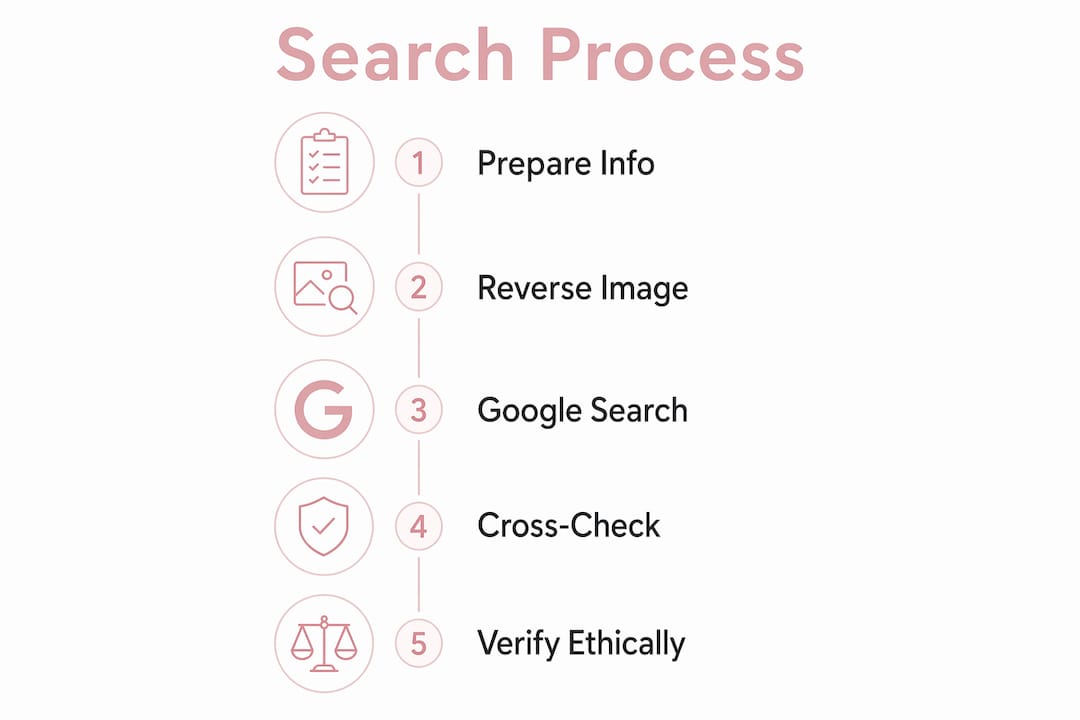
How to use Google search operators to find public dating profiles
Advanced search operators in Google significantly improve your chances of locating publicly indexed dating profiles. Most dating platforms allow some profile data to be indexed by search engines, which means a targeted Google query can surface profiles that would otherwise require an account to find.
Use these techniques in sequence:
- Site-specific search: Type
site:tinder.com "Full Name"into Google. Replace “Full Name” with the person’s actual name. This limits results to Tinder’s indexed pages only. - Expand to other platforms: Repeat the search with
site:bumble.com,site:hinge.co, andsite:okcupid.comusing the same name. - Add location context: If the name is common, add a city or state. For example:
site:tinder.com "John Smith" "Chicago". - Search by username: If you know a username the person uses, search it directly:
"username123" datingor"username123" site:tinder.com. - Try email-based searches: Some older or less privacy-conscious profiles include email addresses in bios. Search the email address in quotes across general Google results.
Privacy settings limit this method. Profiles set to private or accounts on platforms that block indexing will not appear. Treat any result as a lead, not a verdict. Confirm what you find through additional cross-referencing before drawing conclusions.
How to verify profiles by cross-referencing linked social accounts
Linked Instagram or Spotify accounts visible on dating app profiles serve as high-confidence verification signals. Many dating apps allow users to connect their Instagram or Spotify accounts directly to their profile, and these connections are often visible to other users without matching first.
Here is how to use linked accounts effectively:
- Search the username on Instagram. If a dating profile shows an Instagram handle, search it directly. A match in name, photos, and location confirms the profile belongs to the person you are investigating.
- Check Spotify. Spotify usernames on dating profiles are less commonly changed. A Spotify account linked to a dating profile and matching the person’s known music taste or playlist names is a strong corroborating signal.
- Search usernames across platforms. Use a username search tool or manually check the same handle on Reddit, Twitter/X, and TikTok. People rarely change usernames across every platform at once.
- Look for email address traces. Some platforms display partial email addresses in public-facing account recovery pages. Cross-reference these with the email you collected during preparation.
Multiple corroborating signals are required before treating a result as confirmed. A single username match is not enough. A username match plus a photo match plus a linked Instagram account pointing to the same person is a credible finding.
Pro Tip: If you find a dating profile with a linked Instagram account, check the Instagram follower list. A private Instagram linked to a dating profile often has followers who can confirm the account owner’s identity.
What are the common pitfalls and ethical limits of this kind of search?
A found profile does not automatically mean active use. Many profiles remain visible long after a person stops using an app, sometimes for years. These are commonly called “zombie” profiles. Confirming recent activity requires evidence of recent interaction, not just profile existence. Look for recently updated photos, current location data, or active timestamps if the platform displays them.
“Finding a profile is the beginning of an investigation, not the end. A profile created two years ago and never deleted tells you very little about what someone is doing today. Context, recency, and corroboration are what turn a lead into a conclusion.”
The “forgot password” method is another technique worth understanding carefully. Entering a known email address into a dating app’s password recovery page can confirm whether an account exists. However, this method can trigger alerts if the account has two-factor authentication enabled, potentially notifying the account holder that someone attempted access. Use it with that risk in mind.
Technical searches alone do not replace open communication and should be conducted responsibly. The goal of any search should be personal clarity, not harassment or surveillance. If your findings raise serious concerns, the appropriate next step is a direct conversation, not escalation. Use what you find to inform your own decisions, not to build a case against someone.
Key Takeaways
Reliable verification of dating app activity requires combining reverse image searches, targeted Google queries, and linked account cross-referencing rather than relying on any single method alone.
| Point | Details |
|---|---|
| Preparation is critical | Collect full names, emails, phone numbers, and recent photos before searching to avoid false positives. |
| Reverse image search works | Upload photos to Google Images and TinEye to find reused images across dating platforms. |
| Google operators narrow results | Use site:tinder.com "Full Name" and similar queries to locate publicly indexed profiles. |
| Linked accounts confirm identity | Matching Instagram or Spotify handles across platforms is a strong verification signal. |
| A profile is not proof of activity | Zombie profiles persist after disuse; look for recent timestamps or updated photos before concluding. |
My honest read on what these searches actually tell you
I have spent a lot of time working through OSINT techniques, and the single most common mistake I see is treating a search result as a verdict. People find a profile, feel a rush of certainty, and skip the verification steps entirely. That is where things go wrong.
The technical methods in this article are genuinely useful. Reverse image search and Google operators surface real information. But they also surface old information, mismatched usernames, and profiles that belong to someone with the same name. I have seen people confront a partner over a profile that turned out to belong to a different person in a different city. That conversation cannot be undone.
My honest advice is this: run the searches, collect the signals, and then pause before acting. If you find three or more corroborating data points pointing to the same person and the same active profile, that is worth taking seriously. One match on its own is a lead, not a conclusion. Emotional readiness matters too. Knowing what you might find before you search is part of responsible use of these methods. If you are not prepared to act on what you discover, wait until you are.
— Oleg
Cheaterdetector: a faster way to verify dating app activity
Manual searches take time and require technical confidence. Cheaterdetector was built specifically for people who want accurate results without spending hours on Google.
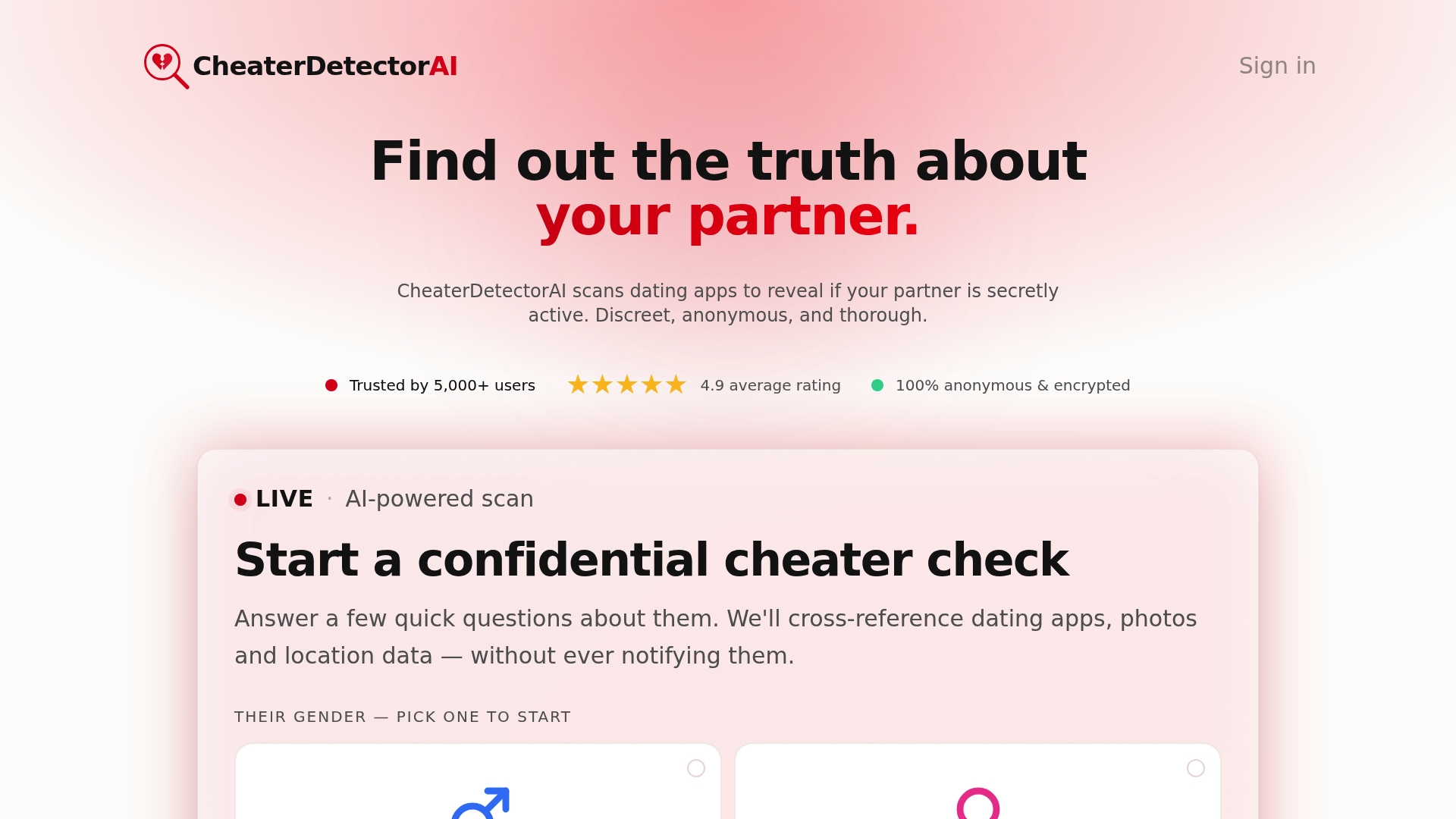
Cheaterdetector uses an AI-powered scanning process to cross-reference partner information across major dating apps anonymously and securely. You enter minimal details, and the system returns a detailed report including profile photos and timestamps. Over 5,000 people have used the platform, which holds a 4.9 average rating. The scan runs without notifying your partner, so you get clarity without triggering a confrontation before you are ready. If manual methods feel too slow or uncertain, run a discreet scan and get a clear answer.
FAQ
How to check if someone is on a dating app for free?
Reverse image search through Google Images or TinEye and targeted Google queries using site-specific operators are the most effective free methods. Combine both for the most reliable results.
Can someone tell if I searched for their dating profile?
Standard Google searches and reverse image searches are invisible to the subject. The “forgot password” method on dating apps can trigger a notification if two-factor authentication is enabled, so use it carefully.
What does it mean if I find a profile but it looks old?
Many dating profiles persist as zombie accounts long after a person stops using the app. Look for recently updated photos, active timestamps, or current location data before drawing any conclusions about current activity.
Is cross-referencing social media accounts reliable for verification?
Linked Instagram or Spotify accounts visible on dating profiles are strong verification signals. A match across username, photos, and linked accounts from multiple platforms provides credible confirmation.
Are paid instant-search tools worth using?
Many paid tools provide generic or unreliable results. Manual cross-referencing of verified data points consistently outperforms quick scans from low-quality paid services. Purpose-built tools like Cheaterdetector are a more reliable alternative when manual methods fall short.