%20scale(1.05)%20translate(-12,-14.25)'%3e%3cpath%20d='M12%2021s-7.5-4.7-7.5-10.2A4.3%204.3%200%200%201%2012%207.5a4.3%204.3%200%200%201%207.5%203.3C19.5%2016.3%2012%2021%2012%2021Z'%20fill='%23F0384A'%3e%3c/path%3e%3c/g%3e%3c/svg%3e)

Checking whether your boyfriend is active on dating apps is the process of using direct searches, third-party lookup tools, and behavioral observation to confirm or rule out hidden dating activity. Popular platforms like Tinder, Bumble, and Hinge are the most common places people look first. The standard industry term for this type of check is a “partner profile search,” though most people simply call it finding out if their boyfriend is on dating sites. Knowing how to see if your bf is on dating apps gives you real answers instead of guesswork, and this guide walks you through every method that actually works.
How to see if your bf is on dating apps directly
Searching for your boyfriend’s profile inside a dating app is the most direct method, but it comes with real limitations. Most apps do not let you search by name. You have to work around that.
Use filters to narrow the search
Apps like Tinder let you set filters by age, location, and distance. Setting the distance to 1 mile and entering his exact age dramatically narrows the pool of profiles you see. This method works best when you are in the same city as your boyfriend. It takes patience, but it is one of the few free ways to check without creating a fake account.
Here is a step-by-step process to follow:
- Create a new account on the app using a different email address and phone number.
- Set your location to match your boyfriend’s known location.
- Set the distance filter to the smallest available setting, usually 1 mile.
- Enter his exact age in the age filter.
- Set your gender and orientation to match what he would be searching for.
- Scroll through profiles carefully and look for his photos, name, or bio details.
- Check activity indicators. Tinder shows a green dot labeled “Recently Active” for users active in the last 24 hours, and “Online Now” for activity within the last 2 hours.
Pro Tip: Take screenshots of any profile you find before swiping or interacting. Profiles disappear from your feed once you swipe, and you will not see them again in the same session.
Check linked social media accounts
Some dating apps connect to Facebook during sign-up. If you have access to his Facebook account with permission, go to Settings, then Security and Login, then Apps and Websites. Any active dating app connections will appear there. This is one of the most overlooked methods because it requires no new accounts and leaves no trace.
Using third-party tools and reverse image searches
Third-party lookup services scan multiple dating platforms at once using an email address or phone number. This approach covers far more ground than manually checking each app.

What third-party lookup services do
Services like Social Catfish and Spokeo cross-reference an email or phone number against multiple dating websites to surface linked profiles. The accuracy and privacy risks vary between services. Some return results in minutes. Others require you to submit personal information before showing any data, which raises its own privacy concerns.
Pricing follows a tiered structure. Costs range from free scans to around $50 for a full background check combined with a dating profile search. Single reports typically run $5–$10. That range matters because a free scan often only confirms whether a profile exists, while a paid report includes photos, timestamps, and bio details.
Reverse image search
Reverse image search is a technique that checks whether a photo appears elsewhere online. Google Images and TinEye both support this. Upload a photo of your boyfriend that he does not use on his public social media. Unique photos that appear only on dating profiles are the most likely to surface results. Photos he uses on Instagram or Facebook are less useful because those results will just point back to his known accounts.
Key considerations when using third-party tools:
- Always use services with a clear privacy policy and encrypted data handling.
- Avoid services that ask for your own sensitive information upfront without explanation.
- Treat results as leads, not proof. A profile match needs verification before you draw conclusions.
- Paid reports are more complete, but free scans are a reasonable first step.
Behavioral signs and phone checks that point to dating app use
Digital searches give you data. Behavioral observation gives you context. The two work best together.
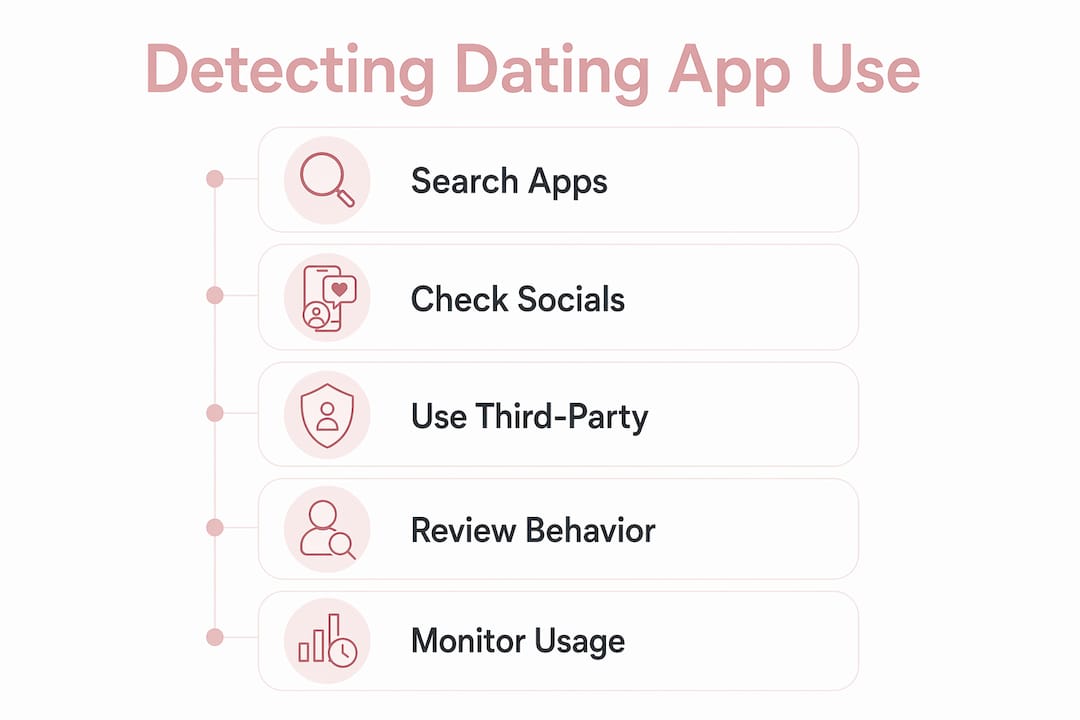
Phone behavior red flags
Frequent changes in phone secrecy are one of the clearest behavioral signals. Watch for new passwords you were not told about, hidden notifications, or a sudden habit of placing the phone face-down. These behaviors alone do not confirm anything, but they are worth noting alongside other evidence.
Other signs worth tracking:
- Unfamiliar app icons on his home screen or in the app library.
- Notifications from apps with generic names that do not match known social platforms.
- A sudden increase in phone use late at night or in private spaces.
- Defensive reactions when you are near his phone.
Use Screen Time and data usage logs
Screen Time on iPhone records exact timestamps of when each app was used. Android offers a similar feature called Digital Wellbeing. These logs are backed by the operating system, which makes them more reliable than behavioral guesses. If you have shared access to a device or a family plan, this data is available without any additional tools.
App usage data provides concrete, timestamped evidence that is harder to dispute than a feeling or a suspicion. That specificity matters when you are preparing to have a serious conversation.
Pro Tip: If you notice an app you do not recognize, search its name in the App Store or Google Play before assuming the worst. Some apps have names that sound suspicious but are completely unrelated to dating.
How to use what you find responsibly
Finding evidence of a dating profile does not automatically mean your boyfriend is actively cheating. Private investigators advise verifying whether a profile shows recent activity, updated photos, and a current bio before drawing conclusions. An old profile from before your relationship is a very different situation than a freshly updated one.
Document before you confront
Write down what you found, where you found it, and when. Screenshots with timestamps are the clearest form of documentation. Keep this record factual and unemotional. The goal is clarity, not a case file for an argument.
Approach the conversation without accusations
“Gathering calm, factual evidence before speaking is the healthier path. Direct communication, grounded in what you actually found rather than what you fear, gives both people a fair chance to respond honestly.”
Lead with what you observed, not what you concluded. “I found a profile with your photos on Tinder that was active last week” is a statement of fact. “You’re cheating on me” is a conclusion that shuts down conversation before it starts. Combining digital evidence with direct communication produces better outcomes than confrontation alone.
Presence on a dating app does not always equal infidelity. He may have forgotten to delete an old account. He may have been added by a friend as a joke. Context matters. Your goal is to understand the situation fully, not just confirm your worst fear.
Key Takeaways
Verifying whether your boyfriend is on dating apps requires combining direct app searches, third-party lookup tools, and behavioral observation for the most reliable result.
| Point | Details |
|---|---|
| Use app filters first | Set distance to 1 mile and match his exact age to narrow results on Tinder or Bumble. |
| Check linked accounts | Facebook’s Apps and Websites setting reveals active dating app connections without leaving a trace. |
| Third-party tools cover more ground | Services that scan by email or phone number check multiple platforms at once, with paid reports including photos and timestamps. |
| Screen Time beats guesswork | iPhone Screen Time and Android Digital Wellbeing provide timestamped app usage logs backed by the operating system. |
| Verify before confronting | Confirm a profile is active and recently updated before drawing conclusions or starting a conversation. |
What I’ve learned from watching people go through this
I have seen people make the same mistake repeatedly. They find a profile, assume the worst immediately, and blow up a relationship over an account that was created three years ago and never deleted. The profile had no recent photos, no updated bio, and had not been logged into since before the relationship started. That is not evidence of cheating. That is evidence of a forgotten account.
The methods that actually work are layered. A filter search on Tinder tells you a profile exists. Screen Time tells you whether the app is being used right now. A third-party report tells you which platforms have linked accounts. None of these alone gives you the full picture. All three together give you something worth acting on.
The part most people skip is the verification step. Verifying partner activity across digital and behavioral signals reduces false alarms significantly. A profile with a two-year-old photo and no recent login is not the same threat as a profile updated last Tuesday with new pictures. Treat them differently.
My honest opinion is this: the goal of any search should be clarity, not ammunition. If you find something real, you deserve to know. If you find nothing, that matters too. Either way, what you do with the information determines whether the relationship moves forward or ends with dignity.
— Oleg
Cheaterdetector makes the search faster and more private
Searching manually across multiple apps takes hours and still leaves gaps. Cheaterdetector runs an anonymous, encrypted scan across major dating platforms using minimal information about your partner. You do not need his passwords, his phone, or his knowledge.
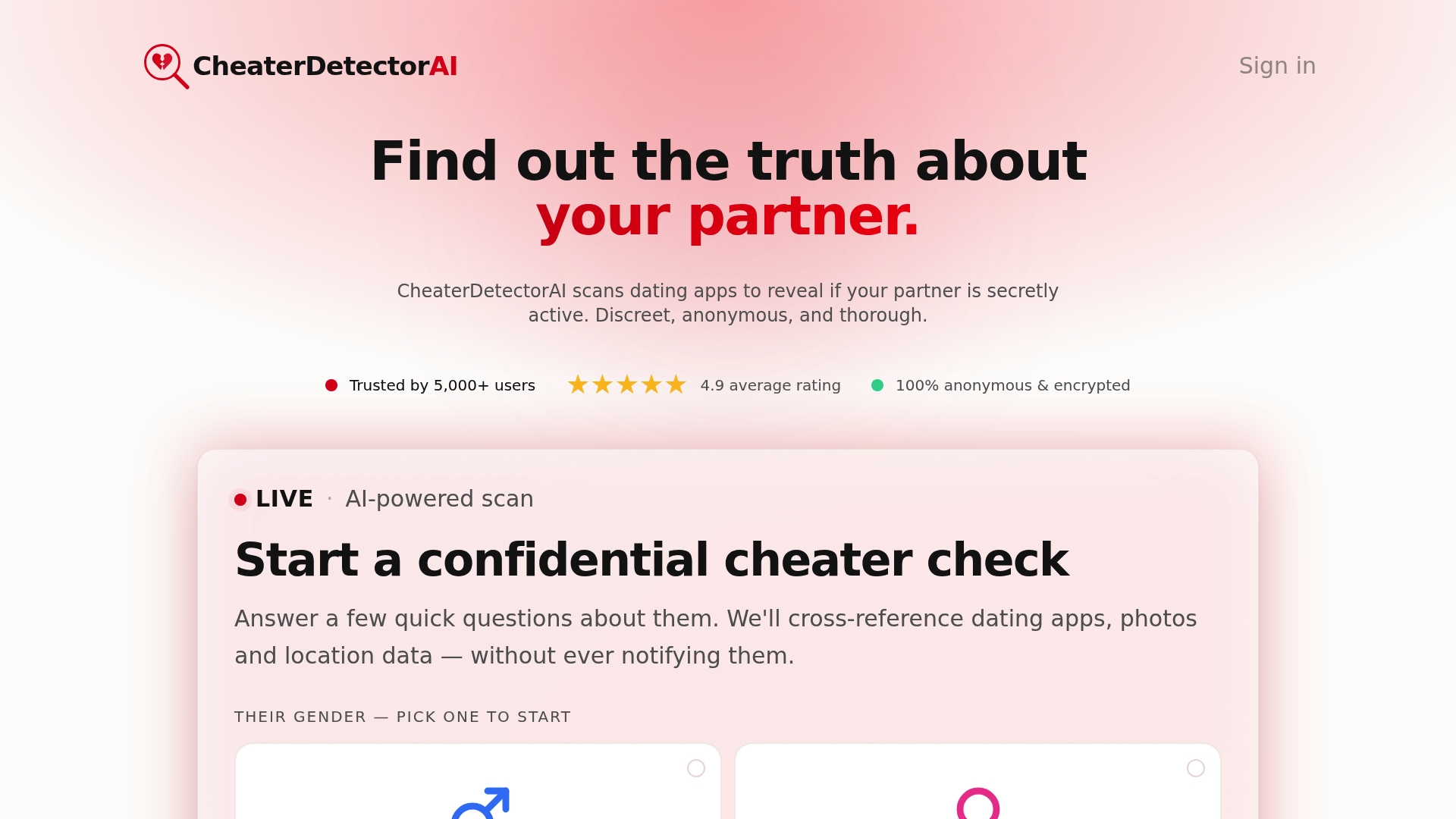
The platform has earned a 4.9 average rating from over 5,000 users. Reports include profile photos, timestamps, and platform details, giving you the specific, verifiable information that manual searches often miss. If you want to check your partner’s profiles without tipping him off, Cheaterdetector is the most direct path to a clear answer.
FAQ
Can I find my boyfriend on Tinder without an account?
No. Tinder requires an account to view profiles. You need to create one and use age and distance filters to search manually.
How do I know if a dating profile is still active?
Look for recently updated photos, a current bio, and Tinder’s “Recently Active” or “Online Now” indicators. A profile with no recent changes may be abandoned.
Are third-party dating profile lookup services safe to use?
Safety varies by service. Choose platforms with clear privacy policies and encrypted data handling. Avoid services that require excessive personal information before showing results.
What does Screen Time show about dating app use?
Screen Time on iPhone logs the exact time and duration each app was used. This gives you timestamped proof of activity that is more reliable than behavioral observation alone.
Is it wrong to check if my boyfriend is on a dating app?
Checking is not inherently wrong, but how you use the information matters. Verify findings carefully, document them factually, and approach any conversation with specific evidence rather than assumptions.