%20scale(1.05)%20translate(-12,-14.25)'%3e%3cpath%20d='M12%2021s-7.5-4.7-7.5-10.2A4.3%204.3%200%200%201%2012%207.5a4.3%204.3%200%200%201%207.5%203.3C19.5%2016.3%2012%2021%2012%2021Z'%20fill='%23F0384A'%3e%3c/path%3e%3c/g%3e%3c/svg%3e)

You already know something is wrong. The late nights, the locked phone, the sudden distance. That gut feeling is exhausting. And the worst part? Not knowing for sure.
Here’s the single most important thing you need to hear right now: stop any spying you’re considering, and start preserving public evidence instead. Installing tracking software, reading your partner’s messages without permission, or logging into their accounts can get YOU criminally charged, even in a divorce case. Courts can throw out everything you collected illegally, and you could face felony charges under state computer-crime statutes.
Do this in the next hour:
- Screenshot any public social media posts, dating profiles, or location check-ins you can see without logging in
- Back up those screenshots to a secure cloud folder only you can access
- Write down the date, time, and URL of everything you capture — this starts your chain of custody
Never do this:
- Install spyware or tracking apps on your partner’s phone
- Log into their email, social media, or bank accounts without permission
- Record phone calls without consent (illegal in many states)
- Place a GPS tracker on a vehicle you don’t own
Pro Tip: Before you collect anything, find out what your state allows. A short consultation can keep everything you collect from being thrown out later.
Key Takeaways
Proving infidelity online takes a pattern of corroborated digital evidence, preserved with chain-of-custody documentation, collected only from sources you’re allowed to access.
| Point | Details |
|---|---|
| Spying backfires | Installing spyware or accessing private accounts can result in felony charges and evidence exclusion. |
| Pattern beats one screenshot | Courts use an inclination and opportunity standard; multiple corroborating facts are far stronger than a single message. |
| Preserve immediately | Dating profiles and social posts disappear fast; screenshot, timestamp, and back up the moment you find something. |
| Attorneys unlock records | Phone carrier logs and platform data require a subpoena; move before records are purged. |
| CheaterDetectorAI is a quick first step | Anonymous scans of public dating profiles require no phone access and return timestamped encrypted reports. |
What digital evidence of infidelity actually holds up in court?
Courts accept more types of online evidence than most people realize, but each one has a catch. Here’s what investigators and family attorneys say holds up when obtained properly.
Evidence types to prioritize:
- Text messages and DMs — show communication patterns and tone; strongest when exported with metadata, not just photographed
- Dating app profiles — active profiles with recent timestamps are powerful; capture the URL, the profile photo, and the “last active” indicator
- Social media posts and check-ins — public posts with location tags and timestamps can place your partner somewhere they claimed not to be
- Photos and videos — especially those with embedded GPS coordinates in the file metadata
- Call logs — frequency and duration of calls to an unknown number suggest a pattern
- Browser history — hotel searches, dating site visits, and deleted items sometimes survive and can be recovered by forensics
- Financial records — hotel charges, restaurant receipts, gift purchases, and unexplained cash withdrawals
- Eyewitness accounts — a friend, coworker, or neighbor who saw something firsthand
- Surveillance photos from a licensed PI — timestamped, documented, and treated as neutral third-party evidence by courts
| Evidence Type | What Makes It Persuasive | Authenticity Hurdle | Preservation Note |
|---|---|---|---|
| Text messages / DMs | Shows intent and relationship tone | Screenshots alone often rejected; need metadata | Export full thread; record sender, date, platform |
| Dating app profiles | Active profile = inclination | Profile may disappear fast | Screenshot URL + timestamp immediately |
| Financial records | Ties spending to specific dates/places | Must match other evidence | Save PDFs; note account and statement period |
| Call logs | Frequency proves ongoing contact | Carrier records needed for full picture | Screenshot your own bill; subpoena for partner’s |
| Social media check-ins | Places partner at a location | Posts can be deleted | Screenshot with URL and timestamp |
| Surveillance photos (PI) | Neutral third-party documentation | Must be taken in public | Use licensed PI; get written report |
| Browser / device history | Shows search behavior | Requires device access or forensics | Note if you’re allowed to access a shared device |
Pro Tip: Every digital file contains metadata — hidden data that records when a photo was taken, where, and on what device. A screenshot of a screenshot loses that data. Capture original files when you lawfully can, and use OSINT techniques like reverse image search to find public profiles without touching any private account.
How do U.S. courts actually evaluate online infidelity evidence?
Courts rarely require anyone to be caught in the act. The standard most U.S. family courts use is circumstantial: inclination plus opportunity. That means the evidence needs to show your partner was attracted to someone else AND had the chance to act on it. Florida courts explicitly use this test, and similar standards apply across many states.
A single screenshot of a flirty text rarely moves a judge. What does move a judge is a connected pattern: romantic messages on a Tuesday, a hotel charge in the same city that Friday, and a location tag placing your partner there. Each piece alone is weak. Together, they’re hard to explain away.
Courts also scrutinize how digital evidence was obtained and whether it’s authentic. A screenshot printed from your phone can be challenged as altered. An authenticated export from the platform itself, with timestamps and sender metadata intact, is far harder to dispute. Forensic exports and chain-of-custody documentation are what experienced practitioners recommend when a case may go to trial.
What courts commonly accept:
- Romantic or explicit messages showing emotional or physical interest
- Hotel, travel, and restaurant receipts matching dates in communications
- Unexplained absences corroborated by location data
- Phone carrier records showing frequent calls or texts to a third party
- Licensed PI reports with documented observations
Get advice before litigation begins. Evidence preserved correctly during the pre-litigation phase is far more useful than evidence scrambled together after a filing.
How to collect and preserve digital evidence the right way
Start here: preserve what you can lawfully access, and never touch what you can’t. That line is the difference between useful evidence and a criminal charge.
Step-by-step workflow:
- Secure your own device first. Change your passwords and enable two-factor authentication so your partner cannot delete evidence from shared accounts.
- Capture public profiles immediately. Dating app profiles and social posts disappear fast once suspicion is in the air. Screenshot the profile, the URL, and any “last active” timestamp.
- Record the chain of custody as you go. For every piece of evidence, write down: what it is, where you found it, the date and time you found it, and what device you used to capture it.
- Export full message threads you’re allowed to access. If you share a family phone plan and can see your own account’s call log, download the PDF statement. Don’t just photograph the screen.
- Save financial documents you’re entitled to. Joint bank statements, credit card bills, and shared account records are generally accessible to both spouses. Download and save PDFs.
- Use OSINT techniques for public sources. Reverse image search your partner’s photos to find dating profiles. Check public friends lists and tagged photos on social media. These are fair game and often revealing.
- Back everything up in two places. A secure cloud folder and an encrypted USB drive. Keep the USB somewhere your partner cannot access it.
Never do any of the following:
- Install spyware, keyloggers, or tracking apps on a device you don’t own
- Log into accounts using your partner’s credentials
- Secretly record phone calls (a felony in many states)
- Place a GPS tracker on a vehicle titled solely in your partner’s name
- Alter, crop, or edit any file you plan to use as evidence
Chain-of-custody template: For each item, record: Who captured it, when (date and exact time), how (device used, method), where the original was found (URL or platform), and where the copy is stored.
| Step | Action | OK to Do? | Priority |
|---|---|---|---|
| Screenshot public profiles | Capture URL, photo, timestamp | Yes | Immediate |
| Export your own call log | Download from carrier account | Yes | Same day |
| Save joint financial PDFs | Download from shared accounts | Yes | Same day |
| Reverse image search | Use Google Images or similar | Yes | Same day |
| Access partner’s accounts | Log in without permission | No | Never |
| Install tracking software | Any device you don’t own | No | Never |
Pro Tip: Browser history, saved logins, and email trash can reveal hidden activity on a shared or jointly owned computer. If you’re allowed to use a shared device, document what you find without altering anything. Deleted files are sometimes recoverable by a forensics lab.
When should you use subpoenas and formal discovery?
Once you need records held by a phone carrier, a platform, or a financial institution, stop doing it yourself. Hire an attorney and let them subpoena those records. That’s the only proper path to provider-held data, and it’s also the path that produces authenticated records a court will trust.
Records commonly obtainable through subpoena or discovery:
- Phone carrier call logs and text message metadata (not content, usually, but frequency and duration)
- Platform message records with provider-authenticated metadata
- Hotel registration and payment records
- Credit card and bank transaction histories
- Ride-share trip records (Uber, Lyft)
- Email header data from providers
Phone companies often retain billing records for roughly two years, but that window varies by provider and record type. Waiting costs you. If you suspect a case is heading toward divorce proceedings, move immediately so preservation letters can go out before records are purged.
Pro Tip: Do not make public accusations or confront your partner before speaking with counsel. Tipping them off can cause them to delete accounts, move money, or change their behavior in ways that destroy evidence you haven’t captured yet.
Should you hire a private investigator or a digital forensics lab?
Hire a professional when you can’t safely collect evidence yourself, or when you need documentation that will hold up to cross-examination in court.
A licensed private investigator conducts physical surveillance in public spaces, produces timestamped photos and written reports, and maintains chain-of-custody documentation. Courts treat PI reports as neutral third-party evidence, which is harder to challenge than self-collected screenshots. A PI is the right call when you need to document meetings, confirm a location, or establish a pattern of behavior over time.
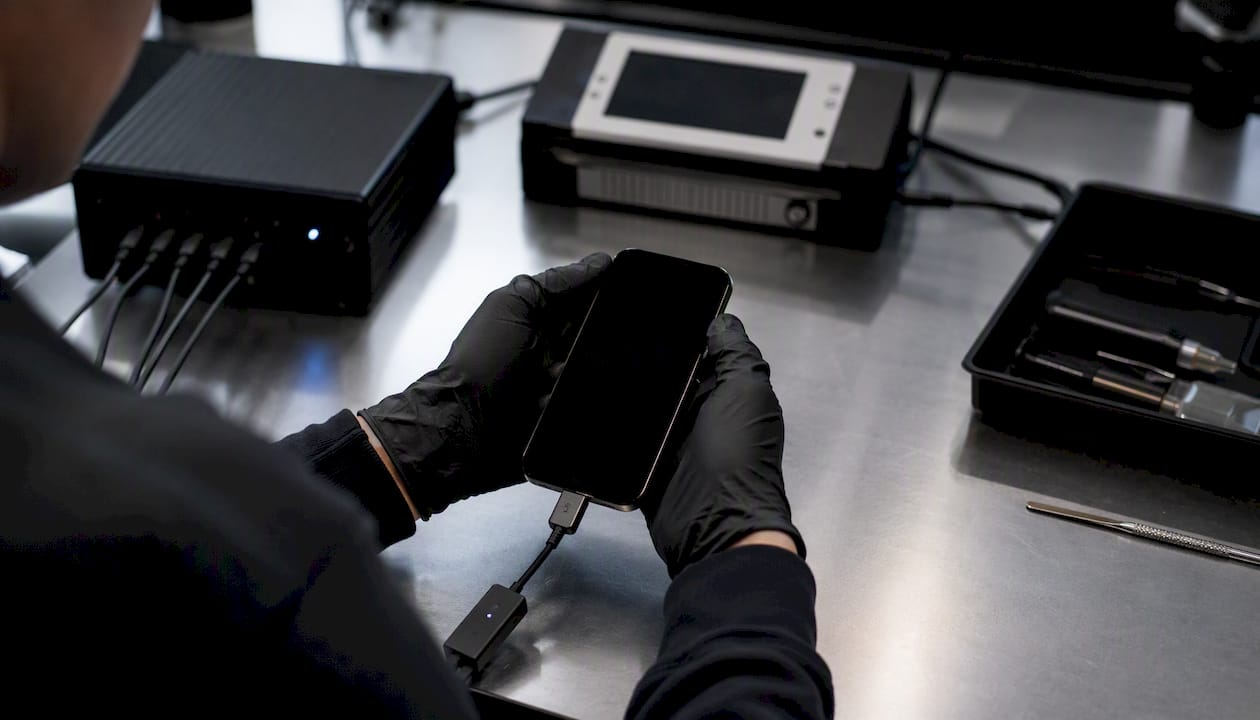
A digital forensics lab does something different. They image a device (with proper authorization), extract deleted files, recover metadata, and produce an expert affidavit that can be presented in court. This is the route when a shared device may contain deleted messages, photos, or app data that a screenshot can’t capture.
What to expect from each:
- Licensed PI: surveillance logs, timestamped photos, written observation reports, possible expert testimony
- Forensics lab: device image, metadata extraction, deleted file recovery, expert affidavit
Before hiring either, ask: Are they licensed in your state? Do they follow chain-of-custody procedures? Have they testified in family court before? Those three questions separate professionals from people who will make your case worse.
Mistakes that destroy evidence or backfire on you
The most common errors are unauthorized access, file alteration, and public shaming. Any one of them can sink your case.
- Installing spyware or stalkerware on your partner’s phone is a federal crime under the Computer Fraud and Abuse Act and a state crime in most jurisdictions. Evidence collected this way is inadmissible and can result in criminal charges against you.
- Secretly recording conversations without consent is a crime in many states. In a two-party consent state, doing this is a felony.
- Using your partner’s login credentials to access their email, social media, or bank accounts is unauthorized computer access, regardless of your marital status.
- Posting evidence publicly before or during proceedings can be treated as harassment, damage your credibility with the judge, and potentially violate court orders.
- Altering screenshots — even cropping or adjusting brightness — gives opposing counsel grounds to challenge authenticity and exclude the evidence entirely.
- Collecting evidence without documenting the chain of custody leaves gaps that attorneys will exploit.
Unauthorized access can lead to felony charges and evidence exclusion, even when the person doing it is the wronged spouse.
Your 24–72 hour action checklist
Time matters. Dating profiles and social posts disappear fast once someone suspects they’re being watched.
- Hour 1: Screenshot every public profile, post, or check-in you can find without logging into any account that isn’t yours. Include the URL and timestamp in each capture.
- Hour 2: Back up all screenshots to a secure, private cloud folder (one your partner does not have access to) and a separate encrypted USB drive.
- Hour 3: Write a discovery log. Date, time, platform, what you found, and how you found it. This is the start of your chain of custody.
- Day 1: Download PDFs of any joint financial statements, phone bills, or shared account records you’re entitled to access.
- Day 1–2: Run a reverse image search on your partner’s photos using Google Images. Check public social media for tagged locations and friends-list activity.
- Day 2: If divorce is on the table, book a consultation with a family attorney to learn what your state allows and what to do next.
- Day 2–3: If you need professional help, contact a licensed PI or digital forensics lab. Ask about their chain-of-custody procedures before hiring.
- Day 3: Store one complete copy of all evidence somewhere only you can access. Tell no one else what you have.
Document the date and time you first noticed each piece of evidence. Courts sometimes ask when you became aware of specific facts, and a contemporaneous log is far more credible than memory.
Cheater Detector AI: a scan that doesn’t touch their phone
If you want fast confirmation that your partner is active on dating apps, CheaterDetectorAI is an option that requires zero access to their phone, their accounts, or any private data. It scans publicly available dating profiles across major platforms, matches them to the information you provide, and returns an encrypted report with profile photos and activity timestamps.

You don’t need their password. You don’t need their device. The scan is anonymous, meaning your partner is never notified.
What CheaterDetectorAI does:
- Searches major dating platforms using a name, photo, or other basic details you provide
- Returns matches with profile photos and timestamps showing recent activity
- Offers a reverse image dating search to find profiles by photo when you don’t have a username
- Provides ongoing monitoring alerts so you know if a profile appears or becomes active
- Delivers everything in an encrypted report, with no phone access required
A scan result is not the same as court-authenticated evidence. If your situation is heading toward divorce or custody proceedings, bring in a professional or a forensics lab. But if you need a fast, private answer before you decide what to do next, a scan is a sensible first step.
Check their profile today and get a clear answer without touching their phone.
Pro Tip: Use CheaterDetectorAI’s deep person scan if you want a thorough search across multiple platforms at once. Save the report as soon as you receive it, and add it to your evidence folder with the date and time of the scan.
Why we built this, and what you should expect
Discovering that your partner might be cheating is one of the most disorienting things a person can go through. The instinct to grab their phone, check their messages, or install a tracker is completely understandable. But it’s also the fastest way to weaken your position and hand them an advantage in court.
CheaterDetectorAI exists because there was a gap: people needed a way to get a fast, honest answer without crossing any lines. Public dating profiles are public. Getting that answer quickly, privately, and without confrontation gives you the clarity to decide what to do next, whether that’s a conversation, professional advice, or simply peace of mind.
Your privacy is protected throughout. No one is notified. No device is touched. And if the scan comes back clean, you’ll know that too.
Search their name now and find out the truth.
Get a fast answer with Cheater Detector AI
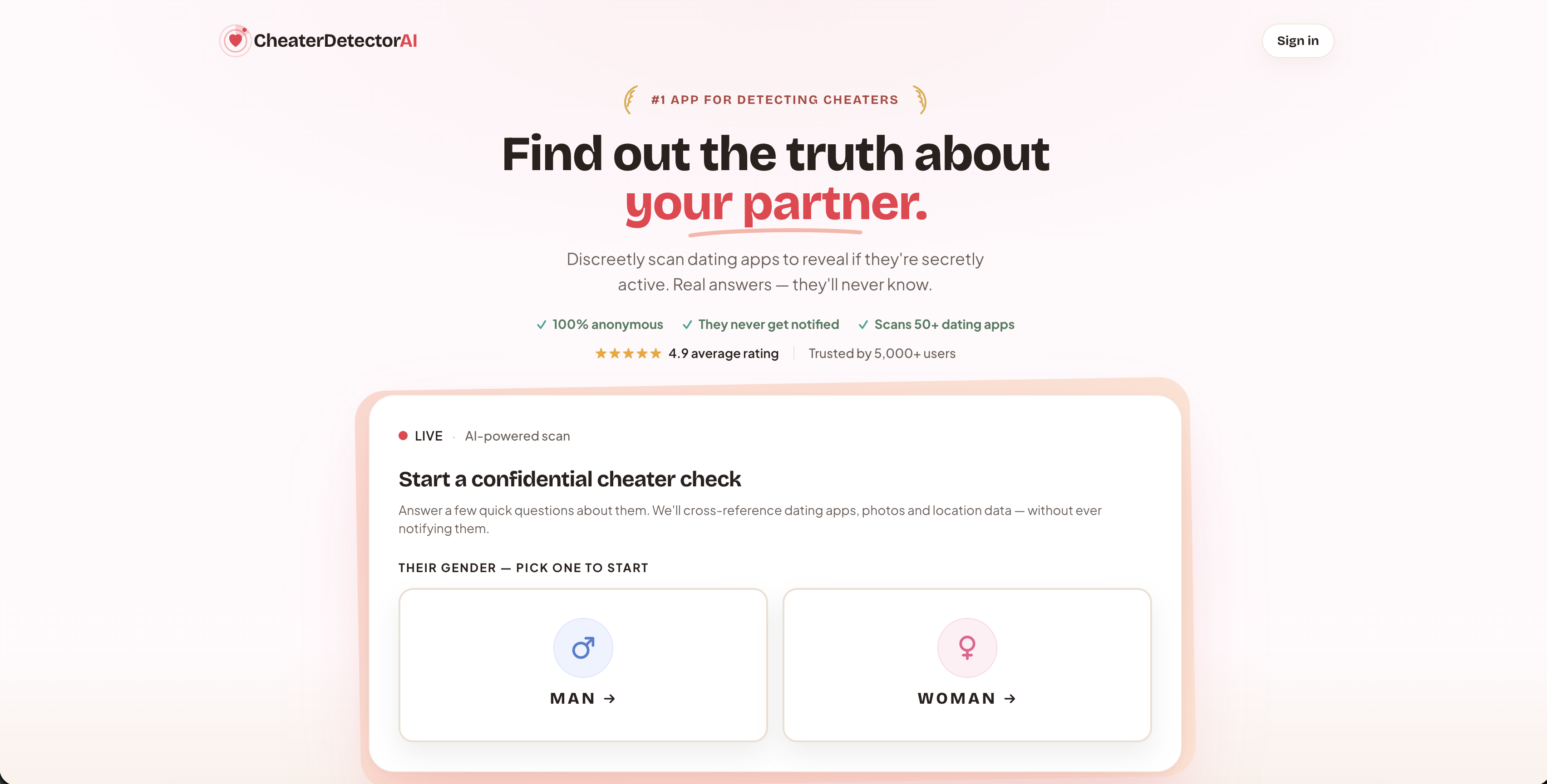
You deserve to know the truth, and you deserve to find it without putting yourself at risk. CheaterDetectorAI gives you exactly that: a fast scan of public dating profiles, an encrypted report with photos and timestamps, and zero phone access required.
No spyware. No hacking. Nothing that can hurt your case. Just a clear, private answer based on publicly available information.
Check their profile today at CheaterDetectorAI. If you want a deeper search across multiple platforms, run a deep person scan right now. And if you want to find out anonymously whether your partner is on dating apps at all, start your anonymous check here.
Three steps. No tech skills needed. Results fast.
Sources
- What Counts as Proof of Adultery in Florida? - LegalClarity
- 10 ways technology betrays cheaters - HowStuffWorks
- Phone Records in Divorce: Understanding Their Role and …
This article is general information. Rules on evidence collection, wiretapping, and computer access vary by state.
If your case is heading to court, get advice specific to your state before acting on anything here.
FAQ
What proof do you need to prove infidelity in court?
Most U.S. courts use a circumstantial standard: evidence of inclination (romantic interest) plus opportunity (access to act on it). A pattern of corroborated facts, such as messages, hotel receipts, and location data, is far stronger than any single piece of evidence.
Are text message screenshots enough to prove adultery?
Screenshots alone are often challenged as altered or incomplete. Courts increasingly require authenticated exports with metadata and timestamps; corroborating evidence like financial records or call logs significantly strengthens the case.
Can phone records prove adultery?
Phone carrier records can show frequent calls or texts to a third party, which supports an infidelity claim when combined with other evidence. These records are typically obtainable by subpoena, and carriers often retain them for roughly two years.
Is it OK to tell someone their spouse is cheating online?
Sharing information about a spouse’s infidelity is generally fine, but how you obtained that information matters enormously. Evidence gathered through unauthorized account access, spyware, or secret recording can expose you to criminal charges regardless of what the evidence shows.
Can CheaterDetectorAI results be used as evidence?
A CheaterDetectorAI report documents publicly available dating profile activity with timestamps and photos, which can support a broader pattern of evidence. For court use, get professional advice on how to authenticate and present the report alongside other corroborating documentation.