%20scale(1.05)%20translate(-12,-14.25)'%3e%3cpath%20d='M12%2021s-7.5-4.7-7.5-10.2A4.3%204.3%200%200%201%2012%207.5a4.3%204.3%200%200%201%207.5%203.3C19.5%2016.3%2012%2021%2012%2021Z'%20fill='%23F0384A'%3e%3c/path%3e%3c/g%3e%3c/svg%3e)
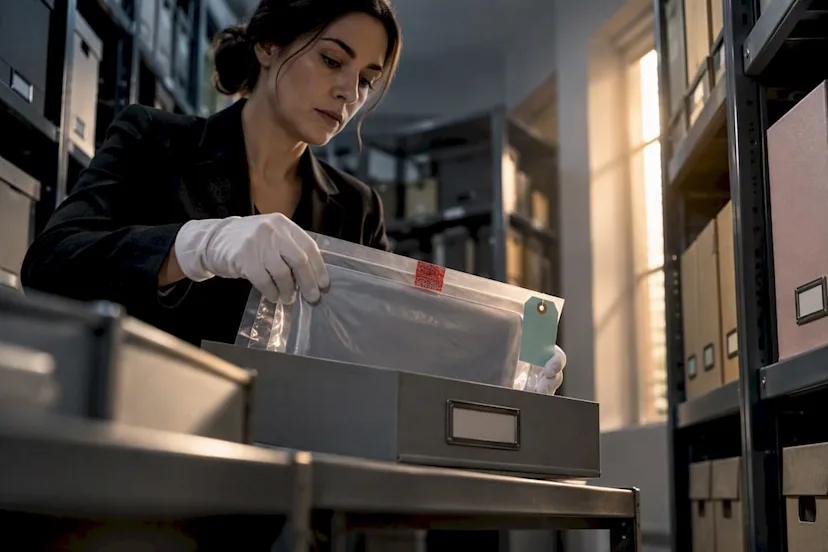
Judges will accept texts, photos, financial records, dating app activity, and witness statements as proof of an affair, but how you get that proof matters just as much as what it shows. Illegal hacking, spyware, or secret recordings can trigger criminal charges or a civil lawsuit against you, and a judge may throw the evidence out anyway. Before you do anything else, save what you already have and call a divorce attorney.
TL;DR:
- Using legally obtained texts, photos, and financial records is essential; editing or altering these files can weaken your case or lead to penalties.
- Recording conversations without proper state consent can be criminal and invalidate your evidence, so know your local laws before attempting to record.
- Gathering evidence swiftly and storing it securely with clear labels enhances your chances of admissibility and reduces the risk of losing valuable information.
- Relying on private, public-profile scans of dating apps provides a legal way to gather initial proof without hacking or breaking laws.
- Presenting well-organized, authentic digital evidence and witness statements improves credibility and helps resolve disputes more effectively in court.
Common types of evidence used in U.S. divorce cases
You do not need a smoking gun to build a strong case. Courts commonly accept texts, emails, photos, videos, witness testimony, and financial records when the evidence is properly authenticated. Each type has its own preservation rule, and getting it wrong can weaken your case before you even see a judge.
- Texts and iMessages: screenshot the full thread with visible timestamps, and keep the original device untouched.
- Emails: save the full message with headers, not just a copied paragraph.
- Photos and video: keep the original file so the timestamp and location data stay intact.
- Social media posts: screenshot with the surrounding context visible, since privacy settings do not guarantee protection once a post exists.
- Dating app activity: document the profile page, message history, and dates, but do not log into an account that is not yours.
- Financial records: bank and credit card statements showing hotel charges, gifts, or unexplained transfers.
- Witness statements: write down names and a short account while memories are fresh.
If your partner deleted messages from a dating app before you could capture them, there are still legal ways to document what happened.
How courts decide if digital evidence is real and usable
A screenshot alone rarely wins a case. Judges want to know the evidence is authentic, meaning you can show where it came from and that nobody altered it. Attorneys establish this through metadata, witness testimony, or records pulled directly from the phone carrier or app provider.
Hearsay is another hurdle. A text message is often allowed not to prove what it claims is true, but simply to show that the message existed and was sent, which sidesteps the usual hearsay objection. The best evidence rule also favors originals over copies, so a provider record beats a screenshot when the two disagree.
Even authentic evidence can be limited if a judge decides it is more inflammatory than useful, weighing its value against the risk of unfair prejudice. The safest move is simple: never edit, crop, or “clean up” a file, and keep a note of exactly how and when you saved each item.
State recording laws and what they mean for your evidence
Recording a conversation you are part of is generally legal under one-party consent rules that apply in most states. The problem comes with two-party consent states, where secretly recording a phone call or conversation without everyone’s permission can be a crime, not just a mistake. More than a few states require all-party consent for audio recordings, which turns a secret recording into a criminal offense in those jurisdictions.
Federal law adds another layer: intercepting a live call is treated differently than accessing messages already stored on a device, and shared devices or workplace notices can change what counts as private in the first place.
- Know your state’s consent rule before you press record on anything.
- If you are unsure whether a device or account is truly “yours,” do not access it.
Pro Tip: When in doubt, don’t record. Preserve what already exists on your own devices and let your attorney request the rest.
Safe, legal ways to collect and preserve evidence
You do not have to break the law to build a strong case. Start by preserving what you already have: export message threads, take dated screenshots, and leave your partner’s devices alone. From there, your attorney has several lawful tools available.
- Preservation letters notify a person or company to keep records intact before they might be deleted.
- Subpoenas legally compel a phone carrier, bank, or app company to hand over records.
- Formal discovery is often the most effective and lawful route to provider records, and it avoids the risks of self-help snooping.
- Forensic imaging of a device may be advised by an attorney in specific cases, using a proper chain of custody.
Courts reach mixed results on evidence collected outside these channels: some civil courts have admitted illegally obtained material, while many states bar unlawfully intercepted communications outright, which is exactly why counsel-led collection matters.
Lawful public-profile scanning sits in this same safe category. These tools check public dating app profiles for a match, without ever touching your partner’s phone or accounts, which keeps you out of legal gray zones while you gather your first solid lead.
Does proof of cheating actually change your divorce outcome?
Most states run on no-fault divorce, so infidelity by itself will not stop a divorce or speed it up. What it can do is shape the rulings that come after. If the affair involved secretly draining joint savings, buying gifts, or funding trips with marital money, that spending can affect how assets get divided and whether alimony shifts in your favor.
Custody is different. A judge only weighs infidelity there if it actually harmed the children, such as exposing them to unsafe situations or neglect tied to the affair. Simply having an affair does not usually move custody one way or the other.
In practice, evidence of cheating helps far more often with money than with who gets the kids.
High-risk moves that can backfire or land you in legal trouble
Some of the most common ways people try to catch a cheating partner are also the ones most likely to hurt their own case.
- Installing spyware or hacking into an email or social account can create federal and state liability, on top of the risk that the evidence gets thrown out.
- Secretly recording a conversation in a two-party consent state can be a criminal act, not just a bad idea.
- Sharing or posting intimate photos of your partner carries separate legal risk, regardless of what they did.
- Editing or “cleaning up” a photo or video before saving it can destroy its usefulness in court.
If you already did one of these things, tell your attorney right away so they can manage the fallout instead of finding out during discovery.
What to gather before your first meeting with a lawyer
Walking into your attorney’s office organized saves time and strengthens your case from day one.
- Label your evidence clearly: original devices, dated screenshots, financial statements, message logs, and witness names and contact information.
- Store it securely: copy files to a USB drive or a private cloud folder, with file names that describe what each item shows.
- Write a short preservation note for each item explaining when and how you saved it.
- Talk to your attorney before doing anything else, and be upfront about how you obtained each piece of evidence, including anything you are not sure was legal.
Being honest with your lawyer about a risky method, like checking a shared account without permission, lets them plan around it instead of getting blindsided later.
What happens when your evidence and your partner’s story clash
Divorce cases rarely have a moment where one clean piece of evidence settles everything. More often, you have a stack of messages and statements, and your partner’s attorney has a different explanation for each one. When that happens, the judge weighs credibility as much as content: who kept consistent records, whose account lines up with dates and locations, and whose evidence looks tampered with or incomplete.
This is where organization pays off. A well-labeled evidence file with clear timestamps and a documented chain of custody carries more weight than a large but messy pile of screenshots, because attorneys stress that relevance and authentication matter more than volume. If your partner disputes a text or photo, your lawyer can push for the original file or a provider record to settle the disagreement, since originals generally outrank copies when the two conflict.

Witness statements often become the tiebreaker in a dispute. A friend, family member, or coworker who can speak to what they personally saw or heard adds a layer that digital evidence alone cannot. Keep those accounts in writing and dated, so memories do not shift by the time a hearing happens.
If your partner claims a message was taken out of context, your attorney can request the full thread rather than a single screenshot, which usually clears up the disagreement one way or the other. The goal is never to “win” every disputed point. It is to build a record clean enough that a judge trusts your version more than a contested one.
Deadlines you need to know before you submit evidence
Divorce cases move on a schedule set by your state court and your specific case, not by a fixed nationwide deadline for evidence. Once a divorce is filed, courts typically set discovery deadlines, meaning a specific window during which both sides must exchange documents, answer questions under oath, and respond to subpoenas. Miss that window, and a judge may refuse to let you introduce new evidence later, even if it is compelling.
This is different from the general statute of limitations for filing a fault-based divorce claim in states that still recognize one. Those filing deadlines vary by state and by the ground for divorce, so there is no single number that applies everywhere.
The practical lesson is timing. Evidence that sits on your phone for months while you wait can become harder to authenticate, and text or app records held by a provider are not kept forever. The sooner you preserve something and hand it to your attorney, the better your odds of using it inside your case’s actual deadlines.

Why talking to a divorce attorney should be your very first move
Every path above works better with a lawyer guiding it. An attorney knows which evidence your state’s courts actually weigh, which collection methods are legal in your state, and how to request records through subpoenas or formal discovery instead of risky self-help.
Bring everything you have already, even if some of it was collected in a way you are unsure about. A lawyer would rather know about a gray-area screenshot upfront than discover it during a deposition. From there, they can decide what strengthens your case for alimony, asset division, or custody, and what should stay out of the file entirely.
If you have not found solid proof yet but suspect your partner is active on dating apps, a lawful, private scan of public profiles is a reasonable first step before formal discovery even begins. It gives you and your attorney something concrete to work from, without the legal risk of digging through a phone that is not yours.
Why this approach matters more than catching every detail
Most people going through this do not want a legal lecture. They want to know if they are right, without doing something that gets them in trouble or makes the divorce uglier than it needs to be. The lawful path is slower than hacking an account, but it holds up, and that is the only kind of proof worth having in front of a judge.
— Oleg
How CheaterDetectorAI helps you get answers without the legal risk
You do not need to touch your partner’s phone to find out if he or she is active on dating apps. CheaterDetectorAI checks public profiles across major dating platforms using only a name, photo, or basic details you already have, so there is no hacking, no spyware, and no notification sent to your partner.
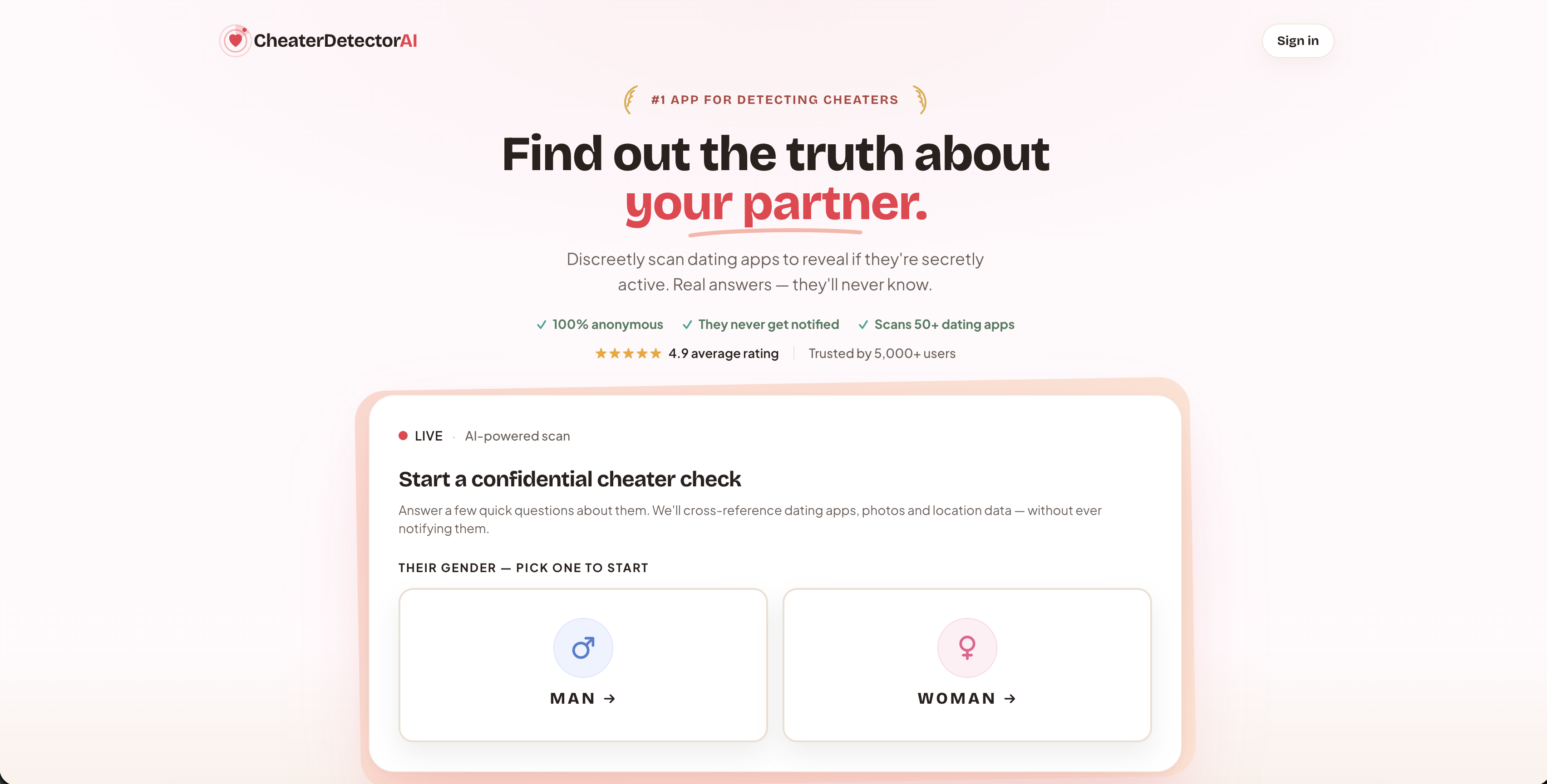
The Deep Person Scan gives you a full report with profile matches, photos, and activity timestamps, while Partner Check is built for a faster first look. If you only have a photo to go on, the reverse-image dating search can match it against profiles on Tinder, Bumble, Hinge, OkCupid, and Plenty of Fish. Every report is encrypted, and results come back fast enough to give you real clarity before your next move, whether that is talking to your partner or your attorney.
Search their name now on CheaterDetectorAI and see what turns up. Check their profile today with a Deep Person Scan. Get an encrypted report for your attorney so you walk into that first legal conversation with real documentation instead of guesses.
Sources
- 8 essential tips & best practices for effective evidence gathering in divorce
- Beware of federal liability for email and social media hacking during a divorce
This article is general information, not a substitute for advice from a qualified lawyer. Consult a qualified legal professional about your own circumstances before acting on anything here.
FAQ
What proof do you need for cheating in a divorce?
Courts generally accept texts, emails, photos, videos, financial records, and witness statements as proof of an affair, as long as the evidence is authenticated and legally obtained. The strongest cases combine several types of evidence rather than relying on one message or photo alone.
Can I get divorced because of infidelity?
Yes, but most states allow no-fault divorce, so you can end a marriage without proving cheating at all. In states that still recognize fault-based grounds, proof of adultery can support that specific claim, though it rarely changes whether the divorce itself is granted.
Are texts enough to prove adultery?
Texts can support a claim of infidelity, especially when the full thread and timestamps are preserved and properly authenticated. On their own, a single screenshot is often treated as weaker proof than a pattern of messages backed by financial records or witness accounts.
What is the 80/20 rule in infidelity?
This is not a recognized legal standard in U.S. divorce courts, and definitions of it vary widely outside legal contexts. Courts focus on documented evidence of the affair and its financial or parental impact, not on informal rules like this one.