%20scale(1.05)%20translate(-12,-14.25)'%3e%3cpath%20d='M12%2021s-7.5-4.7-7.5-10.2A4.3%204.3%200%200%201%2012%207.5a4.3%204.3%200%200%201%207.5%203.3C19.5%2016.3%2012%2021%2012%2021Z'%20fill='%23F0384A'%3e%3c/path%3e%3c/g%3e%3c/svg%3e)

Think your partner deleted their dating-app messages to hide something? You can get a fast, anonymous answer without touching their phone. Deleted private messages are generally only recoverable through device forensics or carrier records, and neither is something you can do yourself. But you don’t need their messages to find proof. A public-profile scan can show you whether your partner has an active dating profile right now.
Here’s what you need to know before you do anything:
- Deleted private messages require device or server access to recover — that access is off-limits without consent
- Installing spyware or guessing passwords can backfire on you, not them
- The Stored Communications Act and the Computer Fraud and Abuse Act make unauthorized access a federal offense, even between spouses
Pro Tip: Before you do anything, step away from your partner’s phone. Going through it without permission breaks trust, and anything you find that way can end up working against you.
Key Takeaways
Deleted dating-app messages are rarely recoverable, but a public-profile scan can show active dating profiles, photos, and timestamps without any phone access.
| Point | Details |
|---|---|
| Deleted messages are hard to recover | Recovering private messages requires device forensics or a court subpoena — not a DIY task. |
| Snooping backfires | Installing spyware or getting into their accounts without permission can get you in real trouble, even if you’re married. |
| Public-profile scans are fair game | Anonymous scans only look at public dating profiles and can return profile matches and photos. |
| Preserve evidence correctly | Save encrypted reports, screenshot public profiles, and log dates before you decide on your next step. |
| CheaterDetectorAI is the no-snooping option | Anonymous, encrypted scans across major dating platforms — no phone access, results delivered fast. |
Why Recovering Deleted Messages Could Backfire on You
Stop before you install that app or guess that password. Getting into your partner’s phone, accounts, or messages without permission can violate federal law, and being married doesn’t change that.
LegalClarity confirms that the Stored Communications Act and the Computer Fraud and Abuse Act criminalize unauthorized access to private communications. Courts have consistently rejected the idea that marriage grants automatic access to a spouse’s messages or accounts.
The risks are real and wide:
- Criminal charges under the Wiretap Act, CFAA, or state stalking statutes
- Civil lawsuits for intrusion upon seclusion — your partner could sue you
- Evidence exclusion in divorce proceedings — a judge may throw out everything you found
- Protective orders filed against you, not your partner
The AAML’s guidance on digital espionage in matrimonial cases documents real cases where spouses activated carrier-level forwarding to collect months of texts — and courts later treated that interception as a separate criminal offense. The Luis v. Zang Sixth Circuit decision shows how complex Wiretap Act litigation gets, with courts divided on who bears liability when third-party spyware is involved.
Bottom line: Snooping can come back on you. Stop any attempt to get into your partner’s phone, accounts, or messages, and stick to public information from here.
The New York Attorney General forced a spyware vendor to notify victims that their phones were being monitored — a clear signal that regulators see these tools as dangerous in most personal uses.
What Deleted Messages Can’t Tell You vs. What a Scan Can
Erase chat history on dating apps removes the conversation from view. Recovering it typically requires device forensics or a court-ordered subpoena to the platform, and you can’t do either on your own.

What a public-profile scan can find is different and often more useful:
| What requires device/server access | What a public-profile scan can find |
|---|---|
| Deleted private messages | Active dating profiles and usernames |
| Private match lists | Public profile photos |
| In-app notifications | Visible activity indicators and timestamps |
| Account login history | Bio text and location settings (when public) |
A scan won’t show you what your partner wrote to someone. It will show you whether he or she has an active, searchable profile on major dating platforms right now. That’s often the evidence that matters most.
Scans do have limits. Your partner may use a nickname, keep photos private, or have already deleted the profile. Checking platform-specific public signals can help fill gaps, but no scan is guaranteed to catch every account.
Safe Ways to Check Whether Your Partner Is Active on Dating Apps
The safest path starts with public information and only escalates from there if you need it. Here’s the order that protects you:
- Run a reverse-image search. Upload a photo of your partner to CheaterDetectorAI’s reverse-image search to find profiles using that photo across dating platforms.
- Hire a licensed private investigator. A PI can watch and document public behavior in ways that hold up in court.
- Get professional advice if you’re heading for divorce. In a divorce case, dating platform records can be subpoenaed through formal discovery, which is the proper route to private account data.
- Contact police if there is a threat. If you fear for your safety, call the police before doing anything else.
Family-law guidance consistently recommends formal discovery over secret device access during separation or divorce. Evidence gathered through proper channels is admissible. Evidence grabbed from a phone usually isn’t.
Pro Tip: If you think your own device may be monitored, do your research from a different device — a library computer or a friend’s phone. More on this below.
How CheaterDetectorAI Works and What Its Reports Show
CheaterDetectorAI scans publicly available dating-platform profiles using anonymous, encrypted queries. You never touch your partner’s phone. The service never notifies your partner. It only looks at public information.
What you provide:
- Your partner’s name (and optionally a photo)
What the report returns:
- Profile matches across major dating apps
- Public profile photos linked to those accounts
- Usernames your partner is using
- Visible activity indicators and timestamps where the platform makes them public
The service offers on-demand scans and an optional ongoing monitoring subscription that sends alerts when new activity appears. Reports are encrypted. The process is anonymous from start to finish.
CheaterDetectorAI has been used by many individuals and holds a high average user rating. The brand’s educational blog covers no-snooping ways to get answers in plain language.
Pro Tip: Save your encrypted report the moment you receive it. Screenshot the key matches, note the date and time, and store everything in a secure folder your partner cannot access.
Run an anonymous scan now at CheaterDetectorAI.
How to Preserve Evidence and What to Do Next
Preserve what you can, and stick to public information only.
Do:
- Save your CheaterDetectorAI report immediately after receiving it
- Screenshot public dating profiles before they disappear
- Keep a written log with dates, times, and what you observed
- Get advice from someone you trust before confronting your partner
- Call police if you feel physically threatened
Don’t:
- Access your partner’s phone, email, or accounts without permission
- Install any monitoring app or spyware
- Forward your partner’s messages to yourself
- Delete anything — courts treat spoliation seriously
LegalClarity notes that unauthorized device access can create both civil and criminal exposure, even when the evidence you find turns out to be accurate. In a divorce, the same information can be requested through subpoenas instead.
How to Tell If Your Own Phone Is Being Monitored
Your partner may be watching you while you’re trying to find out the truth about them. Watch for these warning signs:
- Sudden battery drain with no change in your usage
- Unexplained data spikes on your monthly bill
- Device overheating when the screen is off
- Apps with generic names you don’t remember installing
- Texts or calls you didn’t make appearing in your history
The FTC’s stalkerware guidance warns that monitoring software can read messages, track location, activate microphones, and hide itself from the home screen. Removing it without help can alert the person who installed it — and in an abusive relationship, that escalation can be dangerous.
If you suspect monitoring, contact the National Domestic Violence Hotline or a local DV advocate before touching anything on your device. They can connect you with forensic resources that preserve your safety first.
Pro Tip: Do all your research on a device your partner has never had access to. A library computer or a trusted friend’s phone keeps your search completely private.
How to Read Your Scan Results and What to Do Next
A profile match is a lead, not a confession. Here’s how to act on what you find:
- Strong match with recent activity. Save the encrypted report. Note the username, photos, and any visible timestamps. Take a breath before confronting your partner — the report can also help later if things head toward divorce.
- Weak or partial match. Run a deeper scan or enable monitoring alerts. A partial result may mean your partner used a nickname or kept photos private. More guidance on interpreting results can help you decide next steps.
- No match found. A clean result doesn’t always mean a clean partner. Your partner may have used an alias, deleted the profile recently, or set everything to private. Consider enabling ongoing monitoring alerts if other signs persist.
Public-profile matches show presence, not intent. They don’t tell you what your partner said in private messages. What they do tell you — that an active profile exists — is often exactly what you need to start a real conversation or decide what comes next.
Check their profile today at CheaterDetectorAI.
What I’d Tell Anyone in Your Shoes Right Now
The urge to grab your partner’s phone and read everything is completely understandable. You’re scared, you’re hurt, and you want the truth. But that impulse can wreck your position before you’ve even started.
Here’s what I’d say plainly: installing a spy app, guessing a password, or reading your partner’s messages without permission can get you in trouble. Not them. You. The person who snooped often ends up worse off, even when their partner was actually cheating.
The smarter move is to keep it clean from the first moment. Run a public-profile scan. Document what you find. Talk to someone you trust. If you’re in danger, call the hotline first. The truth is worth finding, and so is your peace of mind while you find it.
Cheater Detector AI: the Anonymous Scan You Can Run Right Now
If you’ve been reading this wondering whether your partner is secretly active on dating apps, you don’t need their phone to find out. CheaterDetectorAI gives you an anonymous, encrypted scan of public dating profiles — no device access, no spyware, no snooping.
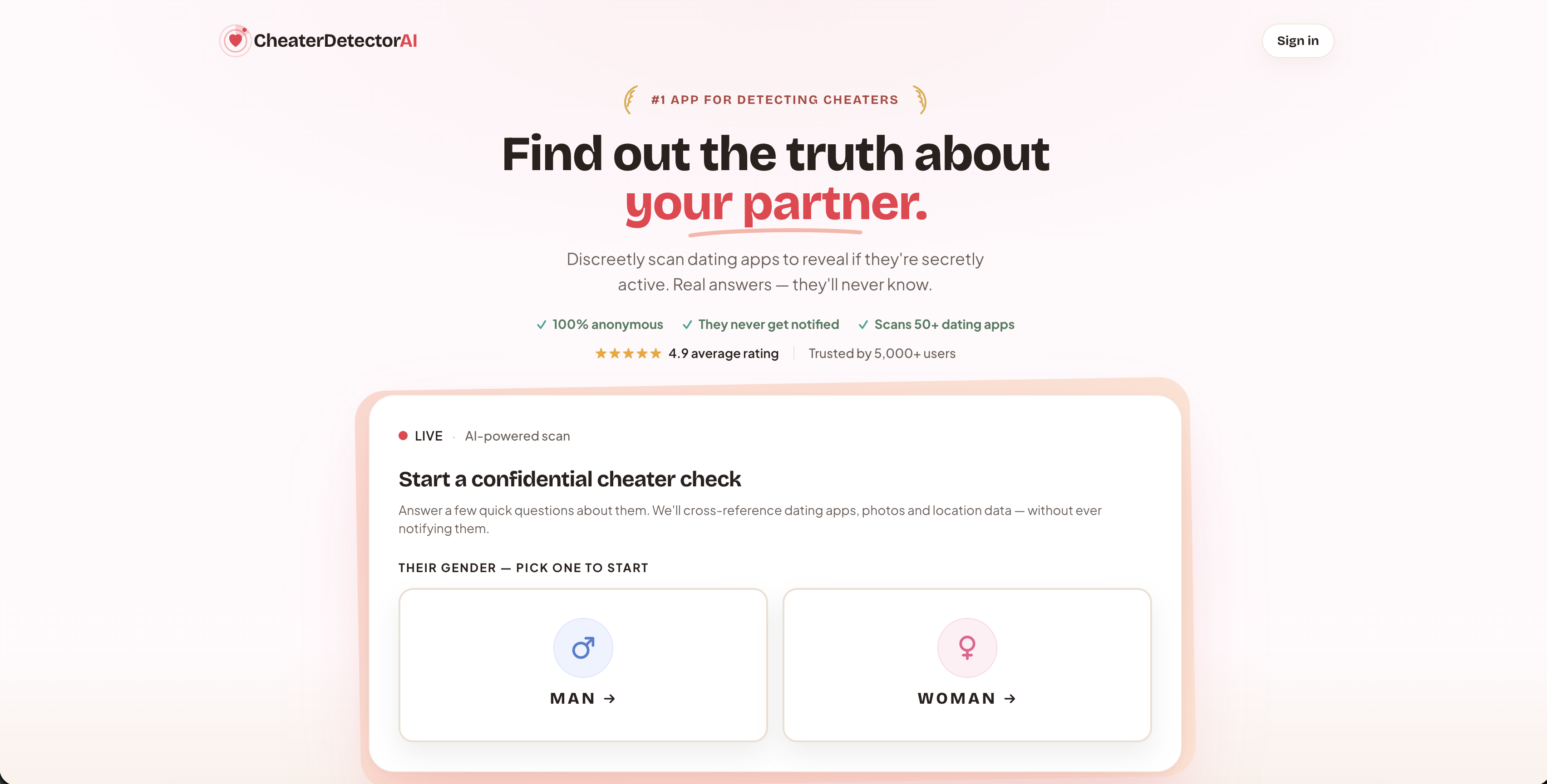
You enter a name and optional photo. The service scans major dating platforms and returns profile matches, photos, usernames, and visible activity timestamps where available. Reports are encrypted and delivered fast. Pricing covers a one-time scan fee with an optional monitoring subscription for ongoing alerts — no long-term commitment required to get your first answer.
Over 5,000 users have trusted CheaterDetectorAI with a 4.9 average rating. The process is anonymous from start to finish, and the encrypted report is yours to keep if you need it later.
Search their name now and get the answer you’ve been looking for — privately, anonymously, and without touching their phone.
Sources
- Digital Espionage in Matrimonial Cases: Drawing the Line Between Legitimate Self-help and Unlawful Interception of Electronic Communications
- Stalkerware: What to Know
- Is It Illegal to Read Someone Else’s Texts? Laws & Penalties - LegalClarity
- Luis v. Zang, et al. (6th Cir. 2016)
This article is general information, not a substitute for professional advice. If you’re dealing with a separation or divorce, get advice for your own situation before acting on anything here.
FAQ
Can deleted dating app messages be recovered?
Recovering deleted private messages typically requires device forensics or a court-ordered subpoena to the platform, so it’s not something you can do yourself. In a divorce, this can be requested through formal discovery.
Can you get in trouble for checking your partner’s phone without permission?
Yes. The Stored Communications Act and CFAA make unauthorized access a federal offense, and courts have rejected the idea that marriage creates an exception.
Does uninstalling a dating app delete the account and profile?
Uninstalling an app does not delete the account. The profile typically remains active and searchable on the platform until the user manually deletes the account from within the app or via the platform’s website.
What can CheaterDetectorAI actually find?
CheaterDetectorAI scans publicly available dating profiles and returns profile matches, photos, usernames, and visible activity timestamps where the platform makes them public. It does not access private messages or require your partner’s phone.
What should I do if I find an active profile?
Save the encrypted report, screenshot the public profile, and take time to decide your next step before confronting your partner. The report can also help later if things head toward divorce.