%20scale(1.05)%20translate(-12,-14.25)'%3e%3cpath%20d='M12%2021s-7.5-4.7-7.5-10.2A4.3%204.3%200%200%201%2012%207.5a4.3%204.3%200%200%201%207.5%203.3C19.5%2016.3%2012%2021%2012%2021Z'%20fill='%23F0384A'%3e%3c/path%3e%3c/g%3e%3c/svg%3e)

Trust after cheating can come back, but it comes back slowly and only through proof, not promises. If the affair is still going on, that has to stop today. If you feel unsafe in any way, get to a safe place and call someone you trust before you do anything else. Everything past that point is slow, steady rebuilding work, not a quick fix.
TL;DR:
- Trust is rebuilt through consistent, repeated actions proving the affair is over, not promises or apologies alone.
- Deep healing may take two to five years, with progress evidenced by fewer triggers, steady behavior, and renewed feelings of safety.
- Immediate steps focus on ending all contact with the affair partner, taking full responsibility, and demonstrating transparency through shared passwords and schedules.
- Professional therapy, such as the Gottman Trust Revival Method or the TRUST framework, provides structured guidance tailored to individual needs and anxiety levels.
- Ongoing secrecy, repeated lies, coercion, or violence indicate unrecoverable situations requiring safety measures or legal intervention.
What Betrayal Does to Your Body and Mind
Your brain doesn’t process betrayal the way it processes an argument about dishes or money. Discovering an affair sends your whole system into survival mode, and the shock alone can make it hard to think straight or make decisions right after you find out, according to Mayo Clinic.
That’s betrayal trauma. It’s a real, physical response, not just hurt feelings. You might notice:
- Intrusive images or thoughts that pop up when you least expect them
- Trouble sleeping, or waking up at 3 a.m. replaying texts
- Checking his or her phone, location, or social media compulsively
- Feeling jumpy, on edge, or unable to relax even in normal moments
- Struggling to concentrate at work or with your kids
Betrayal trauma can produce symptoms similar to PTSD, and GoodTherapy notes that trauma-informed therapy and supportive relationships matter most when those symptoms start interfering with daily life.
This is why “I’m sorry, it will never happen again” doesn’t calm you down, even when your partner means it. Your nervous system is on high alert, and it doesn’t trust words. It trusts patterns. Calming that alarm system has to happen before explanations or apologies can even land. That’s the whole idea behind the TRUST framework, which puts regulation before reassurance for exactly this reason.
Approaches like Emotionally Focused Therapy (EFT) and the Gottman Institute’s work with couples both build on this same truth: healing starts in the body, then moves to the relationship.
Frameworks That Actually Give You Steps to Follow
You don’t have to guess at how repair works. Two frameworks, built by people who study this for a living, break it into pieces you can actually act on.
- Atone. The person who cheated takes full responsibility, without excuses or blame-shifting, and answers questions honestly. This phase can’t be rushed.
- Attune. Both partners work on really hearing each other’s pain, not just talking past it.
- Attach. Couples rebuild physical and emotional closeness once safety starts to feel real again.
That’s the Gottman Institute’s Trust Revival Method, and it’s built on a simple idea: grand gestures don’t rebuild trust. Ordinary, repeated proof does.
The TRUST framework breaks it down a little differently, into five working parts:
- Transparency — sharing passwords, location, or plans without being asked twice.
- Regulation — both partners learning to calm their own nervous system before a hard conversation.
- Understanding — really grasping why the affair happened, not just that it did.
- Steady consistency — showing up the same way, day after day, for months.
- Time — accepting that healing won’t follow a schedule you set.
If you’re working with a therapist, ask which framework fits your situation. Gottman’s model works well for couples who want a clear roadmap through counseling. The TRUST framework fits couples where anxiety or panic attacks are getting in the way of even having a conversation.
If You Cheated: Your Exact Next Steps
Your job right now isn’t to explain yourself. It’s to prove, through action, that the affair is over and it’s never happening again.
Start here, in order:
- End all contact with the affair partner completely. Delete the number. Block on every app. No “just checking in one last time.”
- Stop every secret behavior, not just the affair itself. Hidden accounts, deleted messages, locked phones. All of it has to go.
- Accept full responsibility. No “but you were distant too.” That comes later, if ever, and only in your own therapy.
Once the affair is over, the real work is building small, boring, repeated proof:
- Share your location and passwords without being asked.
- Keep the same schedule you tell your partner you’re keeping.
- When you slip up, even in a small way, own it fast instead of getting defensive.
Pro Tip: When your partner asks the same question for the tenth time, answer it like it’s the first. Getting defensive tells his or her nervous system you’re hiding something, even when you’re not.
Individual therapy matters here too. A good therapist helps you understand why you cheated, not to excuse it, but so it doesn’t happen again. Verywell Mind points to a clear plan and real accountability as the backbone of any repair after infidelity.
If You Were Cheated On: Protecting Yourself While You Decide
You get to protect your own heart while you figure out what comes next. That’s not selfish. It’s necessary.
When a conversation starts spiraling, ground yourself first:
- Name five things you can see in the room.
- Take one slow breath in for four counts, hold for four, out for four.
- Step outside for two minutes before responding to anything upsetting.
Ask for specific, measurable things, not vague reassurance:
- “Show me your phone location for the next six months.”
- “Text me when you leave work and when you get home.”
- “Let me see the messages if I ask, no explanation needed.”
Not every wave of fear is a real threat. A trigger might be a smell, a song, or a time of day that reminds you of finding out. A real threat is a broken promise, a lie you catch, or a pattern repeating. If you can’t tell the difference on your own, that’s exactly what individual therapy is for.
Pro Tip: Keep a small notebook of what actually happened versus what you feared happened. Over weeks, that gap usually shrinks, and it shows you real progress instead of just how you feel today.
Support groups, close friends who won’t judge either of you, and a safety plan if you ever feel physically unsafe all belong in your corner.
How Long Rebuilding Trust Really Takes
Deep repair after a major betrayal commonly takes two to five years, not weeks or months. That range varies based on whether the affair was a one-time slip or a pattern, how honest the accountability phase was, and whether both partners get real professional support.
Progress doesn’t look like a straight line. It looks like fewer triggers over time, behavior that stays consistent whether or not anyone’s watching, and a slow return of feeling safe enough to relax. Setbacks happen, a bad anniversary, a random memory, a new detail that surfaces. One hard week doesn’t erase months of steady proof. It just means the alarm system fired again, and that’s normal.
Getting Professional Help That Actually Works
Couples therapy built specifically for betrayal, like EFT or Gottman-method counseling, gives you a trained referee and a proven structure instead of two hurt people going in circles. Psychology Today recommends this kind of couples work for significant infidelity, alongside individual therapy to process trauma on your own.
Individual therapy matters for both partners, for different reasons. The betrayed partner processes trauma and rebuilds self-trust. The partner who cheated digs into why it happened.
Before your first session, ask a potential therapist:
- Have you worked with couples specifically after infidelity?
- What’s your approach if one partner shuts down or gets defensive?
- How do you handle sessions where things get emotionally heated?
Expect the first few sessions to focus on safety and ground rules, not deep digging. A good therapist slows things down before speeding up.
Red Flags: When It’s Not Safe or Not Repairable
Watch for patterns, not single bad moments:
- Ongoing secrecy after promising transparency, hidden phones, new secret accounts, disappearing for hours unexplained.
- Repeated deceit, especially getting caught in a new lie after already promising honesty.
- Minimizing or blaming you for the affair instead of owning it.
- Coercive control, like isolating you from friends or monitoring your every move.
- Any violence or threats. If this applies, your safety comes first, contact the National Domestic Violence Hotline at 1-800-799-7233 immediately.
One slip during a hard conversation isn’t the same as a pattern. A pattern is the real warning sign.
Why the Research Backs This Approach
Clinical guidance consistently points the same direction on trust after cheating: accountability, transparency, and professional support work; secrecy and pressure don’t.
- Mayo Clinic recommends ending the affair and consulting a counselor as the first concrete steps after discovery.
- Clinicians researching attachment injuries publish findings on PubMed for readers who want primary studies behind these recommendations.
- The pattern across sources is consistent: regulation has to come before reassurance can actually land.
That’s not a coincidence. It’s why grand apologies fail and small, repeated proof works. Recovery also requires both people doing different jobs, one person earning trust back, the other actively healing, and neither job works without the other happening at the same time.
A Short Recovery Story: What Small Wins Actually Look Like
One couple I heard about didn’t have a breakthrough moment. They had a Tuesday. He texted “leaving work now, home by 6” without being asked. She didn’t check his location that night. Small, boring, repeated.
Months later, those Tuesdays added up. She stopped flinching at his phone buzzing. He stopped over-explaining every late night. Neither of them called it healed. They called it better than last month.
If you’re in the thick of it right now, that’s normal. Reach out for support today, whether that’s a therapist, a support group, or one honest friend.
When You Need Answers Before You Can Heal
You can’t do trauma-informed repair work on a foundation of “maybe he’s lying again” or “what if she’s still talking to someone.” Suspicion left unanswered just feeds the same nervous-system alarm this whole article is about calming down.
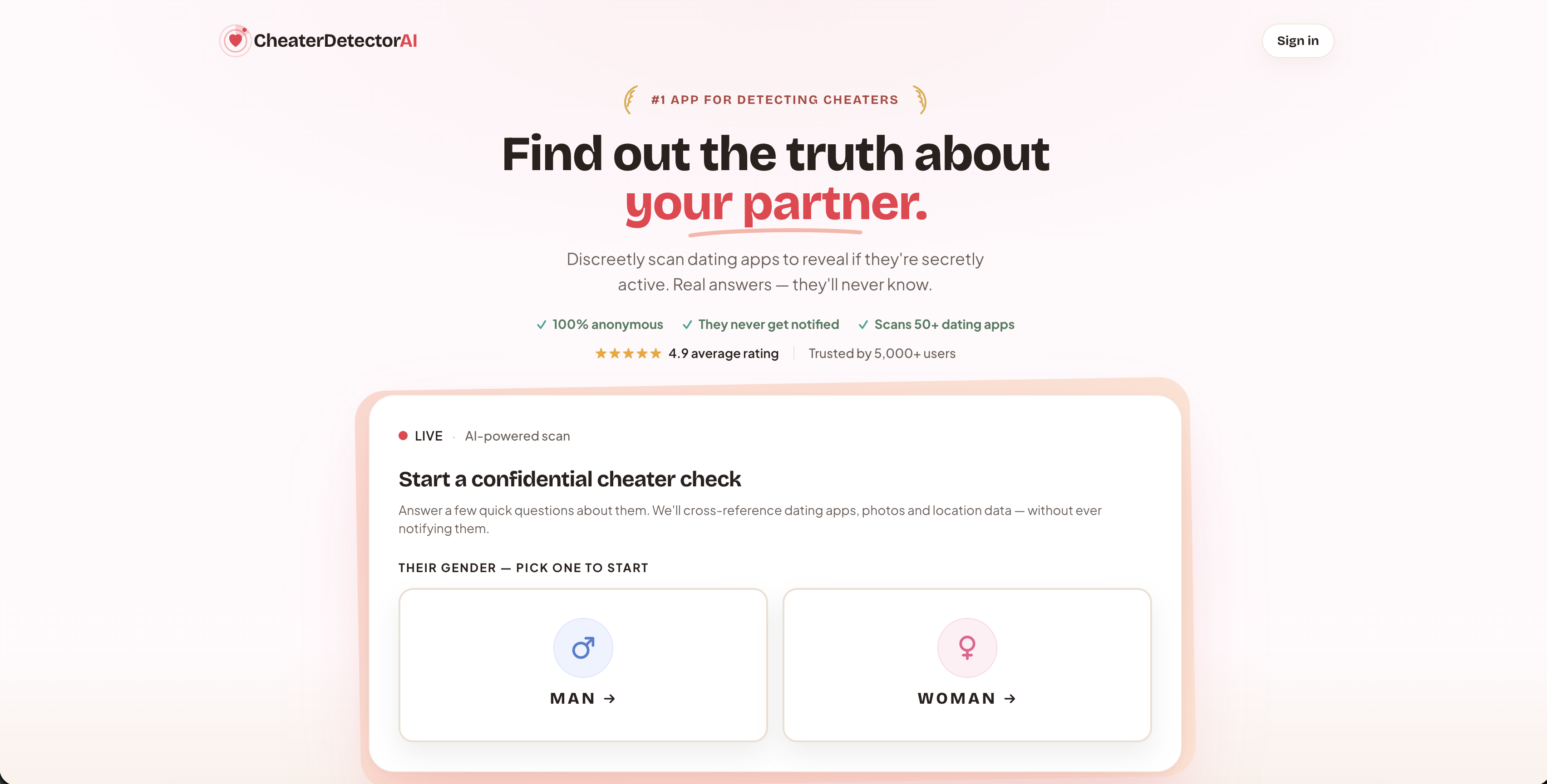
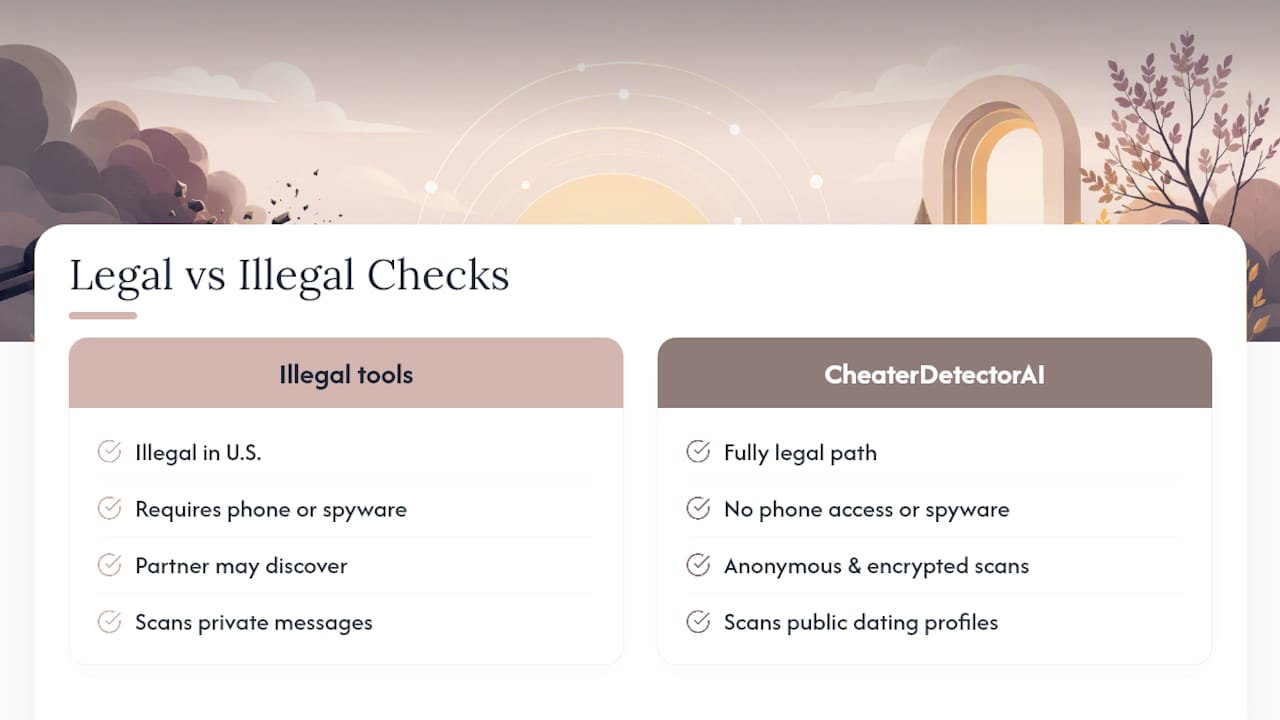
Here’s what you need to know: spyware, hidden tracking apps, and reading someone’s private messages without consent are illegal in the United States, and using them can get you prosecuted, not your partner. That risk is not worth it, no matter how anxious you feel.
CheaterDetectorAI takes a different, fully legal path. It only scans public profiles across major dating platforms using minimal details you provide, no phone access, no spyware, nothing hidden on his or her device. Every scan is encrypted and anonymous, so your partner never knows you checked. Reports come back fast, with profile matches, photos, and activity timestamps, giving you real answers instead of uncertainty.
This matters most when suspicion keeps circling and you need facts before you can start real repair work, whether that’s couples therapy or a safety plan. Search their name now with a deep person scan, or check their profile today to see if they’re active on dating apps. If you have a photo but no name, get an anonymous scan with a reverse image search instead.
Where to Learn More and Find Help
For deeper reading, Mayo Clinic’s infidelity recovery guide, the Gottman Institute’s Trust Revival Method, and SimplyPsychology’s overview all offer solid next steps. For legal ways to find clarity first, read how to prove infidelity online.
This article is general information, not a substitute for advice from a qualified doctor. Consult a qualified healthcare professional about your own circumstances before acting on anything here.
Sources
- Infidelity: Mending your marriage after an affair - Mayo Clinic
- Reviving Trust After an Affair (part 2) - The Gottman Institute
- Feeling broken from betrayal trauma—how to heal - GoodTherapy
FAQ
Can You Ever Fully Trust Someone Again After Cheating?
Many couples do rebuild real trust, but it comes back as a continuum built through consistent behavior over years, not as a switch that flips back on.
How Long Does It Take to Rebuild Trust After Cheating?
Deep repair after a major betrayal commonly takes multiple years, though smaller signs of progress can show up much sooner.
When Should You Walk Away After Infidelity?
Walk away when you see patterns, not single mistakes: ongoing secrecy, repeated lies, minimizing what happened, coercive control, or any violence or threats to your safety.
What Is the 80/20 Rule People Mention With Infidelity?
Definitions of this idea vary widely online and it isn’t backed by the clinical sources in this article, so treat any specific version you find with caution rather than as an established rule.