%20scale(1.05)%20translate(-12,-14.25)'%3e%3cpath%20d='M12%2021s-7.5-4.7-7.5-10.2A4.3%204.3%200%200%201%2012%207.5a4.3%204.3%200%200%201%207.5%203.3C19.5%2016.3%2012%2021%2012%2021Z'%20fill='%23F0384A'%3e%3c/path%3e%3c/g%3e%3c/svg%3e)
You found something. A message, a name, a photo. Your stomach dropped. Now you’re wondering if a screenshot can actually prove what you think you saw — and whether it will hold up if things get serious.
Here’s the honest answer: screenshot evidence of cheating can help you, but only if you capture it the right way, preserve it carefully, and pair it with other proof. A lone screenshot, sitting on your phone with no context, is easy to challenge in court. Done right, it becomes part of a case. Done wrong, it can hurt you.
Do these things in the next 24 hours:
- Do not delete anything. Leave every message, photo, and notification exactly where it is.
- Take screenshots of full conversation threads, not just the damaging line. Capture the sender’s name, the timestamp, and the platform.
- Back up your screenshots to a secure location you control — a personal email account or a USB drive you keep private.
- Do not post anything online. Not to social media, not to a group chat, not anywhere.
- Do not touch your partner’s phone, accounts, or devices.
Key Takeaways
Screenshot evidence of cheating is most useful when it’s captured completely, preserved carefully, authenticated with corroborating records, and handled properly from the start.
| Point | Details |
|---|---|
| Capture full context | Screenshot entire threads with timestamps, sender names, and platform visible — never just one message. |
| Preserve the original device | The phone or computer where the conversation lives is your strongest authentication asset; never reset or sell it. |
| Avoid invasive collection | Spyware, unauthorized account access, and non-consensual recordings can get evidence excluded and backfire on you. |
| Corroborate with other records | Combine screenshots with call logs, financial records, and witness statements to show inclination and opportunity. |
| CheaterDetectorAI is a simple first step | Scanning public dating profiles with CheaterDetectorAI requires no device access and produces a timestamped report you can bring to a consultation. |
How U.S. courts treat screenshot evidence of cheating
Courts can accept screenshots as evidence, but they don’t have to. The burden is on you to show that what you’re presenting is real, unaltered, and relevant. That’s a higher bar than most people expect.
Under the Federal Rules of Evidence, two rules matter most here. Rule 901 requires authentication: you must show the screenshot is what you claim it is. That means tying it to a specific device, account, or person. Rule 803 covers hearsay exceptions — in divorce and custody cases, a message sent by your partner can often be admitted as a statement by an opposing party, which sidesteps the usual hearsay block.
Common objections you’ll face from opposing counsel:
- The screenshot was edited or fabricated.
- There’s no metadata or file information to verify it.
- The conversation is taken out of context — you cherry-picked one message.
- The original device isn’t available for inspection.
- There’s no witness who can confirm the account belongs to your partner.
Attorneys advise that screenshots are most useful when they’re paired with corroborating records — call logs, emails, or testimony — and when the original device is available. A screenshot alone, without any of that, is a starting point, not a finish line.
Step-by-step capture checklist to make your screenshots count
Follow this checklist and you’ll preserve the strongest possible version of what you found.
- Capture the full thread, not just one message. Scroll to the top of the conversation and screenshot every screen. Judges want context. A single damaging line pulled from a longer exchange is easy to attack.
- Make sure the timestamp is visible. On most phones, the date and time appear at the top of the screen. If yours doesn’t show it, check your phone’s status bar settings or take a photo of the screen with another device that shows the time.
- Show the sender’s name and profile photo. The screenshot needs to identify who sent the message. If the name is cut off, scroll or zoom out until it’s visible.
- Capture the platform name. Whether it’s a text thread, Instagram DM, or WhatsApp conversation, the app’s interface should be visible in the screenshot so there’s no question about where it came from.
- Take multiple captures. One screenshot per screen, overlapping slightly so there are no gaps in the thread.
- Photograph the device itself. Use a second phone or camera to take a photo of the screen on the original device. This shows the device’s physical state and can help establish that the screenshot wasn’t created on a computer.
- Name your files clearly. Use a consistent format:
YYYY-MM-DD_platform_description(for example,2026-03-14_instagram_dm_thread). This makes it easy to organize and hand off later. - Save originals to a read-only backup. Copy files to a USB drive or a private cloud folder. Do not edit, crop, or filter any image after saving it. The original file is your evidence.
- Write a brief note for each screenshot. In a separate document, record when you found it, what device you used, and what you saw. This becomes part of your chain of custody record.
Pro Tip: If you export a conversation directly from the app (WhatsApp and iMessage both have export options), that file carries more weight than a screenshot because it includes metadata the app generates. Save the export file alongside your screenshots.
Do not do any of the following:
- Log into your partner’s email, social media, or phone accounts without their consent.
- Install any app on their device to track location or read messages.
- Record phone calls or in-person conversations without checking your state’s consent rules first. Many states require all parties to consent to a recording, and breaking that rule is a criminal offense.
Practical authentication techniques courts accept
The goal is simple: show that your screenshot is accurate, unaltered, and tied to the right account and device. Here’s how courts and attorneys actually get there.
- Preserve the original device. The phone or computer where the conversation lives is your strongest asset. Don’t factory reset it, don’t sell it, and don’t let anyone else use it.
- Export the conversation from the provider. WhatsApp, iMessage, and most major platforms let you export full conversation histories. These exports include metadata that a screenshot doesn’t.
- Collect file metadata where possible. Every image file has embedded data — creation date, device model, sometimes GPS location. This EXIF data can help confirm when and where a screenshot was taken.
- Get witness testimony. If someone else saw the message on the screen, their statement can help authenticate it. This is especially useful when the original device isn’t available.
- Obtain provider records via subpoena. Records can be requested directly from the platform or carrier as part of your case. These are far harder to challenge than anything you captured yourself.
- Use forensic acquisition tools. A licensed digital forensics examiner can create a verified copy of a device’s contents, complete with hash values that prove nothing was altered.
The sequence looks like this: capture → preserve → authenticate → submit. Each step builds on the last. Skip one and the chain breaks.
When the stakes are high — custody disputes, significant asset division, fault-based divorce — hire a licensed digital forensics professional. Their affidavit of authenticity carries weight that your own screenshots simply cannot match.
What can make screenshots inadmissible, and what can backfire on you
Certain collection methods can both invalidate your evidence and seriously backfire on you. This is the part most people skip, and it’s the part that matters most.
Never do these things:
- Install spyware or hidden tracking apps on your partner’s device. This violates the federal Computer Fraud and Abuse Act and state wiretapping statutes.
- Log into their accounts without permission. Accessing someone else’s email, social media, or messaging accounts without consent is unauthorized computer access in most states. Even if you know the password, using it without permission can get you in real trouble.
- Intercept private communications. Reading messages in real time, or capturing them as they’re transmitted, falls under the federal Electronic Communications Privacy Act. The penalties are serious.
- Record conversations without consent in two-party-consent states. States including California, Florida, Illinois, Pennsylvania, and Washington require everyone in a conversation to consent before it can be recorded. Recording your partner without their knowledge in these states is a crime, not just a civil issue.
- Delete or alter any evidence after a case has started. Once divorce or custody proceedings begin, destroying evidence is spoliation. Courts can sanction you for it, and it can destroy your credibility.
Courts in Florida and most other states apply an “inclination and opportunity” test for adultery claims. Illegally obtained evidence doesn’t just get excluded — it can signal to the judge that you acted in bad faith, which affects everything else in the proceeding.
State consent rules for recordings vary. Before you record any conversation, look up your state’s specific wiretapping statute or get professional advice. The difference between a one-party-consent state and a two-party-consent state can be the difference between admissible evidence and a criminal charge.
What judges actually look for in screenshot evidence
Judges have seen fabricated screenshots. They know how easy it is to edit a text message on a phone and take a photo of it. What they’re looking for is corroboration — multiple pieces of evidence that point in the same direction.
What a judge typically checks:
- Is the date and time visible and consistent with other records?
- Does the conversation flow naturally, or does it look cut or edited?
- Is the original device available for inspection?
- Are there related logs — call records, email headers, location data — that support the screenshot?
- Is there a witness who can confirm the account or the exchange?
- Do provider records match what the screenshot shows?
- Does the conversation have continuity, or are there suspicious gaps?
When screenshots helped: Courts have accepted screenshots of dating app conversations and text threads when the original device was produced, the full thread was preserved, and the content was corroborated by call logs or financial records showing the same person and time period.
When screenshots failed: Judges have excluded screenshots when the original device was unavailable, when only a single message was captured without surrounding context, or when the opposing party credibly claimed the image was edited. A screenshot taken on a second phone pointed at the original screen, with no metadata and no corroborating records, is the weakest possible form of this evidence.
Experienced divorce practitioners consistently recommend combining screenshots with corroborating records — financial transactions, travel logs, and witness statements — to show both inclination and opportunity. A bundle of consistent corroborating evidence is far more persuasive than any single screenshot.
If you need formal proof: subpoenas, preservation letters, and forensic help
When you need court-quality evidence, use the formal tools. Screenshots you took yourself are a starting point. They are rarely the finish line.
- Talk to a family attorney. Do this before you do anything else that could backfire. They can tell you what’s admissible in your state, what to preserve, and what to avoid.
- Send a preservation letter or spoliation hold. A formal notice to your partner’s side can require them to preserve all relevant digital communications. This creates a formal obligation and protects you if evidence later disappears.
- Subpoena provider records. As part of your case, records can be subpoenaed directly from platforms like Meta, Google, or a wireless carrier. These records are authenticated by the provider and are far harder to challenge than anything you captured yourself.
- Request a forensic acquisition. A licensed digital forensics examiner can create a verified, court-ready copy of a device’s contents. The resulting report includes hash values that prove the data wasn’t altered after collection.
- Obtain an affidavit of authenticity. The forensics examiner signs a sworn statement about their methods and findings. This affidavit is what allows their report to be admitted as evidence.
Act quickly. Messaging platforms and wireless carriers don’t keep records forever. Many providers retain message logs for a limited period, which can vary; some keep them longer, some shorter. The sooner a preservation request goes out, the better your chances of getting those records before they’re gone. Securing your email account and preserving digital records is a practical first step you can take on your own while you arrange professional help.
Should you post screenshots online? The risks are real
Posting screenshots publicly can hurt your position and expose you to defamation claims or worse. The impulse is understandable — you’re hurt and you want people to know. But it almost always backfires.
Public posting vs. private preservation:
- Public posting: Risks defamation liability if any detail is disputed; can be used against you in court to show bad faith; platforms often remove the content anyway; can complicate custody proceedings by showing poor judgment; may violate state revenge-porn or harassment statutes depending on the content.
- Private preservation: Keeps your evidence intact and uncontested; protects your credibility with the judge; gives whoever represents you full control over how and when it’s disclosed; avoids tipping off your partner that you’re building a case.
Commentators caution that exposing alleged infidelity online can backfire, especially in divorce or custody disputes. The usual advice is to preserve everything privately instead.
Safer alternatives:
- Preserve everything privately and share it only with the professional handling your case.
- Use a public-profile scanning service like CheaterDetectorAI to check whether your partner has active profiles on dating apps — no private account access, no risk.
- If you’re in emotional crisis, contact the Crisis Text Line (text HOME to 741741) or the National Domestic Violence Hotline (1-800-799-7233) before making any decisions about sharing evidence.
Do not post anything publicly until you’ve gotten proper advice. The short-term satisfaction is not worth the long-term damage to your case.
What research and experts say actually works
Courts favor circumstantial corroboration and verified device-level records over isolated screenshots. That’s the consistent finding across divorce practice guides, forensic expert commentary, and professional Q&A resources.
What works in practice:
- Combine screenshots with corroborating logs. Call records, email headers, and location data that match the same time period and person make a screenshot far harder to dismiss.
- Add financial and travel records. Hotel receipts, credit card statements, and travel logs showing your partner was somewhere they claimed not to be are powerful circumstantial evidence.
- Get witness statements. A friend, family member, or coworker who observed relevant behavior can corroborate what your screenshots show.
- Preserve the original device. Forensic experts all say the same thing: the original device is your strongest asset.
- Get a forensic opinion when the stakes are high. In custody disputes or fault-based divorces where significant assets are at stake, a licensed forensic examiner’s report is worth the cost.
Divorce practice guides consistently point to the same conclusion: preservation and chain-of-custody steps materially improve your odds of having evidence admitted. The reader who preserves carefully and gets advice early is in a far stronger position than the one who acts on impulse.
What I’d tell you to do right now
If you’re sitting with that sick feeling in your stomach, here’s what I’d say: slow down before you do anything irreversible.
Preserve what you have. Stop, right now, and don’t touch your partner’s phone or accounts. The evidence you already have on your own device is worth more than anything you might find by crossing a line. Screenshot the full threads you can access from your own accounts. Back them up. Write down what you saw and when.
Then book a consultation — even a free 30-minute one will tell you what’s admissible in your state and what to avoid. The rules for digital evidence vary more than most people realize, and one wrong move can flip the situation against you.
Before you take any invasive step, consider starting with something simple and fast: checking whether your partner has an active profile on dating apps. That’s a public record check, not a hack. It requires no access to their device, no risk to you, and it can give you a concrete answer in minutes.
Cheater Detector AI: check public dating profiles right now
You don’t need to hack anything. You don’t need to touch their phone. And you don’t need to wait months for a subpoena.
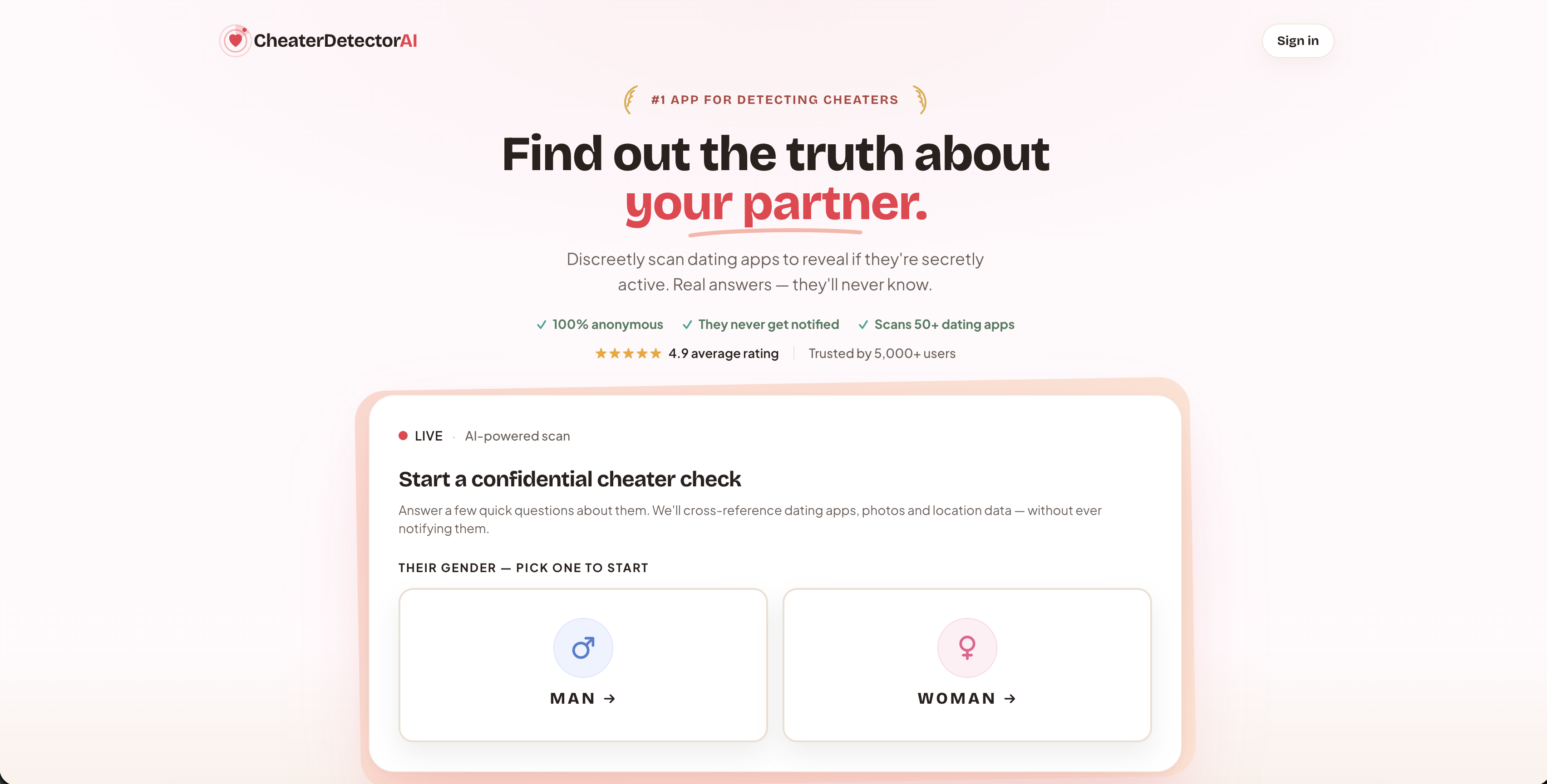
CheaterDetectorAI scans public dating profiles across all major dating platforms — Tinder, Bumble, Hinge, OkCupid, and more — using only your partner’s name and basic details. No phone access. No private account login. No spyware. Just a fast, encrypted scan of publicly available profiles, delivered as a detailed report with photos, timestamps, and activity data.
Search their name now at CheaterDetectorAI and get your answer fast. If a profile turns up, save the report as a PDF, timestamp it, and bring it to your consultation — it’s a documented starting point for your evidence file. Check their profile today and stop wondering. When you’re ready to go deeper, run a full deep person scan to see everything that’s publicly visible across every major platform.
We do not access private accounts, read messages, or install anything on any device.
Where to learn more
- Federal Rules of Evidence (Cornell LII) — The primary source for authentication (Rule 901) and hearsay exceptions (Rule 803). Use this to understand the standard your screenshots must meet.
- Envista Forensics: Pixels and Perjury — Forensic expert breakdown of why screenshots are easy to fake and what courts prefer instead. Read this before deciding whether to hire a forensics examiner.
- Pierce Law Group: Proof of Cheating in NC — Q&A on what counts as useful evidence in family court, including texts and call logs.
- LegalClarity: Proof of Adultery in Florida — Explains the inclination-and-opportunity standard and the risks of illegally obtained evidence. Useful even if you’re not in Florida, since the standard applies broadly.
- Avvo: Submitting Screenshots as Evidence — Practical answers on how to lay a foundation for screenshots in court.
- CheaterDetectorAI: How to Catch a Cheater Online — Step-by-step guide to online investigation and evidence collection without crossing any lines.
- Crisis Text Line — Text HOME to 741741 for free, confidential support if you’re in emotional distress while dealing with suspected infidelity.
This article is general information, not professional advice for your specific situation.
Sources
- What Counts as Proof of Adultery in Florida? - LegalClarity
- What proof of cheating is helpful for support or fault issues, and do texts, call logs, and social media messages count? NC - Pierce Law Group
- How do I submit screenshots as evidence in an admissible way to court? - Avvo
FAQ
Are screenshots admissible as evidence in U.S. court?
Yes, screenshots can be admissible, but they must be authenticated under Federal Rule of Evidence 901 — meaning you must show they are accurate, unaltered, and tied to a specific account or device. Courts commonly require corroborating records or the original device to support that showing.
What counts as proof of cheating in divorce court?
Most U.S. family courts use an “inclination and opportunity” standard, meaning you need evidence that shows your partner was romantically interested in someone else and had the chance to act on it. Screenshots of messages, call logs, financial records, and witness statements can all contribute, but no single piece of evidence is usually enough on its own.
Can a screenshot be detected as fake?
Yes. Forensic examiners can analyze file metadata, hash values, and device-level data to determine whether a screenshot was altered or created on a different device than claimed. Courts increasingly rely on forensic acquisition rather than screenshots alone for exactly this reason.
Is it OK to take screenshots of my partner’s messages?
Screenshots of conversations on your own device or accounts are generally legal. Accessing your partner’s accounts without their consent, installing monitoring software, or intercepting their communications can violate federal and state privacy rules — regardless of what you find.
Can CheaterDetectorAI’s report be used as evidence?
A report from CheaterDetectorAI documents publicly visible dating profiles and includes timestamps and profile photos. It’s a documented record you can preserve and bring to a consultation as part of a broader evidence strategy. It does not involve any private account access.