%20scale(1.05)%20translate(-12,-14.25)'%3e%3cpath%20d='M12%2021s-7.5-4.7-7.5-10.2A4.3%204.3%200%200%201%2012%207.5a4.3%204.3%200%200%201%207.5%203.3C19.5%2016.3%2012%2021%2012%2021Z'%20fill='%23F0384A'%3e%3c/path%3e%3c/g%3e%3c/svg%3e)

If you think your partner is quietly active on dating apps, skip the spyware and don’t read their private messages; there are better ways to find out. Microcheating on dating apps means small, secretive digital behaviors, like keeping a live profile, flirty DMs, or hidden matches, that break trust without a physical affair happening.
Here’s what to do right now:
- Stay calm. Don’t confront your partner yet.
- Don’t touch their phone or install tracking software.
- Look only at what’s public. A profile you can find without logging into their accounts is fair game.
- Write down what you see, with dates and screenshots, before it disappears.
- Plan a real conversation instead of an ambush.
Key Takeaways
Microcheating on dating apps starts small, but it grows through secrecy, repetition, and emotional distance, and confirming it through public information beats spying every time.
| Point | Details |
|---|---|
| Definition matters | Microcheating on dating apps means secret profiles, flirty DMs, or hidden matches that erode trust without a physical affair. |
| Watch for patterns | Secrecy, deleted messages, sudden distance, and repeated attention to one person are stronger signals than a single message. |
| Never snoop | Spyware, hacked accounts, and reading private messages can be illegal and put you at risk, not just them. |
| Document what’s public | Screenshots, timestamps, and public profile searches are safe and useful before any conversation happens. |
| Run a public scan | CheaterDetectorAI checks public dating profiles anonymously and returns a report with matches and timestamps, no phone access required. |
What Microcheating Looks Like on Dating Apps
Microcheating on dating apps rarely looks like a full-blown affair. It looks like small choices, repeated over and over, that your partner would probably hide from you.
On dating apps specifically, common examples include keeping an account active after you’ve committed to each other, swapping flirty messages with matches, sexting someone who isn’t you, or saving private, suggestive photos in a chat. Some people run a second profile under a fake name just to keep options open. Others match with people “just to see who’s out there,” which sounds harmless until it happens every week.
On social media, the pattern looks a little different. Watch for repeated likes or comments on one person’s posts, a secret “close friends” story list, or DMs that read more like flirting than friendship.
- Active or duplicate profiles — a dating app account that’s still live, or a second one you didn’t know about.
- Flirty or sexual messages — texts or DMs with a tone that crosses from friendly to romantic.
- Selective liking — one person getting all the attention on Instagram or TikTok while everyone else gets ignored.
- Secret closeness — private stories, inside jokes, or pet names shared with someone outside the relationship.
- Behavioral shifts — sudden phone secrecy, deleted message threads, a new interest in how they look, or pulling away emotionally.
Pro Tip: Use the “transparency test.” Would your partner be totally fine if you saw that message, DM, or profile exactly as it is? If the honest answer is no, it’s worth paying attention.
Why Small Digital Betrayals Do Real Damage
One flirty message doesn’t end a relationship. But microcheating rarely stays at one message.
The problem is repetition. A little secrecy here, a little emotional energy sent somewhere else there, and pretty soon your partner is investing feelings in someone who isn’t you. Reporting on the topic describes it as flirting or secret messaging that chips away at trust even when nothing physical happens.
Therapists sometimes describe microcheating as “dancing around the edges” of a full affair. It’s not the act itself that’s most dangerous. It’s the direction it’s pointing.
A single awkward text after a few drinks might be a mistake. A pattern, active profile, secret chats, growing distance from you, is a direction. That difference matters more than any one incident.
How to Check Without Snooping
You’re allowed to look. You’re not allowed to spy.
Checking public dating profiles, public social media posts, and asking mutual friends respectful questions is fine. Reading private messages, installing tracking software, or using someone else’s password without permission is not, and it can carry criminal or civil penalties depending on where you live.
Here’s the safe way to look for answers:
- Search public profiles yourself. Use the name, photos, or details you already know to check if a dating profile shows up.
- Screenshot anything public. Save the date, time, and web address so you have a clear record.
- Ask around gently. A mutual friend might mention something without you ever touching a phone.
- Use a scanning service if searching manually feels overwhelming or you want a clearer, faster answer.
- Talk to a counselor if you’re unsure how to handle this, or if you’re already planning next steps for the relationship.
Public information is fair game. Private accounts, passwords, and devices are not, no matter how anxious you are for an answer.
How to Bring It Up Without Starting a War
Pick a calm moment. Not after a fight, not in front of other people, not the second you find something suspicious.
Use “I” statements instead of accusations. Try lines like:
- “I felt hurt when I saw that message. Can we talk about it?”
- “I noticed you’ve been more private with your phone lately. What’s going on?”
- “I need us to agree on what’s okay and what’s not when it comes to apps and DMs.”
Ask follow-up questions calmly: “How long has this been happening?” or “What were you hoping to get from it?” Therapists advise staying focused on feelings rather than launching into accusations, since a defensive, dismissive reaction often tells you more than the original message did.
Avoid public call-outs, screaming matches, or setting a trap. None of that gets you honesty.
Once you’ve talked, turn the conversation into something concrete. Agree on real boundaries: no active dating profiles, shared honesty about who’s texting who, no secret “close friend” lists.
Pro Tip: End the conversation with one specific agreement, not five vague promises. “No dating apps, period” is easier to keep than “we’ll just be more careful.”
Rebuilding Trust and Stopping It From Happening Again
Trust doesn’t come back because someone says “sorry.” It comes back through action.
- Delete the apps together, not just a promise to “stop using them.”
- Agree on small, visible check-ins, like sharing who a new contact is before it becomes a secret.
- Set clear rules about social media, DMs, and what counts as flirting for your relationship specifically.
- Revisit the agreement every few months instead of assuming it’ll hold forever.
If patterns repeat after you’ve talked, that’s a signal, not a coincidence. Experts note that couples therapy often helps when microcheating keeps happening despite clear boundaries, since a therapist can dig into what’s driving the behavior instead of just policing it. Defensiveness, lying about small things, or refusing to set any boundaries at all are red flags that the pattern isn’t likely to change on its own.
Why People Microcheat on Dating Apps in the First Place
Dating apps make microcheating easy in a way that didn’t exist a decade ago. The apps are built for constant novelty, and that design plays directly into why people slip into it.
Some people keep a profile active for validation, not because they want to leave. A match, a message, a compliment from a stranger gives a quick hit of attention that feels good and costs nothing in the moment. Others are avoiding a hard conversation. Instead of admitting they’re unhappy or bored, they quietly keep a door open somewhere else.
Boredom and routine play a role too. Long-term relationships settle into predictability, and a flirty DM feels exciting precisely because it’s new and low-stakes. There’s also the anonymity factor. A private message thread feels separate from real life, like it doesn’t “count” the same way an in-person flirtation would.
None of this excuses the behavior. It explains it. Understanding the “why” matters because it changes how you approach the conversation. Someone chasing a confidence boost needs a different conversation than someone actively planning to leave.
How Microcheating Looks Different Depending on the App
Not every dating app invites the same kind of behavior, and that matters when you’re trying to figure out what you’re dealing with.
Swipe-based apps built around quick matching tend to produce a higher volume of low-effort interactions, matches, brief chats, ghosting, that can feel less “serious” to the person doing it, even though the secrecy is the same. Apps that lean more toward messaging and profile browsing without swiping often show up in a partner’s activity as a lingering, active account rather than fresh matches, which can mean they’re passively keeping the door open rather than actively searching.
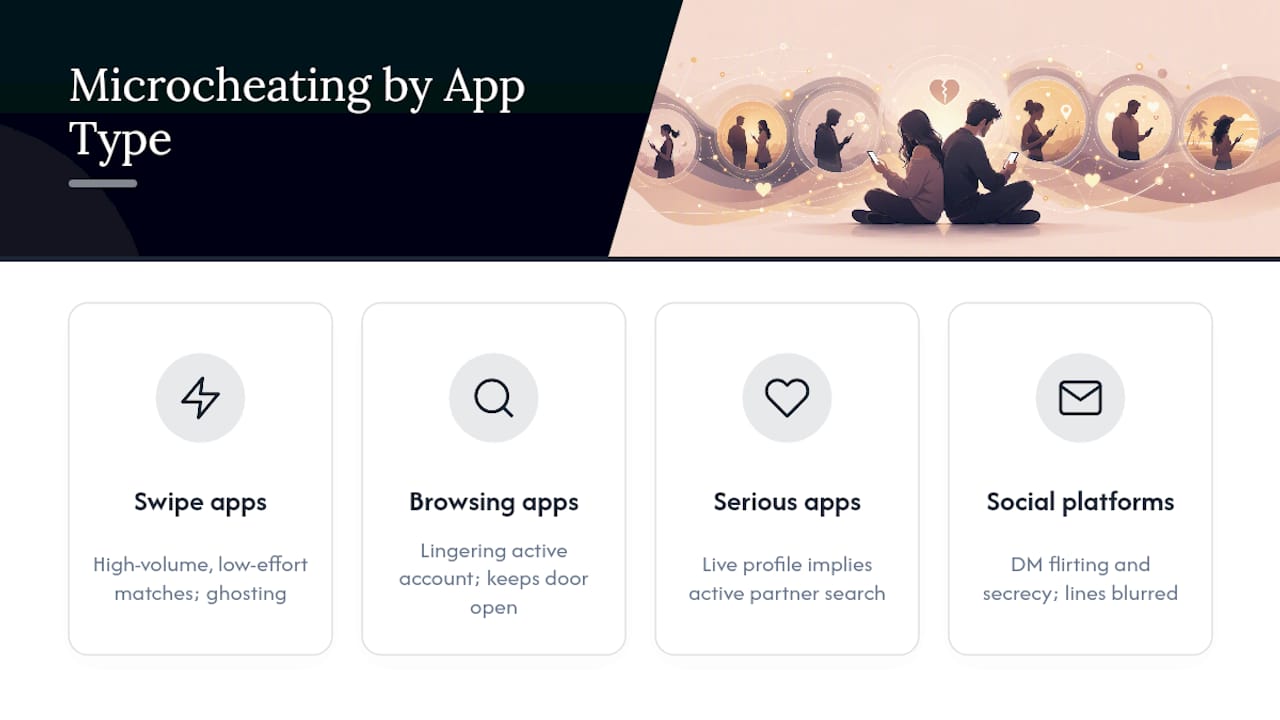
Apps aimed at more serious relationships carry a different weight when someone’s secretly active on them. A live profile there suggests something closer to actively looking for a replacement relationship, not just an ego boost. Meanwhile, general social platforms blur the line entirely. DMs on Instagram or Snapchat aren’t “dating apps” by name, but the flirting and secrecy that happen there function the same way.
The platform itself isn’t the real issue. What matters is whether the account exists, whether it’s hidden from you, and how it’s being used.
The Emotional Toll on Both Partners
Microcheating doesn’t just hurt the person who finds out. It quietly damages both people in different ways.

For the partner who discovers it, the emotional fallout often looks like anxiety, obsessive checking, and a shaken sense of reality. You start questioning memories, wondering what else you missed, replaying conversations for clues you didn’t notice at the time. That hypervigilance is exhausting, and it can bleed into unrelated parts of your life, like sleep, work focus, and how you treat other relationships.
For the partner doing the microcheating, guilt and secrecy carry their own cost. Maintaining a hidden version of yourself takes mental energy, and many people describe feeling increasingly disconnected from their own relationship, even while telling themselves it’s “not a big deal.” That disconnection often deepens the very distance that made the behavior tempting in the first place.
Left unaddressed, the strain shows up as chronic tension, resentment, and a slow erosion of the closeness that made the relationship work. Getting a clear answer, one way or the other, tends to matter more for both people’s mental health than staying stuck in uncertainty.
A Real Answer Beats a Guessing Game
Wanting proof isn’t wrong. Wanting peace of mind after weeks of suspicion is completely reasonable. But spyware and hacked accounts turn you into the one crossing the line. Public dating-app searches and a scanning service give you real answers without that risk.
Get a Scan Instead of Guessing
CheaterDetectorAI gives you a faster, safer path to the truth than manually scrolling through apps for weeks hoping you spot something. It scans public dating profiles across major platforms and sends back an encrypted, anonymous report, with photo matches and activity timestamps, so you’re not stuck guessing what a screenshot means.
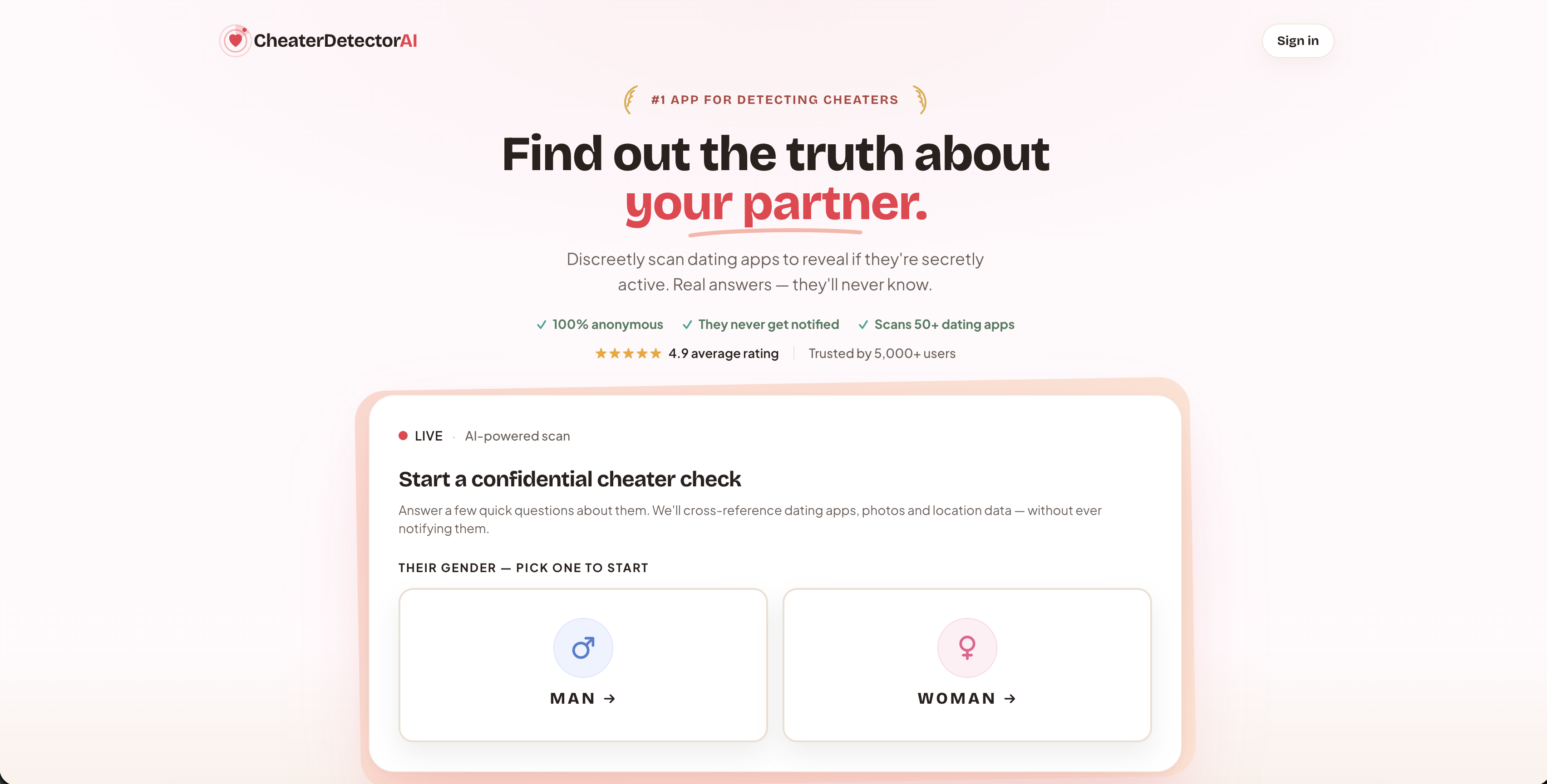
There’s no phone access and no spyware. CheaterDetectorAI only checks public information, which keeps the whole process 100% legal while still giving you a real, detailed answer.
If you’ve been circling the same suspicions for weeks, stop guessing and get facts instead. Search their name now and see what a public scan actually turns up. Check their profile today instead of waiting for another sign that might never come. Run a scan through CheaterDetectorAI and find out where you actually stand.
Sources
- Is ‘microcheating’ a new kind of infidelity for the social media age? | AP News
- Micro-Cheating | Psychology Today
- Are you microcheating? Examples, signs, how to stop, per experts | Men’s Health
- How to recognize ‘micro-cheating’ — and what to do about it | CBS News
FAQ
What Are Examples of Microcheating?
Common examples include keeping an active dating profile after committing to someone, flirty texts or DMs, sexting, secret “close friend” lists, and giving one person consistent likes and comments while hiding it from your partner.
What Is the 3-3-3 Rule in Dating?
This isn’t a standard, expert-backed framework, so definitions vary widely online; it’s not something this article’s research can confirm as a reliable relationship rule.
What Is the 80/20 Rule in Infidelity?
There’s no single agreed-upon definition backed by relationship research, so treat any version you see online with caution rather than as an established standard.
What Is Soft Cheating?
“Soft cheating” is another name people use for microcheating: small, often digital behaviors like secret messaging or flirting that break trust without a physical affair happening.