%20scale(1.05)%20translate(-12,-14.25)'%3e%3cpath%20d='M12%2021s-7.5-4.7-7.5-10.2A4.3%204.3%200%200%201%2012%207.5a4.3%204.3%200%200%201%207.5%203.3C19.5%2016.3%2012%2021%2012%2021Z'%20fill='%23F0384A'%3e%3c/path%3e%3c/g%3e%3c/svg%3e)
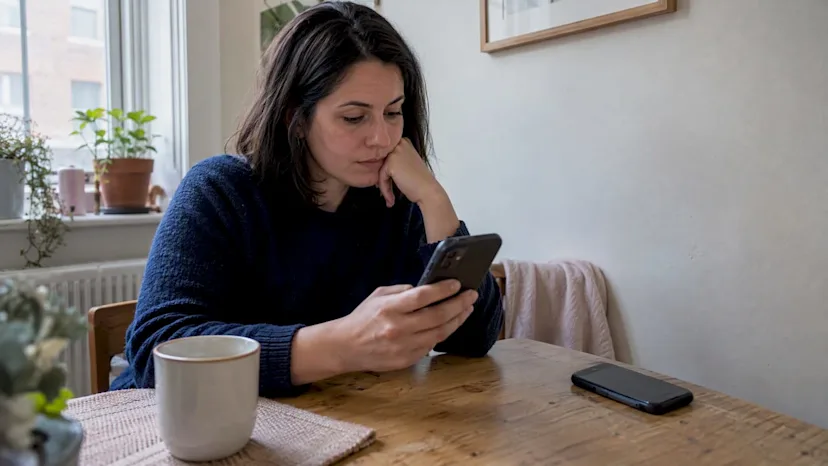
Save the profile and every photo right now, then run a reverse image search on each one. A matching photo under a different name or with different details is a major warning sign, according to FTC guidance. If anything turns up, pause contact and do not send money or personal information until you know more.
TL;DR:
- A single duplicate photo under a different name is a strong indicator of a fake profile, especially if combined with other signs like refusing a live video call.
- Multiple independent clues, such as mismatched details and behavioral red flags, justify stopping contact and reporting the profile to authorities.
- Reverse-image and face-matching searches are helpful but not conclusive alone, as false positives and private photos can mislead assessments.
- Verifying profiles through platform badges, consistent social history, and live interactions provides a more reliable picture than search results alone.
- Using a calm, step-by-step checklist limits false accusations and helps gather solid evidence before taking action against potential fraud.
Step-by-step verification workflow: save, search, cross-check, verify live
Your stomach is probably in knots right now, and that’s normal. The good news is you can work through this calmly with a short checklist instead of guessing. Here is the order that works best, based on FTC consumer guidance.
- Save everything first. Screenshot the profile, every photo, the bio, and any messages before anything can disappear. Note the date and the profile URL so you have a timestamp if you need it later.
- Reverse-image search each photo. Upload the pictures to Google Lens, Bing Visual Search, or TinEye and see where else they appear online.
- Compare what comes back. A match under a different name, a stock photo site, or someone else’s social media is a red flag. No match at all does not clear the person, it just means nothing came up yet.
- Cross-check the username, email, or phone number. Search these across other platforms to see if the name or photos line up or contradict each other.
- Check the social footprint. Look for a consistent history: friends, tagged photos, posts over time. A profile that looks brand new with no history deserves more scrutiny.
- Ask for an unscripted video call. Request a short, live video chat where they do something specific on the spot, like holding up a certain number of fingers. Scammers avoid this because it exposes stolen photos instantly.
- Request a safe public meeting if things look fine. Pick a public place, tell a friend where you’ll be, and keep it low-pressure.
Pro Tip: Never ask for a video call using a video you send them to “prove” something first. Keep it unscripted and in the moment so you can actually confirm it’s a live person.
How many red flags justify stopping contact? One duplicate photo plus a refusal to video chat is usually enough to pause things and investigate further. Two or more independent clues, like a repeated photo and a mismatched name plus a request for money, are a strong signal to stop contact and report the profile. FTC guidance recommends relying on multiple independent clues rather than one search result alone, because a single inconclusive search doesn’t prove anything either way.
If you’re checking on a partner rather than a new match, you can run the same workflow on their known photos and details. Search their name now across the apps they might use, since duplicate or hidden profiles often share the same pictures as a legitimate one. Our reverse-image dating search tool does this photo comparison work for you, pulling matches across major dating platforms in one pass instead of you uploading each picture one at a time.
Tools and methods: what each check actually catches and misses
Each verification method tells you something different, and none of them gives you a complete answer alone. Knowing what each one is good for keeps you from either panicking too fast or feeling falsely reassured.
- Reverse-image search finds reposted or near-identical photos and can point you to the original source, including the date it first appeared.
- Face-matching tools can catch subtly edited duplicate photos that a plain image search might miss, but they also produce false positives between people who simply look alike.
- Username, email, and phone lookups show whether the same contact details appear on other dating apps, social media, or old forum posts.
- Platform verification features, like video selfies or verified badges, confirm that someone is a real person behind the account, but they don’t confirm they’re telling the truth about who they are.
Reading a reverse-image match correctly means checking the source, not just the thumbnail. If a photo turns up on a site dated years before the dating profile was created, that’s the original source and a strong clue the dating profile borrowed it. If the earliest version you find is recent and on a similar dating app, it might just be a cross-posted account by the same real person. The FTC notes that a clean search with no matches does not prove a photo is authentic either, since photos can be new, private, or altered in ways that defeat a simple search.
Face-matching services work by comparing facial features across images rather than matching the files exactly, which is how they catch a cropped or filtered repost that a basic image search would miss. The tradeoff is accuracy: two people with similar bone structure or similar lighting can register as a possible match when they’re not actually the same person. Treat a face-match result as a lead to confirm, never as final proof on its own.

Privacy and legal caveats matter here too. Checking public information, like a photo someone chose to post on a dating profile, is different from trying to access private accounts, hacked data, or anything behind a login that isn’t yours. Security advisories warn against creating fake accounts or attempting to access private areas to verify someone, since that crosses into territory that can carry its own risks. Stick to public-sourced searches, information you already legitimately have, or a service built to protect both parties’ privacy during the check.
Username and email lookups round out the picture. If the name on a dating profile doesn’t match the name tied to their email or phone number elsewhere, that inconsistency is worth noting. A consistent digital footprint across platforms, with tagged photos, friends, and history over time, supports authenticity. A profile with zero digital trace outside the dating app is not automatically fake, but it does mean you have less to verify against.
A statistic worth keeping in mind: FTC data show close to 70,000 people reported romance scams in 2022, with reported losses totaling $1.3 billion and a median individual loss of $4,400. That scale is exactly why a few minutes of checking before you trust someone matters so much.
Platform verification badges and video selfie checks add a layer of confidence since they confirm a live human is behind the account at the moment of signup. They don’t confirm the person’s name, age, relationship status, or intentions, which is why combining platform badges with your own photo and detail checks gives you a more complete picture than relying on the app’s checkmark alone.
How to turn a photo match into an actual verdict
A reverse-image search result on its own rarely tells the whole story. What matters is how you combine it with everything else you’ve found, so you don’t either ignore a real warning sign or accuse someone unfairly over a coincidence.
- A clear duplicate is the strongest signal. The same photo appearing on multiple dating profiles under different names, ages, or locations points strongly to a fake or stolen identity.
- An inconclusive search means keep going, don’t accuse yet. No matches found just means you haven’t found anything yet, not that the person is verified, so move to username checks and a live video request before drawing conclusions.
- Behavioral red flags confirm a technical match. FTC guidance lists repeated refusal to meet, sudden excuses to cancel plans, pressure to move the conversation off the app quickly, and requests for gift cards or wire transfers as major warning signs that, combined with a photo match, make the picture much clearer.
- Watch for common false positives before you panic. Family photos shared between relatives, stock photography used by a real person who didn’t take their own picture, and simply new photos that haven’t been indexed yet can all look suspicious without being proof of anything.
The FTC’s core lesson is that the photo match matters less by itself than the pattern that follows it. A duplicate image paired with fast declarations of love, repeated excuses not to meet, and eventually a request for money is a far more reliable signal than any single clue alone.
Pro Tip: If a search turns up a match but the person has a reasonable explanation and still agrees to an unscripted video call, that’s a good sign. Scammers almost always refuse or stall when asked to prove themselves live.
Before you confront anyone, remember that a shared family photo or a sibling using the same childhood picture can trigger a false match. Give the benefit of the doubt to a single ambiguous result, but treat two or more independent red flags, technical or behavioral, as a real reason to stop and protect yourself.
If you find duplicates or signs of fraud: protect your evidence and your money
Finding a duplicate profile or a pattern of lies is scary, but what you do in the next hour matters. Move carefully and protect yourself first.
- Stop all contact immediately. Don’t confront them yet if money or safety might be involved. Block the account once you’ve saved what you need.
- Save every piece of evidence. Screenshot the profile, all photos, full message threads with timestamps, the profile URL, and any payment or gift card requests.
- Change your passwords. If you shared any account details, email access, or financial information, update those passwords right away.
- Warn anyone else at risk. If you suspect the same person is targeting friends or family, give them a heads-up with what you found.
FTC guidance recommends preserving this evidence before you report anything, since platforms and agencies need specifics, not just a feeling that something is wrong.
- Report the profile to the dating app using their in-app abuse or safety reporting tool, including screenshots as proof.
- File a report with the FTC at ReportFraud.ftc.gov if money, gift cards, or personal information was requested or exchanged.
- Contact the FBI’s Internet Crime Complaint Center (IC3) if you’re dealing with extortion, blackmail, or a financial scam that’s already cost you money.
If you’re trying to confirm whether your own partner has an active or hidden profile rather than dealing with a new match, consider a paid, private verification service built for exactly that purpose. Check their profile today using a dedicated search instead of creating fake accounts or trying to log into something that isn’t yours, which protects your own privacy and avoids any legal gray area. For more on the safer, non-invasive route, see our guide on legal steps for worried partners to spot fake dating profiles.
How CheaterDetectorAI helps when you need a private answer
When you’ve done the manual checks and still feel unsure, or you simply don’t have the time or stomach to search photo by photo, we built a faster, more private way to get an answer. We designed our scans specifically for worried partners who suspect someone is active on dating apps behind their back.
- Partner Check services scan major dating apps using minimal information about a partner to see if they have an active profile, without notifications.
- Deep Person Scan services run more comprehensive, multi-platform searches using photo and profile cross-referencing.
- Reverse-image dating search services use face-matching technology to compare photos against profiles, catching reposted or edited images that a manual search might miss.
Reports may include photo matches, confidence indicators, and activity timestamps where available, along with profile links. Ongoing monitoring with activity alerts may be offered for new matches beyond a one-time check.
These processes are encrypted and anonymous. They do not require creating fake accounts, messaging anyone, or accessing private information beyond what is public. Scans do not notify the partner. The aim is to provide clarity while minimizing added drama or risk.
No scan, ours or anyone else’s, can promise certainty with zero gray area. A clean report lowers the odds of an active profile, it doesn’t erase every possibility, and a match still deserves the same careful follow-up described earlier in this guide: confirm details, watch for behavioral red flags, and talk to your partner directly when you’re ready. For a closer look at how platform-specific checks work, see our breakdown on how to check if someone is on a dating app.
Why a calm checklist beats a panicked search at 2 AM
I know what it feels like to lie awake running the same search over and over, refreshing a profile, zooming into a photo for the tenth time. That instinct to check everything at once usually makes things worse, not better. A methodical approach, one step at a time, protects you emotionally as much as it protects you from being wrong.
The hardest part isn’t learning the steps. It’s resisting the urge to skip straight to a conclusion before you’ve actually gathered enough to support one. A single photo match can feel like proof when your gut is already screaming at you, but jumping to a confrontation too early can damage a relationship that was actually fine, or tip off someone who wasn’t fine and give them time to cover their tracks.

Take the checklist seriously, in order. Save the evidence first. Search the photos. Check the usernames. Ask for a live video call before you ever send an accusation. If you reach the end of that list and the red flags are still there, you’ll have something solid to act on instead of a feeling you can’t quite explain to anyone else.
Search their name now if you’ve been putting it off out of fear of what you’ll find. Waiting rarely makes the picture clearer, it just delays the moment you finally get to breathe easier, one way or the other.
— Matt
Get a private answer with CheaterDetectorAI
You don’t have to run every search yourself, upload every photo one at a time, or sit with the not-knowing any longer than you want to. We built our scans so you can check whether your partner has an active dating profile without them ever finding out, using only minimal information you already have.
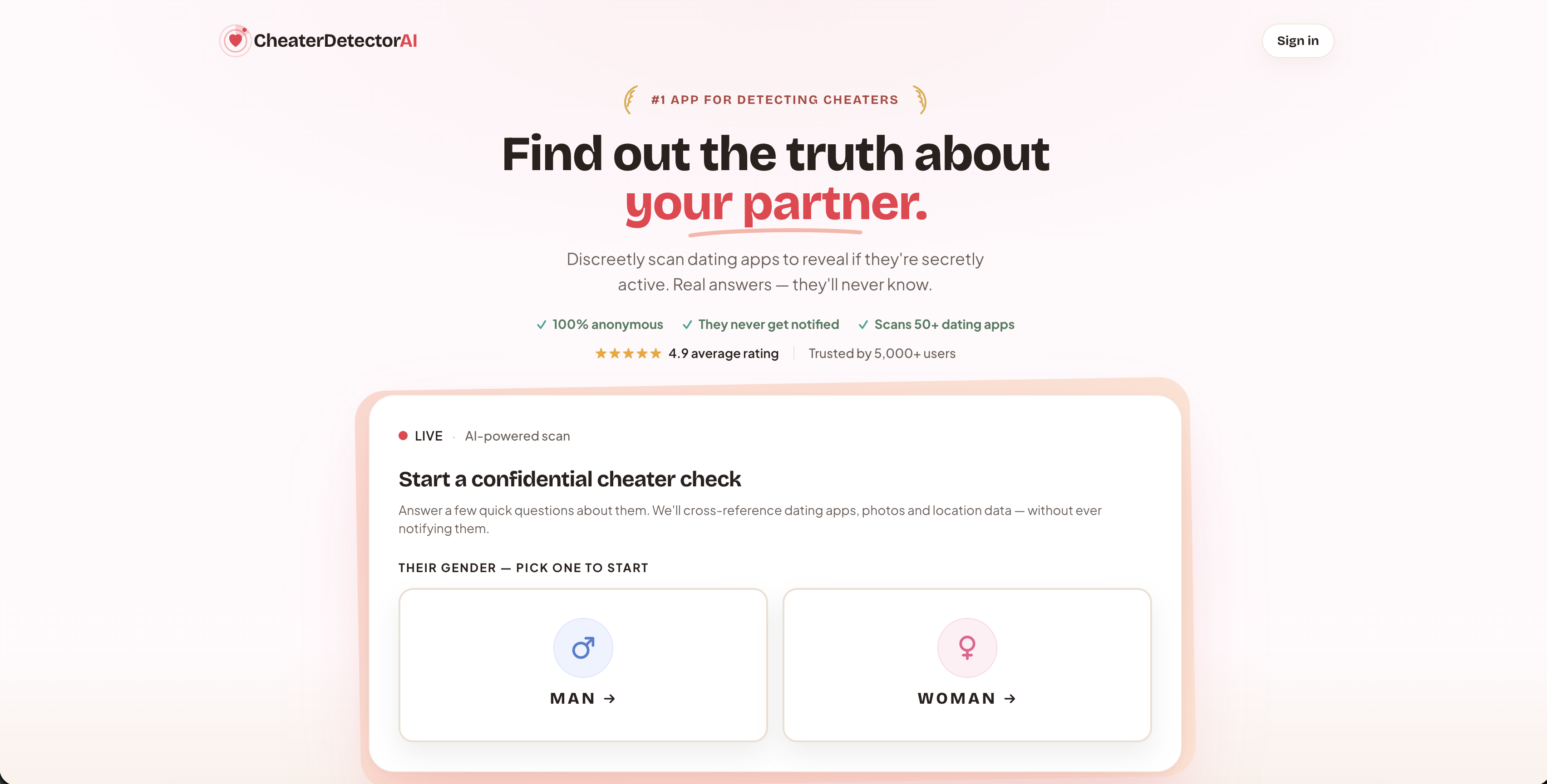
After you submit a request, we cross-reference your partner’s details across major dating apps and deliver an encrypted report with any profile matches we find, including photos and activity timestamps. If you want ongoing peace of mind rather than a one-time check, we also offer monitoring with alerts for new activity.
Check their profile today with Partner Check for a focused look across major apps, or run a Deep Person Scan for a more comprehensive search. If you already have a photo you want compared directly against dating profiles, start with our reverse-image dating search. Search their name now and stop guessing in the dark.
This article is general information, not a substitute for advice from a qualified financial advisor. Consult a qualified financial professional about your own circumstances before acting on anything here.
FAQ
What is the 333 rule in dating apps?
The “333 rule” isn’t an official platform policy, it’s informal dating advice some people use to avoid dragging out a connection with someone who keeps finding excuses not to meet, which is itself a common warning sign of a fake profile.
How do I check if my boyfriend has a dating profile?
Start by searching his name, phone number, and email across major dating apps, and try a reverse-image search on any recent photos of him to see if they turn up elsewhere. Our Partner Check service runs this kind of cross-platform search privately, without notifying him, and delivers a report if an active profile turns up.
What is CheaterDetectorAI?
CheaterDetectorAI is a private scanning service that cross-references minimal information about a partner against profiles on major dating apps to check for active or hidden accounts. We deliver an encrypted report with any photo matches, profile links, and activity timestamps, and the scan never notifies the other person.
How can I find out if someone is on Tinder for free?
You can try reverse-image searching their known photos with Google Lens, Bing, or TinEye, and search their name or username directly within Tinder’s own discovery settings if you have a shared account to browse from. These manual checks have real limits since you can’t search by name alone inside most apps, which is why a dedicated Tinder Profile Search can confirm an active account more reliably.
What counts as enough proof to stop contact with someone?
One duplicate photo under a different name is enough reason to pause and investigate further, according to FTC guidance on using multiple independent clues. Two or more red flags together, like a repeated photo plus a refusal to video chat or a request for money, are a strong enough signal to stop contact and report the profile.