
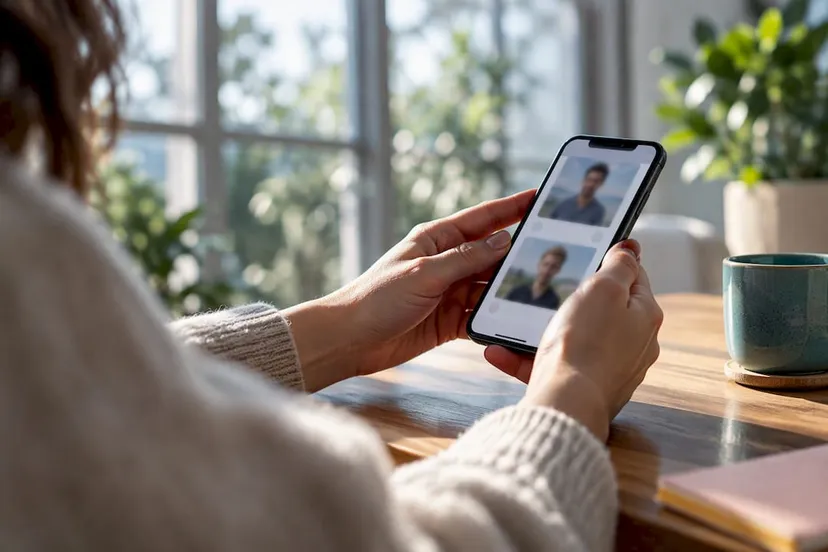
You can check whether your partner has a secret dating profile. Public searches, reverse-image checks, and anonymous scan services like Cheater Detector AI let you look without ever touching their phone. What you shouldn’t do is install spyware or read their private messages. Search their name now before you consider anything riskier.
TL;DR:
- Public searches and reverse-image checks can find dating profiles without accessing private messages or accounts.
- Installing spyware or hacking into accounts without consent can lead to criminal charges and lawsuits, and it damages your credibility in court.
- Using anonymous scan services allows cross-referencing public profiles with minimal details, and nothing touches your partner’s devices.
- To ensure evidence is usable in court, save original, unedited screenshots from reputable sources and avoid any unauthorized account access.
- If divorce or custody is involved, get professional advice before pursuing deeper investigation.
What counts as snooping, and why it matters to you
Reading his texts feels like it would answer everything in five minutes. It could also cost you far more than five minutes in a courtroom.
Under the Electronic Communications Privacy Act and related federal wiretap laws, you can’t intercept someone’s electronic communications without consent. Being married or living together doesn’t create an exception. Neither does “I pay the phone bill.” The Stored Communications Act extends this further, covering stored messages, emails, and app data sitting on a device or in the cloud.
Here’s what actually crosses the line:
- Installing a tracking or spyware app on her phone without her knowledge
- Logging into his email, texts, or dating app accounts using a password you found or guessed
- Setting up call or message forwarding without consent
- Accessing accounts after a breakup once you no longer have permission to be there
This isn’t theoretical. New York’s Attorney General secured $410,000 from tech companies that sold spyware marketed for monitoring partners. The FTC has taken direct action against stalking apps too, warning both the companies that build them and the people who use them. If you install one of these tools, you’re not just risking your relationship. You’re risking criminal charges, a civil lawsuit from your partner, and a permanent mark that can follow you into a divorce or custody case.
Ways to check without touching their phone
You don’t need access to anyone’s device to find real answers. You need patience and the right search order.
- Search by name and username. Try full names, nicknames, and any username your partner uses on social media across Tinder, Hinge, Bumble, OkCupid, and Plenty of Fish. People reuse the same handle everywhere without thinking twice.
- Run a reverse-image search. Save a clear photo of your partner (one you’re already allowed to have) and search it. A match on a dating app, even under a different name, is hard to explain away.
- Use an anonymous scan service. Some anonymous scan services cross-check public dating profiles using minimal details you already have, no login, no phone, no notification sent to your partner.
Each method only touches what’s already public. None of them require you to guess a password or open an account that isn’t yours.
Pro Tip: Run the same reverse-image search on more than one photo. Cheaters who build a fake profile sometimes use an old photo from years ago that won’t match a recent search.
The catch: private messages and hidden or blocked profiles stay out of reach through public methods. If your partner has locked down privacy settings or isn’t using a recognizable photo, a public search may come up empty even if he’s active. That’s the exact gap an anonymous scan service is built to close, since it cross-references details you provide against accounts a manual search would miss.
Your step-by-step checklist for checking safely
Follow this order. Skipping steps is how people end up crossing a line by accident.
- Prep first. Use a device your partner has never touched, like a laptop at work or a friend’s phone. Create a separate folder or email just for anything you save. Change your own passwords if you’re worried he has access to your accounts.
- Run quick public searches. Start with name, username, and photo checks across the major apps: Tinder, Hinge, Bumble, OkCupid, and Plenty of Fish.
- Order an anonymous scan if the picture’s still unclear. Submit the basic details you already have, no passwords, no device access, and let the scan cross-reference public profiles for you.
- Document everything properly. Save date-stamped screenshots, keep original file names, and note when and where you found each match.
- Know when to stop. If you’re building toward a divorce or custody case, talk to a family attorney or a licensed private investigator before you go any further on your own.
A few rules to keep in mind while you work through this:
- Never log into an account that isn’t yours, even one you think he forgot to log out of.
- Never install anything on a device you don’t own outright and use alone.
- Never alter a screenshot or edit a file before saving it.
- Always keep a backup copy somewhere your partner can’t access or delete.
Check their profile today using only the steps above, and you’ll have real answers without anything hanging over you.
How to verify a match is real and keep it usable later
Finding a photo that looks like your partner isn’t the same as proving it. A few extra checks separate a real find from a coincidence.
Look for these three signals together, not just one:
- Provenance. Trace the photo back to where it first appeared. A picture lifted from an old social media post carries less weight than one that shows up nowhere else.
- Cross-platform matches. The same face or username showing up on two or three apps is far stronger evidence than a single hit.
- Recent activity. A profile updated in the last few weeks tells you far more than one that’s been dormant for a year.
Once you have a real match, protect it. Save unaltered screenshots straight from the source, keep one original copy in a secure folder, and never edit or crop before you save. Experts in family and criminal cases warn that illegally obtained evidence is routinely thrown out in court, and judges scrutinize how you got it as closely as what it shows. That means avoiding the temptation to log into an account for “just one more look,” install anything on a device that isn’t yours, or alter files to make a point clearer. A clean screenshot from a public source holds up. A password you weren’t supposed to have destroys your credibility, even if what you found was true.
What I’d tell you if we were talking about this over coffee
The not knowing is the part that eats at you, more than almost anything you might actually find. That’s real, and it deserves a real answer, not a lecture.
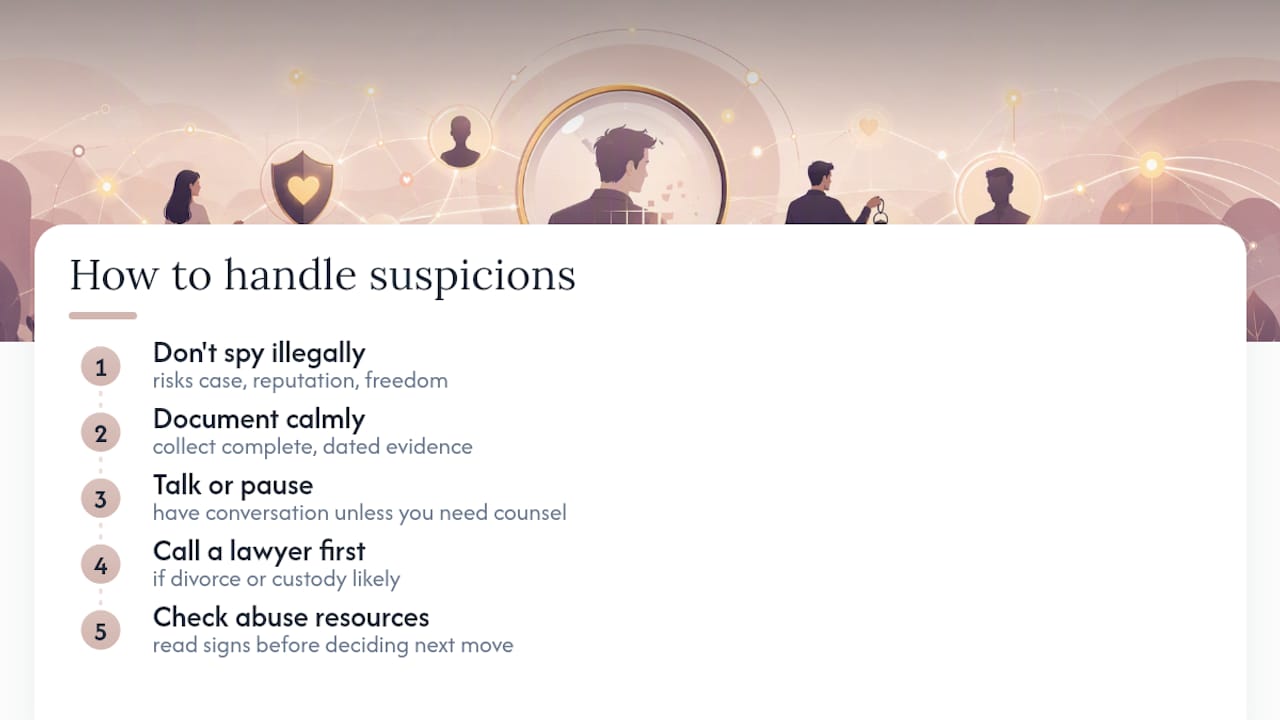
But I’ll say this plainly: snooping risks everything, your case, your reputation, possibly your freedom, for information you can often get from public sources anyway. If you find something, document it calmly and completely before you say a word. Then have the conversation, or get advice first if you think this is heading toward divorce or custody. You deserve clarity. Get it the way that protects you too.
If emotional or psychological patterns in the relationship worry you beyond the dating app question, resources on recognizing abuse warning signs are worth reading before you decide your next move.
— Oleg
Get your answer with an anonymous scan instead of guessing
Anonymous scan services offer a safer alternative to the risky stuff you’ve been tempted to try. No phone access, no accounts to hack, no software to install on anything your partner owns. You give minimal details you already have, and the scan cross-references public dating profiles for you, quietly and encrypted from start to finish.
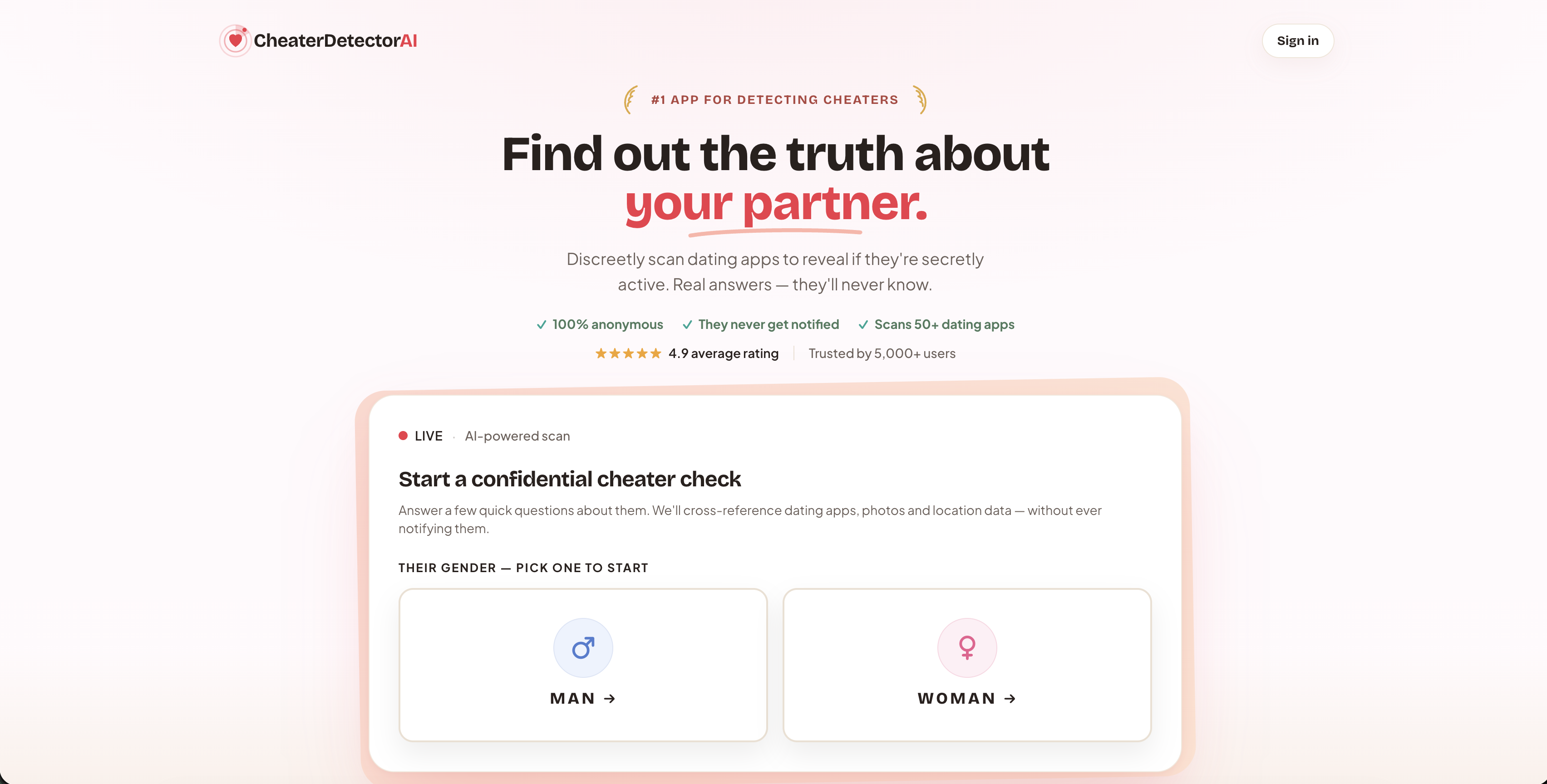
The report may come back with photo-verified matches and timestamps, so you’re not squinting at a blurry screenshot trying to decide if it’s really your partner. Such services aim to provide answers quickly and confidentially, helping users get clarity while maintaining privacy until they are ready to act. Order an anonymous scan through the Deep Person Scan for a deeper cross-platform check, or start with a focused Partner Check if you just need a fast, direct answer. Check their profile today and stop carrying this alone.
This article is general information, not professional advice for your specific situation.
Sources
- Digital Espionage in Matrimonial Cases: Drawing the Line Between Legitimate Self-help and Unlawful Interception of Electronic Communications
- Attorney General James secures $410,000 from tech companies illegally promoting spyware
- Admissibility of illegally obtained evidence in family law cases (American Bar Association)
- FTC: FTC takes action against stalking apps
FAQ
Can I get in trouble for looking through my spouse’s phone?
Yes, if you access it without permission, even if you’re married. Courts and family law resources treat unauthorized access the same regardless of marital status, and it can expose you to criminal and civil liability.
Can I get in trouble for using a spy app on my partner’s phone?
Yes. Regulators including the FTC have pursued both companies that sell spyware and people who use it against a partner without consent. Installing tracking software without permission can trigger criminal charges and civil lawsuits.
What’s a safe way to check if my partner is on a dating app?
Public name, username, and photo searches across apps like Tinder, Hinge, and Bumble are fine, and so are reverse-image searches. An anonymous scan service like Cheater Detector AI goes further by cross-referencing public profiles without needing any device access.
How much does Cheater Detector AI cost?
Current pricing for each scan type is listed directly on the Cheater Detector AI site. Options range from a focused Partner Check to a more thorough Deep Person Scan depending on how much detail you need.
Can evidence I find on my own be used in a divorce case?
Only if you got it the right way. Improperly obtained material, like messages read from a hacked account, is often ruled inadmissible and can hurt your credibility in front of a judge.