%20scale(1.05)%20translate(-12,-14.25)'%3e%3cpath%20d='M12%2021s-7.5-4.7-7.5-10.2A4.3%204.3%200%200%201%2012%207.5a4.3%204.3%200%200%201%207.5%203.3C19.5%2016.3%2012%2021%2012%2021Z'%20fill='%23F0384A'%3e%3c/path%3e%3c/g%3e%3c/svg%3e)

Swipebuster was a paid website that pulled Tinder’s publicly visible profile data and let you search for someone by name, age, and city. It charged around $4.99 per search and returned profile photos, orientation, and a last-seen snapshot. That’s it: No messages. No proof of anything. Just a profile that was already public.
If you’re reading this because something feels off with your partner, here’s what matters right now:
- Swipebuster is no longer the tool it was. The service has changed significantly since its 2016 launch.
- Spyware, phone trackers, and reading your partner’s messages are illegal. Installing any tracking app on someone’s phone without consent can get you prosecuted, even if they’re cheating.
- The legal way to check is a public-profile scan that doesn’t touch their phone.
Check their profile today before you do something that puts you at legal risk.
Pro Tip: Never install any app on your partner’s phone to monitor them. That crosses into illegal surveillance territory under U.S. federal law, regardless of your suspicions.

Search their name now with a legal, anonymous scan. Or get a discreet scan that checks across all major dating apps at once.

What was Swipebuster and how much did it cost?
Swipebuster launched in 2016 and drew media attention from outlets including CNBC, NBC News, Vanity Fair, and Business Insider. The premise was simple and provocative: pay a small fee, enter a few details about someone, and find out if they had a Tinder profile.
Here’s what the service actually offered at launch:
- Search by name, age, gender, and city to find a likely Tinder profile match.
- View profile photos and orientation pulled from publicly visible Tinder fields.
- See a last-seen or activity snapshot showing when the profile was last active.
- No messaging or interaction with the found profile was possible.
The service charged around $4.99 per search. You paid, you searched, you got a result. Whether that result meant anything was a different question entirely.
| What Swipebuster claimed | What it actually delivered |
|---|---|
| Find if your partner is on Tinder | A profile match based on public fields |
| Show recent activity | A snapshot timestamp, not live data |
| Expose cheating | A probable lead, not proof |
| Private, discreet search | A paid lookup of already-public data |
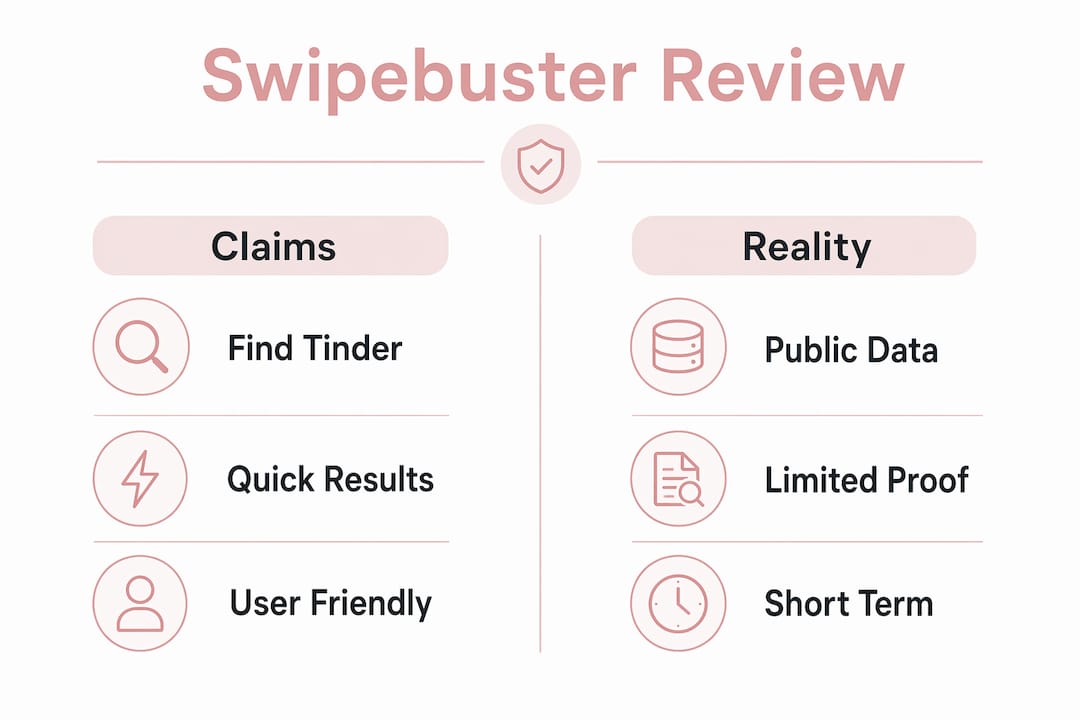
Vanity Fair described the service as a short-term project meant to highlight how much Tinder exposes publicly, and warned readers that results were not definitive evidence of anything.
Pro Tip: Tinder itself told reporters that the information Swipebuster surfaced was already public. Their advice? Download the free Tinder app and search directly rather than paying a third party.
How did Swipebuster actually match people on Tinder?
The matching process was straightforward, which is exactly why it had real limits. Swipebuster used Tinder’s publicly accessible profile data to run lookups against the inputs you provided.
Here’s what you had to enter:
- First name (as it appears on Tinder)
- Age (approximate)
- Gender
- City or location where you believed the person was active
The service matched those inputs to Tinder profiles visible through the app’s public fields. Journalists who examined how it worked noted that Tinder’s API exposed certain searchable profile details to third parties, though not all reporters agreed on how broadly accessible the data actually was.
What you could see: profile photos, listed orientation, and a timestamp of last activity. What you could not do: message the profile, see private photos, read conversations, or confirm the person’s real-world location at any given time.
Pro Tip: A match on a public-profile tool only tells you a profile exists. It does not tell you the person is actively using the app or meeting anyone. Those are two very different things.
For a current, legal way to look up Tinder profiles discreetly, the methods have improved significantly since 2016.
How reliable are results from tools like Swipebuster?
Not very, and here’s why that matters before you do anything drastic.
“A match returned by a public-profile scanner is only as reliable as the profile details matched — treat it as a probable lead, not conclusive proof.” — Vanity Fair
The core problem is that name, age, and city are weak identifiers. In any major U.S. city, there could be dozens of people named “Mike” who are 34 years old. A match on those fields alone proves nothing. Name and location matching is especially fragile among common names and in large metro areas.
Common sources of false positives:
- Shared names. Very common first names return multiple matches.
- Travel or relocation. Tinder profiles often reflect a last-known city, not a current one.
- Photo reuse. Someone might use the same photo across multiple accounts or platforms.
- Outdated profiles. A profile can sit dormant for months and still appear in results.
The “last seen” timestamp deserves special attention. Treat it as a snapshot, not a timeline. It shows when the profile data was last updated or when the app was opened, not what the person was doing or who they were with. Seeing a timestamp from last Tuesday does not mean your partner was on a date last Tuesday.
Before you say anything to your partner, run through this checklist:
- Cross-check the profile photo against their other social accounts.
- Look for mutual friends listed or tagged in public posts.
- Compare the bio details to things only your partner would write.
- Check whether the location matches somewhere they actually were.
- Look at multiple timestamps, not just one.
CNBC’s coverage made this point clearly: a visible profile is not the same as proof of real-world behavior at a specific time.
What privacy and legal risks did experts warn about?
Tinder’s official response to Swipebuster was measured. A Tinder spokesperson told NBC News that the searchable information is public information that Tinder users have on their profiles, and suggested people use the free app directly.
“Making public data searchable changes how people can be found — and that change can expose them to real harm, regardless of whether the data was technically public to begin with.” — NBC News
That defense misses something important. Privacy and safety experts warned that aggregating public dating-app data makes it far easier to locate, track, or intimidate people. The original data being “public” doesn’t remove the harm when a third party packages it into a searchable tool.
The bigger legal risk, though, is on your end. If you go beyond public-profile checks:
Spyware and tracking apps are illegal. Installing any monitoring software on your partner’s phone without their consent violates the federal Electronic Communications Privacy Act and similar state laws. You can be prosecuted. The fact that you suspect infidelity is not a legal defense.
Reading private messages is illegal. Accessing someone’s texts, DMs, or email without authorization is a federal crime under the Computer Fraud and Abuse Act. Courts have prosecuted spouses for this.
Hiring someone to physically follow your partner without their knowledge can cross into stalking statutes depending on your state.
The only safe path is checking publicly available profiles through a legal service. That’s it. Anything that touches their phone, their accounts, or their private communications puts you at legal risk.
What are the safe, legal steps to check if your partner is on Tinder?
You have real options that don’t put you in legal jeopardy. Here’s what to do, in order:
- Create your own Tinder account and search manually using your partner’s name, age, and city. It’s free and completely legal.
- Run a reverse image search on photos your partner uses publicly. If the same photo appears on a dating profile, that’s a concrete signal.
- Order a discreet, legal scan through a service that checks public profiles across multiple dating apps at once. No phone access required.
- Compare multiple identity signals before concluding anything. One match is a lead. Three consistent signals are closer to evidence.
- Talk to your partner if the evidence is strong enough. You don’t need a confession to make a decision about your relationship.
If you do find a match, verify it carefully:
- Does the profile photo match exactly, or just look similar?
- Does the bio contain details only your partner would know?
- Is the listed location consistent with where they’ve been?
On the conversation side, keep it calm and factual. Something like: “I’ve noticed some things that are making me worried. Can we talk about where we stand?” That opens the door without an accusation you can’t back up yet.
Pro Tip: Don’t confront your partner alone if you feel unsafe. Reach out to a trusted friend or counselor first. If you’re in a situation involving control or threats, contact the National Domestic Violence Hotline before taking any action.
For more practical steps, check if someone has Tinder using current, legal methods.
How CheaterDetectorAI works as a legal alternative
CheaterDetectorAI does what Swipebuster claimed to do, but legally, privately, and across far more platforms than Tinder alone.
Here’s the user flow, in plain terms:
- Enter your partner’s first name, approximate age, and location.
- Order a scan. No access to their phone is needed at any point.
- Receive an encrypted report with any matching profiles, photos, and activity timestamps.
- Optionally, set up monitoring alerts so you’re notified if a new profile appears.
Key privacy protections:
- Anonymous scanning. Your partner is never notified that a search was run.
- Encrypted reports. Results are delivered securely, not stored in a way that exposes you.
- No private-message access. The scan checks publicly visible profiles only.
- U.S. law–compliant. The service operates within legal boundaries by checking only what’s publicly available.
| Method | Legal | Private | Covers multiple apps | Requires phone access |
|---|---|---|---|---|
| DIY Tinder search | Yes | No | No | No |
| Spyware / tracker | No | No | Yes | Yes |
| CheaterDetectorAI | Yes | Yes | Yes | No |
The difference between CheaterDetectorAI and a DIY search is coverage and speed. Checking one app manually takes time and misses Bumble, Hinge, OkCupid, and others. A single scan covers them all.
Pro Tip: If you only have a photo and no name, CheaterDetectorAI’s reverse image dating search can match a photo against dating profiles across multiple apps.
Key Takeaways
Swipebuster surfaced public Tinder data for a fee, but a profile match is not proof of infidelity. The only safe path is a legal, public-profile scan.
| Point | Details |
|---|---|
| Swipebuster used public data | It pulled publicly visible Tinder profile fields, not private messages or location data. |
| Results were not definitive | False positives from shared names, travel, and photo reuse made matches unreliable. |
| Spyware is illegal | Installing trackers or reading private messages can get you prosecuted under federal law. |
| Verify before confronting | Cross-check photos, bios, social links, and timestamps before drawing conclusions. |
| CheaterDetectorAI is the legal option | Anonymous, encrypted scans across major dating apps with no phone access required. |
Why legal scans beat DIY snooping every time
The hardest part of suspecting infidelity isn’t finding out the truth. It’s acting on uncertain information and getting it wrong. Confronting your partner based on a name match from a public-profile tool, without corroborating evidence, can destroy a relationship that didn’t need to end. Or worse, it can escalate a situation that was already tense.
What I keep coming back to is the cost of bad data. A false positive from a tool like Swipebuster, acted on in anger, causes real damage. A legal scan that returns a clear, verified match gives you something you can actually stand behind.
The other thing people underestimate is their own legal exposure. Reaching for spyware feels like the obvious move when you’re scared and angry. But it’s the move that can turn you from the wronged partner into the defendant. That’s not a theoretical risk. U.S. prosecutors have pursued these cases.
A legal scan is slower than rage-installing a tracker. It’s also the only option that doesn’t put your own freedom at risk. If you’re at the point where you need to know, find out if your partner is on dating apps the right way.
What CheaterDetectorAI offers worried partners right now
Peace of mind shouldn’t require breaking the law or invading someone’s privacy. CheaterDetectorAI gives you a clear answer, legally, without touching your partner’s phone.
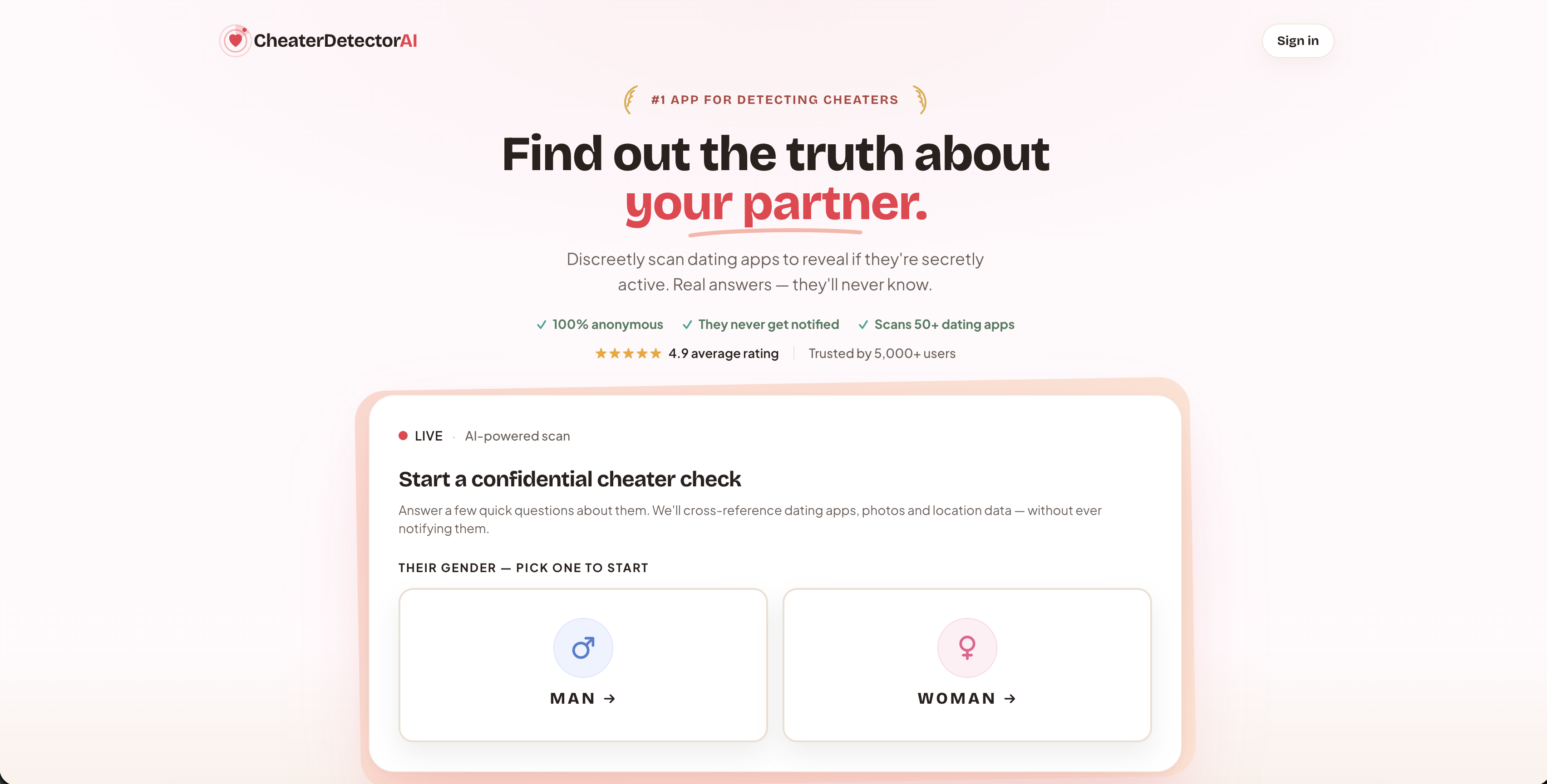
Enter a name, age, and location. The scan runs across major dating apps including Tinder, Bumble, Hinge, OkCupid, and Plenty of Fish. You get an encrypted report with any matching profiles, photos, and timestamps. If you want ongoing coverage, monitoring alerts notify you when new activity appears.
The deep person scan is the most thorough option, covering the widest range of platforms. For Tinder specifically, the Tinder profile search page explains exactly what the scan returns and how the privacy protections work.
Search their name now at CheaterDetectorAI and get your answer without putting yourself at legal risk.
Sources and further reading
Core reporting used in this article:
- CNBC: New app designed to ‘bust’ Tinder users
- NBC News: New App Designed to ‘Bust’ Tinder Users
- Business Insider: You Can Pay to Find Someone on Tinder
- Vanity Fair: Here’s How You Can Check If Your Partner Is Cheating on Tinder
- Mashable: For $5, you can find out if your S.O. is ‘cheating’ on Tinder
- Global News: Tinder users beware; website allows others to track your activity
U.S. safety and support resources:
- National Domestic Violence Hotline: 1-800-799-7233 (available 24/7)
- Crisis Text Line: Text HOME to 741741
- Electronic Privacy Information Center (EPIC): epic.org for digital privacy rights information
This article is general information, not legal advice. If you believe you are in a dangerous situation or need guidance on your specific circumstances, consult a qualified attorney or contact one of the resources above.
FAQ
What is the best app to check if someone is on Tinder?
CheaterDetectorAI is a legal, anonymous option that scans Tinder and other major dating apps using only publicly visible profile data, with no phone access required.
What did Swipebuster cost per search?
News reports at launch cited a fee of roughly $4.99 per search, which returned publicly visible Tinder profile data including photos and a last-seen timestamp.
Is Tinder still widely used in 2026?
Yes. Tinder remains one of the most downloaded dating apps in the United States, which is why checking for an active profile there is still a common concern for worried partners.
Can a Tinder profile match prove my partner is cheating?
No. A profile match shows a public profile exists, not that the person is actively meeting anyone. Always corroborate with multiple identity signals before drawing conclusions.
Is it legal to check if someone is on a dating app?
Checking publicly visible profiles is legal. Installing spyware, tracking apps, or accessing private messages without consent is not, and can result in federal prosecution under U.S. law.