%20scale(1.05)%20translate(-12,-14.25)'%3e%3cpath%20d='M12%2021s-7.5-4.7-7.5-10.2A4.3%204.3%200%200%201%2012%207.5a4.3%204.3%200%200%201%207.5%203.3C19.5%2016.3%2012%2021%2012%2021Z'%20fill='%23F0384A'%3e%3c/path%3e%3c/g%3e%3c/svg%3e)

Yes, someone can create more than one Tinder profile, even though Tinder’s own rules say not to. That’s the honest answer, and it’s probably not the one that gives you peace of mind. But before you panic, know this: spying on your partner’s phone to find out is illegal, and it could get you in serious trouble. There’s a legal, private way to check. Keep reading.
TL;DR:
- Multiple Tinder profiles can exist despite the platform’s rules, but finding one does not confirm current activity or cheating unless recent signals are present.
- Checking for recent activity such as last active timestamps or recent photo updates is more reliable than simply identifying old profiles.
- Legally, you can use reverse image searches, username lookups, app store histories, and billing records without touching your partner’s phone, but spyware is illegal and risky.
- Free search tools have limitations and often cannot detect hidden or incognito profiles or recent activity, making specialized privacy-focused scans more effective.
- Using stalkerware or secret software is illegal, exposes you to criminal charges, and can lead to privacy breaches, so legal, non-intrusive services are the safest options for investigation.
Can You Have Multiple Tinder Accounts?
Tinder’s community guidelines say one person, one account. But rules on paper and what actually happens are two different things. People make second profiles all the time, sometimes with a different name, a work email, or a spare phone number.
That gap between policy and practice is exactly where worry creeps in. Your partner could have a second Tinder account that Tinder never catches. Or he could have set one up months ago, used it twice, and forgotten about it entirely.
Here’s the part that matters most for you right now:
- Finding an old profile doesn’t prove anything is happening today.
- Tinder shows signals like “last active” and recently updated photos, and those tell you far more than the profile simply existing.
- A picture from three years ago with no recent activity is a very different story than a profile updated last week.
Don’t jump to conclusions from a name search alone. What you need is context: is the account alive, or is it a ghost from the past?
How Can You Legally Check If Someone Has a Second Tinder Account?
You have real options here, and none of them require touching your partner’s phone. Investigators use a fairly standard sequence to check for dating app activity without accessing private accounts, and you can borrow it.
- Run a reverse image search. Take a photo you know is your partner’s and search it. This works best when the photo is distinctive and reused elsewhere, but if he’s using brand-new selfies, the search may come up empty.
- Try a username search. If your partner uses the same handle across apps, a people-search tool might connect the dots. Use these responsibly and only with public information.
- Check app store purchase history. On an iPhone or shared Apple ID, look for “Not on This iPhone” downloads. On Android, check the Play Store library. Old downloads sometimes still show up here.
- Look at shared billing or subscriptions. If you share a bank account or family billing, an unfamiliar recurring charge can be a clue.
- Notice small signals. Notification previews that vanish too fast, strange ad targeting, or an unfamiliar Bluetooth device pairing with a phone can all be quiet hints.
Pro Tip: Keep a private log with dates and screenshots as you go. If things escalate later, having a timeline helps you and doesn’t require anything illegal to collect.
When Public Searches Aren’t Enough
Free tools have real limits, and you should know them before you spend hours down a search rabbit hole. Standard search engines and reverse-image tools can’t see inside dating apps the way they see a public Facebook page.
- Hidden or incognito profiles don’t show up in normal searches at all. Tinder and similar apps let people limit visibility, which makes them invisible to casual lookups.
- A profile existing somewhere is weaker evidence than fresh activity. “Last active” timestamps and updated photos tell you far more than a static, years-old listing.
- A burner phone or a secondary device leaves few obvious traces, but you might still notice odd charges, unfamiliar app icons synced across an iCloud account, or Bluetooth pairings you don’t recognize.
- Free cheater-search tools often check one platform, return outdated matches, or ask for a phone number and email upfront, which can put your own data at risk.
This is exactly where a lot of worried partners hit a wall. You’ve done the reverse-image search, checked the app store history, watched for weird notifications, and still don’t know for sure. That’s when a dedicated, privacy-first scan across multiple dating platforms starts to make sense, because it’s built to catch what a quick Google search can’t.
Why You Should Never Use Spyware to Check
Stalkerware is software installed secretly on someone’s phone to track their messages, location, or app activity. It almost always requires getting hold of the device, even briefly, and it is usually marketed under names like parental control or employee monitoring apps to dodge suspicion.
Using it on a partner without consent isn’t a gray area. It’s illegal in most places, and it can expose you to criminal charges, not just your partner. Evidence gathered this way often can’t even be used if things end up in a legal dispute.
Stalkerware has affected 53,870 mobile users identified as survivors in 2020 data, and 85% of domestic violence shelters report working with survivors whose abusers tracked their location. This isn’t a rare, fringe problem.
On top of the legal risk, these apps are often poorly built. Several commercial stalkerware products have been hacked and exposed, spilling private data, including yours, to strangers. The safer path is a device audit of your own phone for anything suspicious, paired with public-data searches, not secret software on someone else’s.
What To Do Next If You’re Worried
Your safety comes first, always. If you’re scared of how your partner might react to being questioned, talk to someone you trust or a local support line before you do anything else.
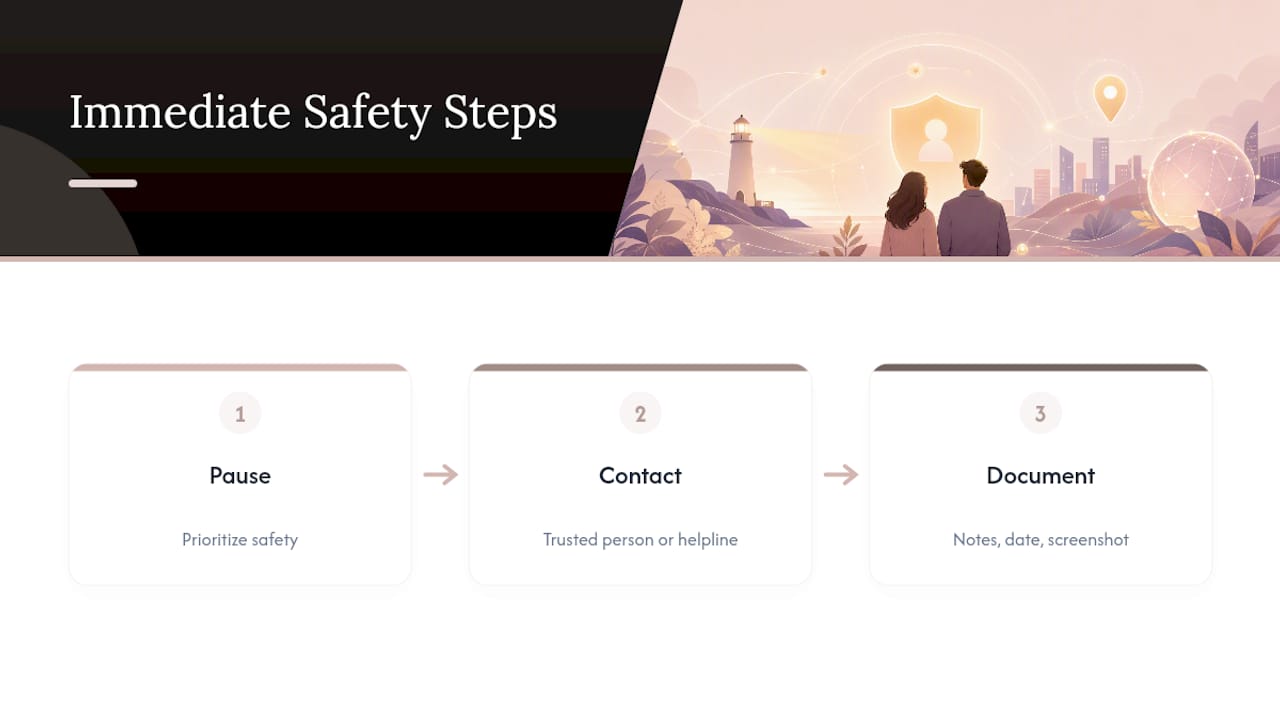
Write down what you find, and note the date. A screenshot of a public profile is fine. Installing anything on his phone is not, no matter how tempting it feels at 2 AM.
Once you have your notes together, you have a choice to make: run a legal scan to get clarity, or talk to a counselor or lawyer if the relationship is already at a breaking point. There’s no wrong order here, but skipping the legal check in favor of secretly grabbing his phone can turn your situation from painful into legally dangerous for you.
— Oleg
Get a Private, Legal Tinder Check With CheaterDetectorAI
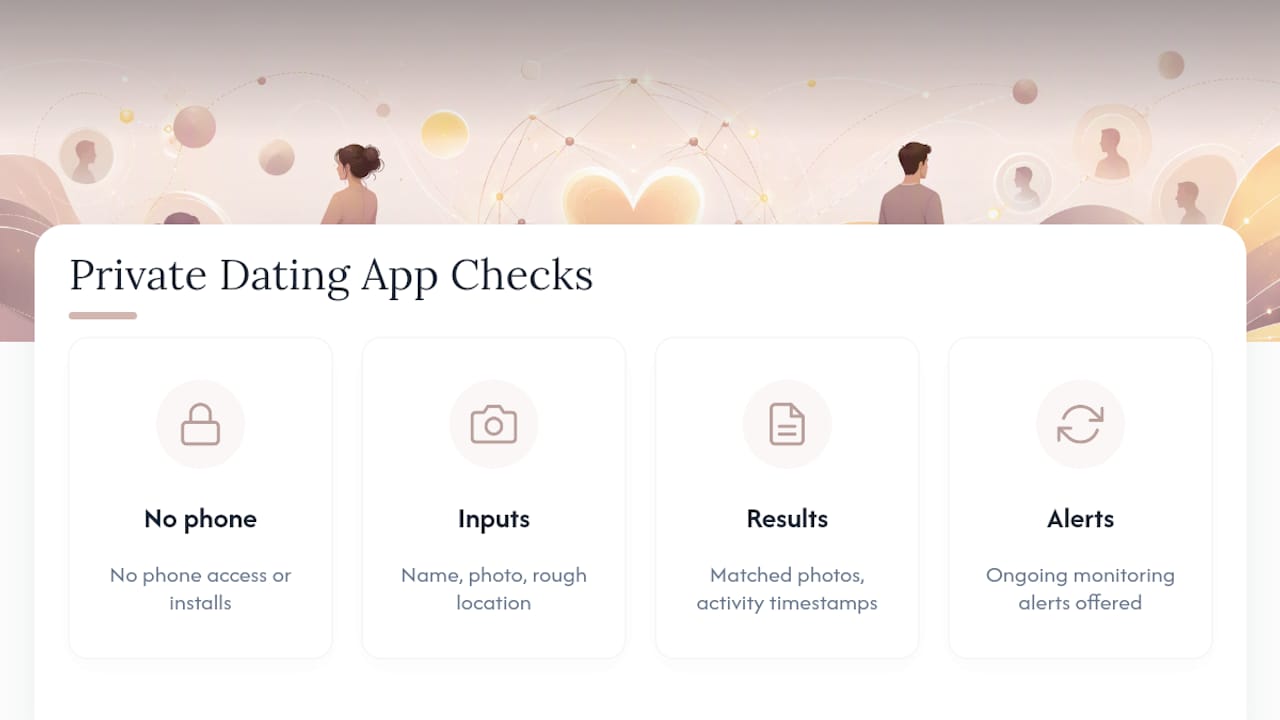
There are services that provide answers without the legal risk of spyware or the guesswork of a free reverse-image search. You provide minimal details, such as a name, a photo, and a rough location, and they scan public profiles across major dating apps for a match.
There’s no phone access, no installing anything, and nothing your partner will ever see. Scans may be encrypted and anonymous, with reports returning indicators such as matched photos and activity timestamps to help determine whether a profile looks active or dormant. Some services offer ongoing monitoring alerts to notify you if new activity appears.
Search their name now with a deep person scan and get real answers instead of another sleepless night guessing.
Check their profile today if you already have a photo. Our reverse image dating search can turn a single picture into a clear result.
Run a private scan through our anonymous dating app check and find out the truth about your partner without ever touching his phone.
Sources
- What to know about stalkerware · National Cybersecurity Alliance
- How to Find Out If My Partner Is on Dating Sites: A Professional Investigative Guide
- Hacked, leaked, exposed: Why you should never use stalkerware apps | TechCrunch
- What are the worst spyware apps — and how do you spot them? | Proton
- Legal and Ethical Ways to Find Someone’s Dating Profiles (2026 Guide) · Identity Search Academy
FAQ
Is It Legal to Have Two Tinder Accounts?
Tinder’s own rules discourage it, but it isn’t a crime for your partner to run two profiles. What’s illegal is you using spyware or accessing his phone without permission to find them.
Can You Use Multiple Tinder Profiles at Once Without Getting Caught?
Yes, and Tinder doesn’t always catch duplicate accounts, especially when different emails or phone numbers are used to set them up. That’s exactly why finding one requires a proper check, not a quick guess.
Does Finding an Old Profile Mean My Partner Is Cheating?
Not necessarily. A profile can sit dormant for years with no recent activity, so checking for a recent “last active” status or newly updated photos matters more than the profile simply existing.
What Does CheaterDetectorAI Actually Check?
CheaterDetectorAI scans public profiles across major dating apps using minimal details you provide, like a name or photo, and returns an encrypted report with any matches, photos, and activity timestamps.
Is Using a Reverse Image Search Enough to Confirm a Hidden Profile?
It can help if your partner reuses distinctive photos, but it often misses hidden or incognito profiles and won’t catch a brand new picture. A dedicated scan across multiple platforms covers more ground.