%20scale(1.05)%20translate(-12,-14.25)'%3e%3cpath%20d='M12%2021s-7.5-4.7-7.5-10.2A4.3%204.3%200%200%201%2012%207.5a4.3%204.3%200%200%201%207.5%203.3C19.5%2016.3%2012%2021%2012%2021Z'%20fill='%23F0384A'%3e%3c/path%3e%3c/g%3e%3c/svg%3e)
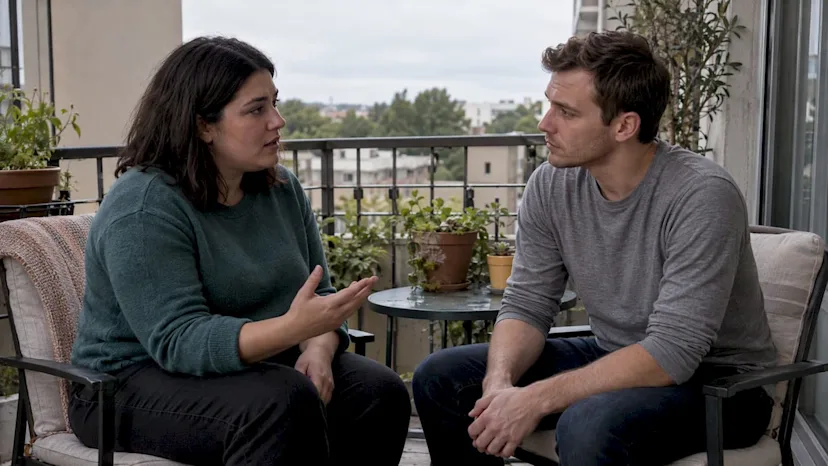
Yes, making or keeping a dating profile can be cheating when it breaks a promise you made to each other, involves hiding it, or includes active searching and messaging. An old, forgotten account is usually not the same thing as a profile your partner is actively swiping on right now. If something feels off, don’t sit with the doubt. Check their profile today and get real answers instead of guesses.
TL;DR:
- An old, unused account differs from recent activity; check its last active date, matches, ongoing conversations, hidden contact, or plans to meet.
- A 2022 survey found 73% consider an intense emotional attachment cheating, while 83% say suggestive online messages qualify; shared boundaries still take precedence.
- Before talking, record dates, screenshots, and app names, then check for recent activity and avoid accusing your partner publicly or over text.
- When outside contact is confirmed, end it before trying to repair trust; first contain the harm, understand what happened, and then decide what comes next.
What therapists and research say about what counts as cheating
There’s no single rulebook for cheating, and that’s part of what makes this so confusing. Psychologist Galena Rhoades told the American Psychological Association that infidelity doesn’t have one fixed definition. The real test is simpler and harder at the same time: did your partner feel betrayed, and were the expectations you both agreed on broken?
Clinicians who treat couples after a betrayal tend to focus on a few things:
- Whether the behavior was kept secret from you on purpose.
- Whether your partner kept talking to someone outside the relationship after you found out.
- Whether your agreed-upon boundaries, spoken or unspoken, were crossed.
This isn’t just theory. A 2023 study in Current Psychology looked at 338 people in exclusive, long-term relationships and found that paying attention to other potential partners was tied to higher rates of online-infidelity behavior. That doesn’t prove a specific partner is physically cheating, but it does support what a lot of worried partners already sense: when someone starts noticing who else is out there, the behavior that follows often matters more than the app itself — for those seeking deeper guidance, consider exploring Alternatives to Dating Apps in Austin to build relationship skills beyond the apps.
Nearly three out of four adults (73%) consider forming an intense emotional attachment with someone else to be cheating, according to a 2022 YouGov survey cited by the APA. That number alone tells you something: you don’t need physical contact for this to count.
When a dating profile is usually seen as cheating
Here’s the practical line counselors draw, and it’s worth sitting with. A profile your partner made years ago and never logged into again is different from a profile he or she opened last month and has been swiping on since. Age of the account matters less than what’s happening on it right now.
Secrecy is often the bigger wound. Deleting the app icon from a phone doesn’t delete the account behind it, and a partner who hides an account rather than closing it is making a choice. The date of last activity tells you more than whether the app is still visible on the home screen.
Watch for these signals:
- Active matches or ongoing conversations with other people.
- Messages that are flirty, suggestive, or sexual in nature.
- Repeated contact your partner has gone out of the way to hide.
- Plans to meet someone from the app in person.
Pro Tip: If you spot something, write down the date, time, and what you saw before you say anything. Memory fades fast, and you’ll want details later.
How common people judge these actions, and what it means for you
You’re not overreacting. Survey after survey shows most people draw firm lines around dating-app behavior. A 2026 survey found that 37% of people consider keeping a dating-app profile active for attention or validation to be unfaithful, 41% consider an ongoing flirtatious text exchange unfaithful, and 36% consider deleting messages to hide them from a partner unfaithful.

Eighty-three percent of adults consider sending suggestive messages online to be cheating, according to the 2022 YouGov data referenced by the APA, and 80% consider lying about time spent with another person to be cheating too.
A few things worth knowing about these numbers:
- Opinions shift some by gender and relationship status, so your partner may genuinely see it differently than you do.
- Majority opinion doesn’t set the rules for your relationship. What you two agreed to matters more than what a survey says.
- The discomfort you’re feeling right now is a legitimate signal, not a flaw in your judgment.
If you suspect a partner has a profile: what to do next
Your instinct might be to confront right away. Slow down first. A calm, fact-based approach protects you and gives you a clearer picture.
- Write down exactly what you saw, including dates, screenshots, and app names.
- Check for signs of recent activity rather than just the presence of an old account.
- Avoid accusing your partner in public, over text, or in front of family.
- If outside contact is confirmed, that contact needs to stop before any real healing conversation can happen.
- Decide whether you want to talk it through together or bring in outside help first.
The APA describes a similar sequence for couples working through betrayal: contain the immediate damage, end any outside contact, understand what actually happened, then decide together what comes next. That order matters. Jumping straight to a confrontation before you have facts often makes things messier, not clearer.
Pro Tip: Pick a private, neutral time to talk, not right before bed and not in front of other people. A calm setting gets you a more honest conversation.
If you want clarity before that conversation even starts, a private verification step can save you from accusing your partner based on a hunch. Our guide on how to find out if your partner is on dating apps walks through the signals worth checking first.
Publisher perspective: how we see hidden profiles and trust
We hear from a lot of people who feel sick to their stomach over a screenshot or a half-glimpsed notification. That reaction makes sense. Secrecy usually hurts more than the specific act does, because it tells you your partner chose to hide something from you on purpose.
We think intent and concealment matter more than whether an account is old or new. A forgotten profile from years ago is a different problem than an active one your partner never mentioned. Before you confront anyone, gather the facts calmly. You deserve clarity, not just a feeling.
— Matt
If you want a private check: a discreet option to verify profile activity
We built CheaterDetectorAI for exactly this moment, when you need facts before you have a conversation you can’t take back. Our Partner Check is one option to consider if you want to look for a dating profile. Review the service details before deciding whether to use it.
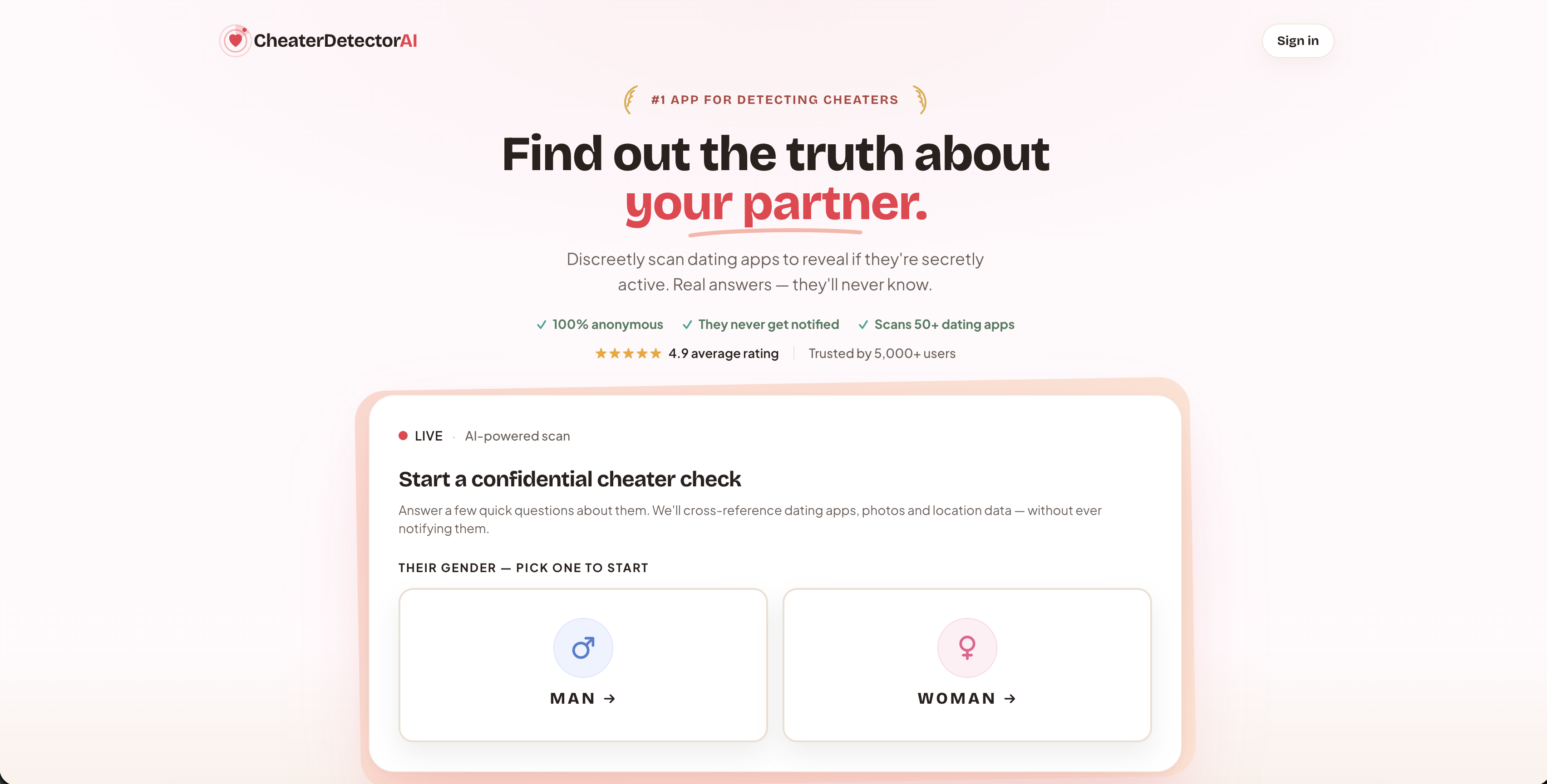
We also offer searches for Tinder, Bumble, and dating profiles by image. Check each service’s details to understand what its results can show.
Stop guessing and start checking. Search their name now, run a Partner Check today, or get your private scan started before you say a single word to your partner.
FAQ
How to tell if you are talking to a scammer on a dating site?
If someone you meet online avoids ways to verify who they are, pressures you to move the conversation elsewhere, or asks for money, be cautious. Inconsistent stories may also be a reason to pause and verify what they tell you. If any of these show up, stop sending information and verify who you’re actually talking to.
What is the 80/20 rule in infidelity?
The so-called rule is a relationship idea suggesting that someone may look outside the relationship when they feel emotionally or physically unfulfilled at home. It isn’t a clinical finding from the sources here, so treat it as a common talking point rather than an established explanation or statistic.
Is going on dating websites cheating?
It depends on what you and your partner agreed to and what the activity actually involves. Researchers and clinicians point to secrecy, active messaging, and broken agreements as the deciding factors, not simply having an account. A 2022 YouGov survey found 83% of adults consider suggestive online messages cheating.
Is it shameful to be on dating apps?
Being single and using dating apps isn’t shameful on its own. The concern only applies when someone in a committed, exclusive relationship keeps a profile active and hides it from their partner, since that secrecy is what tends to cause the real hurt.