%20scale(1.05)%20translate(-12,-14.25)'%3e%3cpath%20d='M12%2021s-7.5-4.7-7.5-10.2A4.3%204.3%200%200%201%2012%207.5a4.3%204.3%200%200%201%207.5%203.3C19.5%2016.3%2012%2021%2012%2021Z'%20fill='%23F0384A'%3e%3c/path%3e%3c/g%3e%3c/svg%3e)
Most dating apps do not tell someone when you look at their profile. But some apps sell a “who viewed me” feature to paying members, and small details like “last active” times or profile changes can quietly give you away. The good news: you have a legal way to check if your partner is active without touching their phone. Keep reading to see exactly what apps show, what they hide, and what’s safe to do next.
TL;DR:
- Most dating apps do not notify users when their profiles are viewed during casual browsing, but paid “who viewed me” features can reveal your activity if enabled.
- Metadata like last active times, location shifts, and profile updates can inadvertently disclose activity without direct notifications, especially if scrutinized closely.
- Installing spyware or tracking apps on a partner’s device is illegal in most jurisdictions and risks criminal charges and civil lawsuits, with evidence often being inadmissible.
- Legal, anonymous profile scans using public information can verify activity or matches without touching private messages or devices, providing verifiable timestamps and photo matches.
- Guessing based on subtle clues is unreliable; instead, use lawful methods like public profile checks or encrypted scans to get concrete evidence of activity.
Do Dating Apps Notify Someone When You Search or View Their Profile?
For most everyday browsing, no. Tinder, Bumble, Hinge, OkCupid, and Plenty of Fish do not ping someone just because you swiped past their photo or tapped into their profile. Your worry that one search will “tip off” your partner and blow your cover is, in most cases, not how these apps work.
But here’s where it gets tricky. A handful of apps sell a premium “views” or “who viewed me” feature. If your partner has that turned on, and if you’re using the same app under an account they could somehow trace, things get riskier. That’s the nuance you need to understand before you go poking around on your own.
There’s a second wrinkle too. Apps don’t send you a notification, but they do leave small digital footprints, like an updated “last active” time or a location that suddenly shifts. Those aren’t alerts. They’re clues. And clues can be misread just as easily as they can be read correctly.

Who Viewed Me Features: What They Actually Show
Passive browsing on most dating apps is private. You can scroll through profiles all day, and the person on the other end has no idea you were there. This is the default setting across the biggest platforms, and it’s the main reason worried partners feel like they’re flying blind.
Some apps offer a paid feature often called “Viewed Me” or “Who Viewed Me.” This is a subscription perk listed openly in their official feature pages and privacy settings. It’s a marketed upgrade.
Here’s what that feature category typically includes:
- A list of accounts that recently viewed the subscriber’s profile
- Sometimes a blurred preview until the person upgrades to see full details
- Access tied directly to a paid tier, not the free version of the app
The catch that trips people up: both people usually need the feature active for it to matter in a two-way sense. If your partner pays for “Who Viewed Me” but you’re not using an account with that feature, your browsing likely stays invisible to them anyway. The reverse can also be true, which is exactly why guessing is such a dangerous game.
Hidden Clues: Last Active, Distance, and Profile Changes
Metadata leaks sound technical, but the idea is simple: it’s the small background information an app shows without meaning to reveal anything specific. Think of it as the app accidentally leaving footprints in the snow while insisting it never opened the door.
A few common examples:
- A “last active” timestamp that jumps every time your partner opens the app
- A distance reading that shifts because your partner traveled somewhere unexpected
- A profile photo, bio, or job title that suddenly changes overnight
None of these are official view alerts. They’re side effects of how the app displays activity. Academic security research on location-based dating apps found that background data like last-active status and distance updates can be pieced together by a determined observer, even when the app never intends to broadcast that information. That’s a real privacy gap, and it’s worth knowing it exists even if you never plan to exploit it.
Pro Tip: If you’re worried about your own activity being read the wrong way, keep your location setting general instead of precise, and avoid updating your profile photo or bio during a tense period in the relationship. Small edits are exactly the kind of thing a suspicious partner notices first.
Why Spyware and Tracking Apps Can Get You Prosecuted
Installing a tracking app on your partner’s phone, reading their private messages, or secretly mirroring their screen isn’t a gray area. In most states, it’s a crime. Federal and state wiretapping and computer fraud laws treat unauthorized access to someone else’s device or accounts as a serious offense, not a relationship shortcut.
Security researchers have connected this kind of tracker use directly to stalking behavior and unauthorized data access, the same legal territory prosecutors take seriously. That research lines up with a hard truth: you can go from “worried partner” to “criminal defendant” faster than you’d think.
Here’s what you’re risking if you install spyware or dig through someone’s messages without permission:
- Criminal charges for unauthorized computer or device access
- Civil lawsuits from your partner, even if you’re the one who was cheated on
- Evidence from an illegal search often gets thrown out anyway, so you gain nothing legally
Even one person’s silence about doing this doesn’t make it safe. If it involves their device, their password, or their private messages without permission, step away from it entirely.
Safe Ways to Check If Your Partner Is Still Active
You don’t need to break any laws to get real answers. A few legal options exist, and each one tells you something slightly different.
- Public profile checks. Searching a name or username on a dating app’s public-facing pages can confirm an account exists, though it won’t always confirm it’s actively being used.
- Reverse-image search. Uploading a known photo of your partner can surface matching profiles across platforms, which is one of the more reliable do-it-yourself checks.
- The app’s own paid features. If you already subscribe to a “who viewed me” tool, it may show you activity, but only within that single app.
Each of these has real limits. None of them can see private messages, and none can prove identity with total certainty on their own.
This is where a legal scan does more of the heavy lifting. CheaterDetectorAI scans public dating profiles anonymously and returns an encrypted report with photo-verified matches and activity timestamps, all without ever touching your partner’s phone.
A lawful scan works only with public profile information and photo matching. It can hand you a verified match and a timestamp, but it can’t pull private messages or anything stored on someone’s device.
What I’d Do In Your Shoes
Your worry is valid. Not knowing is its own kind of exhausting, and guessing games with “last active” times will wear you down faster than facts ever will. Skip the spyware, skip the phone-checking, and don’t risk your own legal standing over a hunch.
Document what’s making you suspicious, then run a legal scan before you say a word. Confront or decide only after you have real evidence in hand, not a screenshot of a distance update that might mean nothing.
— Oleg
Get a Legal, Anonymous Scan Instead of Guessing
You don’t need to hack, snoop, or install anything to find the truth. Certain services check publicly available profiles across popular dating platforms, without touching your partner’s phone, and without breaking any laws.
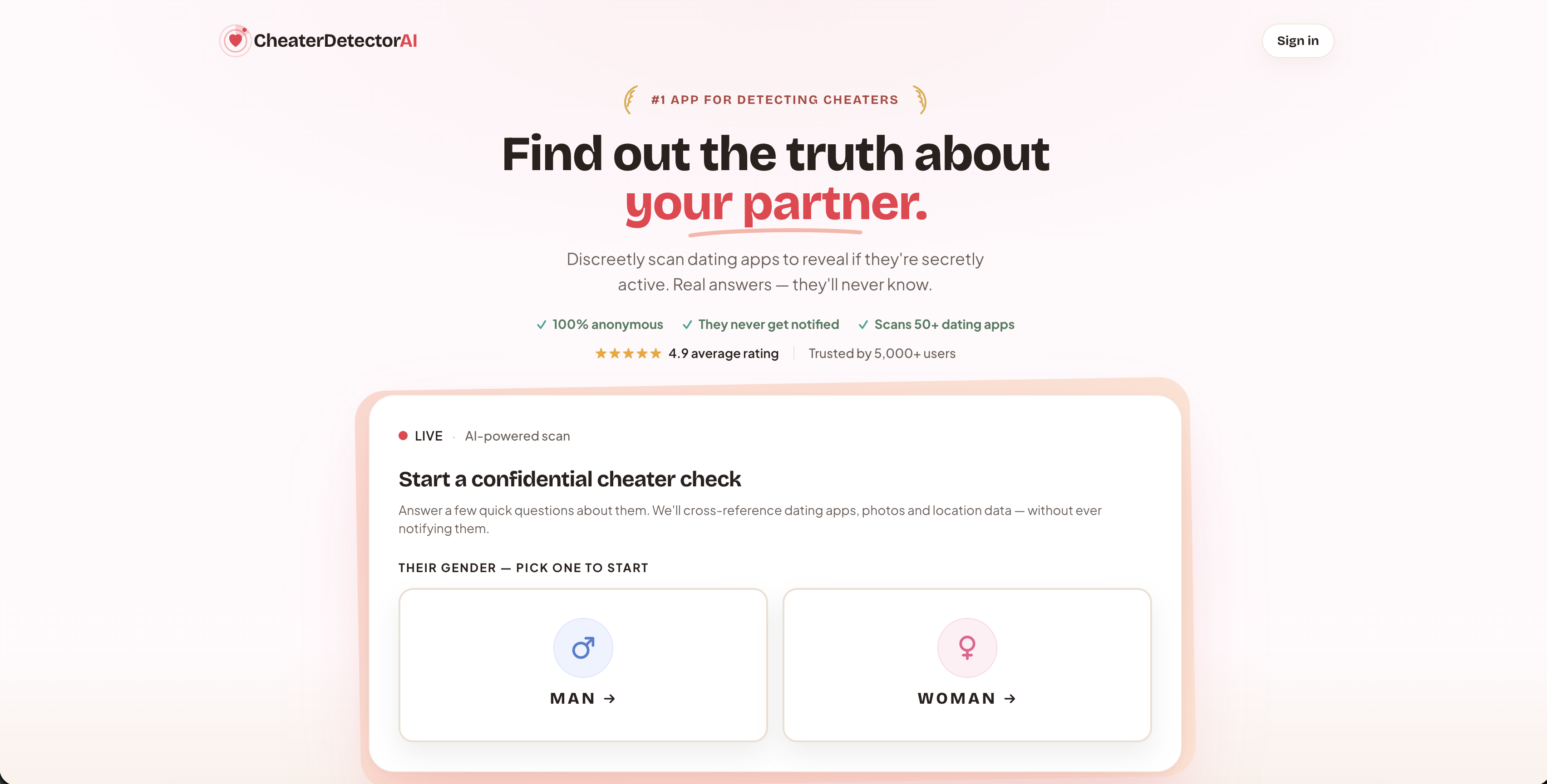
Every scan is anonymous and encrypted, so your partner never finds out you looked. You get a report built from photo-verified matches and activity timestamps, the same kind of evidence that private-investigator work relies on, minus the price tag and the wait.
Search their name now with a Deep Person Scan for a full, detailed report. Suspect one specific app? Run a focused Tinder Profile Search or check their profile today with a Partner Check. Already have a photo saved? Start a reverse-image dating search and get matches fast. Stop staring at “last active” timestamps trying to decode them. Get the real answer instead.
Sources and Further Reading
- USENIX security research on location-based dating apps documents how metadata like last-active status can be pieced together.
- CheaterDetectorAI’s guide on snooping legality explains the criminal risk of spyware and unauthorized tracking.
FAQ
Can someone see if you search them on Tinder?
No, Tinder does not notify someone when you simply view or search for their profile through normal browsing. Certain premium features on other apps can show viewers to paying subscribers, but that’s tied to a subscription tier, not standard search activity.
Can I view dating profiles without signing up?
Some apps let you see limited public profile information without a full account, but most require at least a basic sign-up to browse. A reverse-image search on a known photo is often a faster way to confirm if someone has a public profile.
Does Tinder tell you if someone looks at your profile?
Tinder does not send a direct notification for a simple profile view. Some apps offer a paid “who viewed me” style feature, but it typically only works if both accounts are using that same premium tool.
Can someone find out if you’re on a dating app?
Yes, in a few indirect ways: someone might recognize your photo through a reverse-image search, spot metadata clues like activity timestamps, or run a legal scan like the one CheaterDetectorAI offers using only public profile information.