%20scale(1.05)%20translate(-12,-14.25)'%3e%3cpath%20d='M12%2021s-7.5-4.7-7.5-10.2A4.3%204.3%200%200%201%2012%207.5a4.3%204.3%200%200%201%207.5%203.3C19.5%2016.3%2012%2021%2012%2021Z'%20fill='%23F0384A'%3e%3c/path%3e%3c/g%3e%3c/svg%3e)

Checking your partner’s publicly visible dating-app profiles through an anonymous, encrypted scan service is generally legal in the United States, as long as you never touch their phone, log into their accounts, or read their private messages. That line matters. Cross it, and you could face criminal charges under federal law.
Three anchors hold this answer up: the Fourth Amendment (which governs government searches, not private ones), FTC privacy guidance on how compliant services should handle your data, and services like CheaterDetectorAI that run encrypted scans of public profiles only.
What you can do right now:
- Run an anonymous scan of public dating profiles (no phone access needed)
- Preserve any screenshots you find as evidence
- Never install spyware, tracking apps, or read private messages — those are illegal
Search their name now and get your answer fast.
Key Takeaways
Checking publicly visible dating-app profiles through an anonymous, encrypted scan service is generally legal in the U.S. when you never access a device, account, or private messages.
| Point | Details |
|---|---|
| Public scans are legal | Anonymous checks of publicly visible profiles do not violate U.S. law when no device or account is accessed. |
| Device access is illegal | Installing spyware, reading messages, or using a partner’s credentials can result in federal criminal charges. |
| CFAA gates-up rule | If a profile is publicly visible (gate is up), checking it is lawful; bypassing a login wall is a federal crime. |
| Preserve evidence carefully | Screenshot the profile URL and full page with a visible timestamp immediately after finding a match. |
| CheaterDetectorAI sticks to public data | Encrypted, anonymous scans of public profiles across major dating apps — no phone access. |
What counts as snooping in this article?
Not all snooping is the same. This article covers one specific activity: using an anonymous, encrypted service to check whether your partner has a publicly visible profile on major dating apps. That is it.
Allowed under this article’s scope:
- Anonymous scans of public-facing dating profiles (no login required)
- Reverse image searches using publicly available photos
- Checking a profile URL that is already indexed and visible to anyone
Not allowed and potentially illegal:
- Logging into your partner’s accounts using their credentials
- Installing spyware, keyloggers, or GPS trackers on their phone
- Reading private messages, even if you know the password
- Accessing any account by bypassing a password or security gate
If a minor could be involved in your search, stop immediately. Federal law under COPPA strictly limits how personal information about children may be collected or disclosed online. Contact authorities instead of searching.
Is snooping on public profiles actually legal in the U.S.?
Yes, with clear limits. Here is why.
The Fourth Amendment protects you from government searches without a warrant. It does not stop a private person from looking at information that is already publicly visible. When your partner creates a dating profile and leaves it public, that profile has no reasonable expectation of privacy — the same legal concept the Supreme Court outlined in Katz v. United States.
Private messages and geolocation data are treated differently. Courts have recognized that intimate app data and precise location tracking carry stronger privacy protections, which is exactly why reading messages or installing a tracker crosses into illegal territory even for private individuals.
The Computer Fraud and Abuse Act (CFAA) is the federal law most relevant here. OSINT legal experts summarize the rule simply: if the gate is up (the profile is public), accessing it is generally lawful. If the gate is down (a password or login wall blocks access), bypassing it is a federal crime. Courts applied this reasoning in hiQ Labs v. LinkedIn and Van Buren v. United States — public scraping is not “unauthorized access,” but using stolen credentials is.
Two more limits to know. First, state anti-stalking and harassment laws apply regardless of what you find. Finding a profile does not give you the right to confront, follow, or harass your partner. Second, the FCRA restricts using collected data for employment, credit, or housing decisions — not relevant here, but worth knowing if you ever share a report with a third party.
How to check your partner’s dating-app activity safely
Follow these steps in order. Do not skip the warnings.
- Decide you will only check public data. Commit to this before you start. No passwords, no phone access, no account logins.
- Try a basic name search on Google while logged out of all accounts. Some dating profiles are publicly indexed. Check if someone has a Tinder profile this way first.
- Run a reverse image search using a photo of your partner. CheaterDetectorAI’s reverse image dating search checks public dating profiles specifically, not just general web results.
- Use a compliant scan service. Provide only minimal information: a name, age range, and location. A legitimate service never asks for your partner’s phone, password, or account credentials.
- Save screenshots immediately if you find a profile. Note the URL, timestamp, and platform. Store copies in a secure, private folder.
- Do not confront aggressively or harass. If you find evidence, consider a calm conversation, couples counseling, or a consultation with a family law attorney before acting.
Pro Tip: Screenshot the profile URL and the page itself separately. A URL alone can disappear if the profile is deleted. A full-page screenshot with a visible timestamp is far stronger evidence if you ever need it.
Pro Tip: Some dating apps make profiles public by default. The EFF has noted that platforms differ widely in default visibility settings — which is exactly why a scan service that checks across multiple apps at once saves you hours of manual searching.
Never use any tool that reads messages, uses stolen credentials, or installs surveillance software. The moment you bypass an access gate, you are no longer doing research; you are in federal crime territory.
What does a scan service actually report?
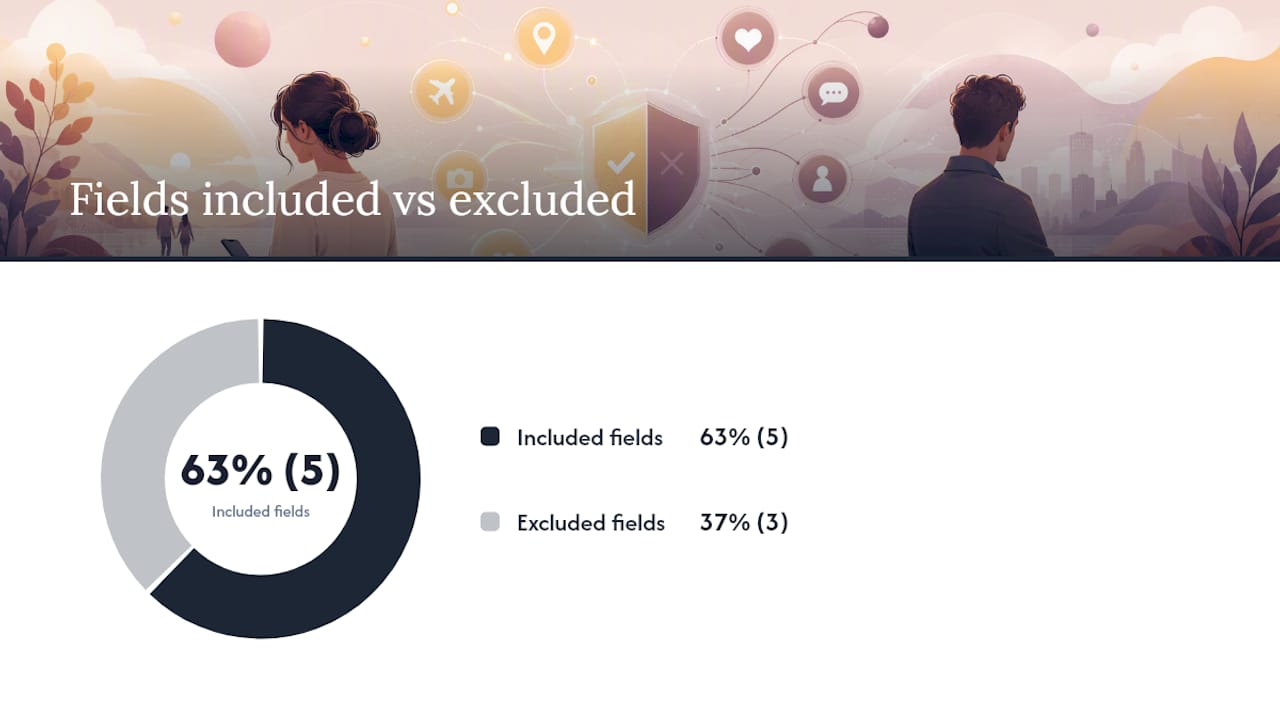
A compliant service checks only what is publicly visible and returns a limited, specific set of fields. Here is what a trustworthy report includes and what it never contains.
| Report field | Included in a public-profile scan | Why |
|---|---|---|
| Profile display name | Yes | Publicly visible on the platform |
| Profile photo(s) | Yes | Publicly indexed or visible without login |
| Platform name | Yes | Identifies which app the profile appears on |
| Public activity timestamp | Yes | Shown publicly on some platforms |
| Public profile URL | Yes (when available) | Accessible without authentication |
| Private messages | Never | Stored communications — legally protected |
| Device location or GPS data | Never | Requires device access — illegal |
| Account login history | Never | Private server data — not publicly accessible |
A compliant service also protects your data. Look for encrypted query delivery, anonymous scanning (the partner is never notified), no requests for your partner’s phone or password, a clear data-retention policy, and published terms of service. The FTC’s privacy and security guidance sets the standard for what responsible data handling looks like — use it as your benchmark when reading a vendor’s privacy policy.
One honest limitation: a profile match is not proof of active cheating. Common names, old accounts, and duplicate profiles can produce false positives. Treat a report as a starting point for a conversation, not a verdict.
How to spot a trustworthy scan service vs. a scam
Green lights — signs a service is legitimate:
- Published privacy policy with clear data-retention limits
- Explicit “no phone access required” statement
- Encrypted report delivery
- Transparent list of which platforms it scans
- Clear refund or satisfaction policy
- No promises of private messages or device logs
Red flags — walk away immediately if you see these:
- Asks for your partner’s phone password or login credentials
- Claims it can read private messages or texts
- Offers to install software on a device
- Vague or missing terms of service
- Guarantees a result regardless of whether a profile exists
- No privacy policy at all
Pro Tip: Before paying, paste the service’s privacy policy URL into a search engine. If it returns no results or the page was created recently with no history, treat that as a serious warning sign.
How dating apps surface profile information to strangers varies by platform design. A trustworthy scan service accounts for those differences rather than promising uniform results across every app.
Cheater Detector AI gives you the answer you need
You want to know the truth, and you want to get it the right way.
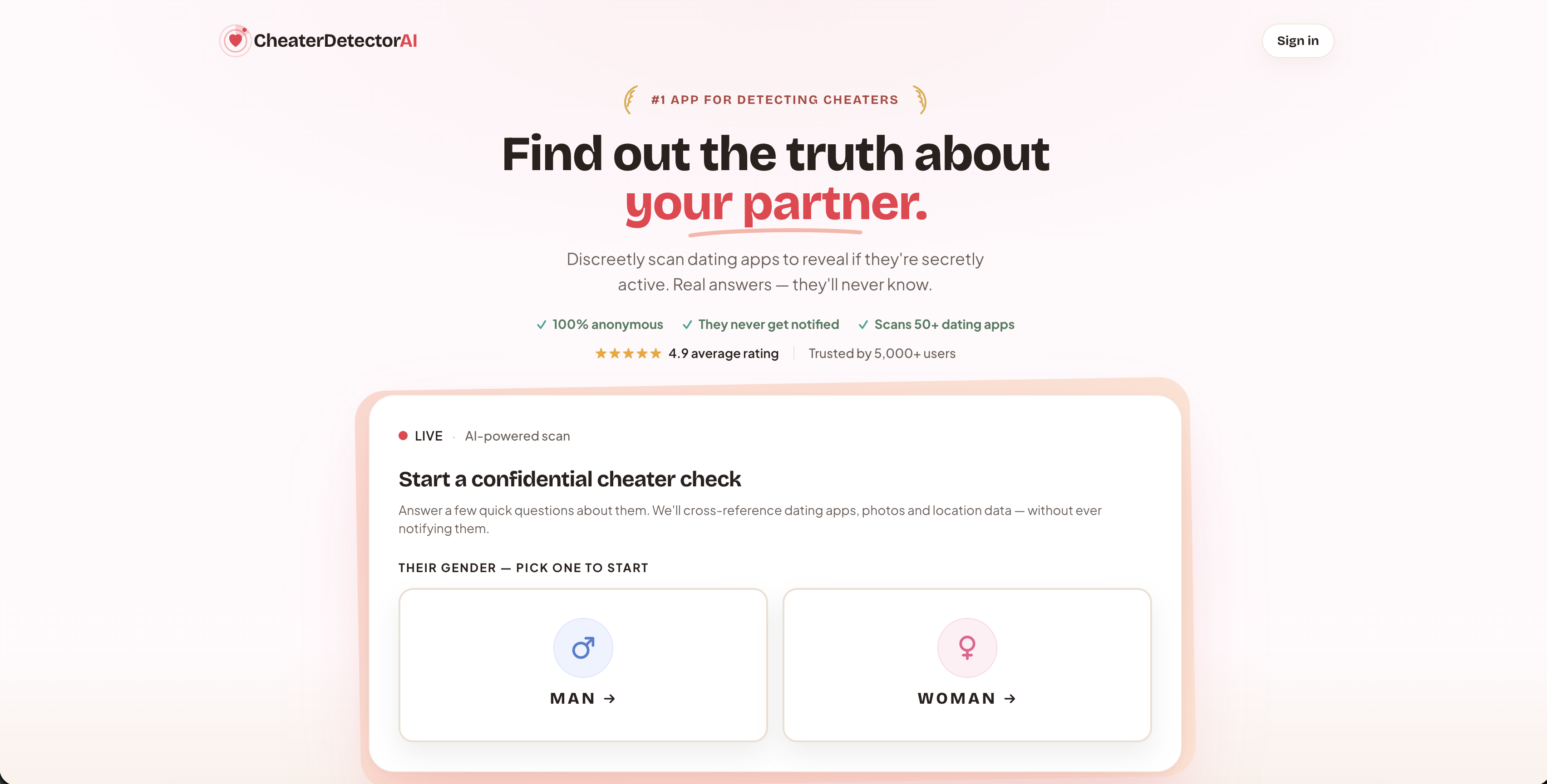
CheaterDetectorAI runs encrypted, anonymous scans of publicly visible profiles across all major dating platforms. No phone access. No passwords. No private messages. You provide a name and basic details; the service does the rest and delivers a report with profile photos, platform names, and public activity timestamps.
CheaterDetectorAI is a service used by many people and has received predominantly positive user ratings. Every scan is anonymous — your partner is never notified.
Search their name now and see what comes back in minutes.
If you want to go deeper, the dating app tracker guide walks through exactly what the report shows and how to read it. Or go straight to the scan: check their profile today and get a clear answer without touching their phone.
Why I recommend starting with a privacy-first scan
The hardest part of suspecting a partner is not knowing. That uncertainty costs you sleep, focus, and peace of mind. An anonymous scan of public profiles gives you a factual starting point — something real to work with, whether the result is reassuring or not. If you find a profile, preserve the evidence and get professional advice before making any major decisions. If you find nothing, that matters too. Either way, you deserve a clear answer, and you deserve to get it the right way.
Start with what is public. Check their profile today — then decide your next step from a position of knowledge, not fear.
Sources
These are the core sources cited in this article, provided for further reading.
This article is general information, not a substitute for advice from a qualified lawyer. Consult a qualified legal professional about your own circumstances before acting on anything here.
FAQ
Is it illegal to check your partner’s phone without permission?
Yes, in most cases. Accessing someone’s phone, reading their private messages, or logging into their accounts without consent can violate the federal Stored Communications Act and state computer-access laws, even in a relationship.
Is snooping on public dating profiles illegal?
No. Checking a publicly visible dating profile through an anonymous scan service is generally lawful in the U.S. under the CFAA’s gates-up principle, as long as you do not bypass any login or access control.
Can you get in trouble for using spyware on a partner’s phone?
Yes. Installing spyware, tracking apps, or keyloggers on another person’s device is a federal crime under the CFAA and can also violate state wiretapping and anti-stalking laws, regardless of your relationship.
What does a scan service report include?
A compliant service returns only publicly visible fields: profile display name, photos, platform name, public activity timestamp, and profile URL where available. It never accesses private messages, device location, or login history.
How does CheaterDetectorAI stay legal?
CheaterDetectorAI scans only publicly visible dating profiles using encrypted, anonymous queries. It requires no phone access, no passwords, and no account credentials, keeping every scan within the bounds of U.S. law.