%20scale(1.05)%20translate(-12,-14.25)'%3e%3cpath%20d='M12%2021s-7.5-4.7-7.5-10.2A4.3%204.3%200%200%201%2012%207.5a4.3%204.3%200%200%201%207.5%203.3C19.5%2016.3%2012%2021%2012%2021Z'%20fill='%23F0384A'%3e%3c/path%3e%3c/g%3e%3c/svg%3e)
Yes, you can find out if your partner is secretly active on dating apps, and no, you don’t need to touch their phone to do it. Public profile searches are fine. Installing spyware, reading private messages, or breaking into their accounts is not, and it can get you criminally charged. Search their name now with CheaterDetectorAI’s anonymous scan instead of doing something you’ll regret to get an answer you can get safely.
TL;DR:
- Public profile searches are fine, but installing spyware or accessing private accounts without consent is a crime with serious penalties.
- A legitimate online investigation only requires basic information like a person’s name, photo, age, city, and known usernames to find matching public profiles and activity.
- Signs of stalkerware include rapid battery drain, unfamiliar apps with generic names, strange device behavior, and unexplained data usage, and help should be sought via a safe device or professional support.
- Blocking on dating apps removes the person’s ability to contact or see your profile, typically erases conversation history, and is a safe method to cut off unwanted communication.
- Using a service like CheaterDetectorAI provides an anonymous way to check if a partner is active on dating profiles through public data, avoiding the risks of phone spying or private data access.
What Crosses the Line When Checking on a Partner
The urge to know is powerful. But some methods will hurt you more than the affair ever could.
Here’s what crosses the line in most states, no matter how justified it feels:
- Installing spyware or “stalkerware” on his or her phone without consent
- Logging into your partner’s email, social media, or dating app account without permission
- Intercepting or reading private text messages and DMs
- Placing a hidden tracking device on their car or person
These aren’t gray areas. Tracking laws vary by state, but many fall under wiretap, computer access, or stalking statutes, and some carry criminal penalties. Secretly monitoring a partner’s device can also backfire in divorce court, turning you from the wronged party into the one in trouble.
Statistic Callout: Stalkerware apps are built to hide from the person using the phone, which is exactly why the FTC warns they’re both invasive and illegal to install without consent.
If you’re tempted to do any of this, stop. One shortcut could end up hurting you far more than it hurts them.
How Anonymous Sleuthing Actually Works
There’s a real difference between snooping and sleuthing. Snooping means invading someone’s private accounts. Sleuthing means looking at what’s already public, and relationship practitioners actually draw this same line when advising people through suspected infidelity.
A scan works with basic information you already have:
- His or her full name
- A recent photo
- Approximate age
- The city they live in
- Any username hints you’ve picked up
That’s it. No login, no phone in your hands, no risk.
What a legitimate report can show you: matching dating profiles, public photos, and timestamps showing recent activity. What it can never show you: private messages, texts, or anything stored inside their phone. CheaterDetectorAI works entirely from public profile data and never asks for phone access at any point.
Pro Tip: Write down every detail you know now, before you start searching. Small things like a gym name in a bio photo or a shared friend’s tag can be the detail that confirms a match.
Safe Steps to Check Without Touching Their Phone
You don’t need special skills for this. You need a plan, and you need to stay patient while you follow it.
- Search his or her name and photo. Try a reverse image search on any photo you have, then search their full name on Google alongside words like “dating profile.”
- Search likely usernames. People often reuse a favorite handle, nickname, or old email prefix across apps. Try variations on Tinder, Bumble, Hinge, and other platforms.
- Cross-check social accounts. Look for shared friends, tagged photos, or check-ins that don’t match what he or she told you.
- Run an anonymous scan. A service like CheaterDetectorAI cross-references the name, photo, and city you enter against active dating profiles and sends back a report with matches, photos, and activity timestamps. Check their profile today instead of guessing.
- Save what you find. Take timestamped screenshots and keep your report saved somewhere private, in case you need it later for a hard conversation.
Pro Tip: Don’t confront your partner the moment you find a match. Gather everything first, calm down, and decide what you actually want to happen before you say a word.
Every step above uses only public information. That’s the whole point, and it’s why it holds up in a way that phone spying never will.
Signs of Stalkerware and What to Do About Your Safety
Sometimes the fear runs the other way. Maybe you think your partner installed something on your phone.
Watch for these signs:
- Battery draining much faster than normal
- Apps you don’t remember installing, often disguised with generic names
- Your phone running hot or acting strangely when idle
- Unusual data usage you can’t explain
Stalkerware is built to hide, so it often looks like a harmless system app or parental-control tool. If you suspect this, do not search for help on the same device. Safety experts specifically warn against researching support tools on a monitored phone, since the person watching you could see your search history in real time.
Use a friend’s phone or a public computer instead. Call the National Domestic Violence Hotline at 1-800-799-7233 if you feel unsafe at any point. Your safety always comes before your answers.
When to Stop and Call a Professional
Some situations need more than a search. They need a professional behind them.
Call a lawyer first if you’re heading toward divorce, a custody fight, or a protective order. Evidence gathered the wrong way, like snooping through a private account, can get thrown out or used against you in court.
Bring in a licensed private investigator when you need documentation that will hold up in court. Their methods are built for exactly this kind of situation, unlike DIY spyware.
- Get professional advice before gathering any evidence tied to divorce or custody
- Hire a licensed PI for surveillance that needs to survive a courtroom
- Call domestic-violence services immediately if you feel physically unsafe
- Read what US law actually says about checking a partner’s dating apps before you act on suspicion alone
Getting professional help early often saves you from a bigger mess later.
How to Block Someone on Popular Dating Apps
Once you’ve confirmed what you needed to know, blocking may be your next move. Here’s how it works on the major platforms.
On Tinder, open the match’s profile, tap the flag icon, then choose “Unmatch” to remove them completely. On Bumble, tap the three dots in the chat window and select “Unmatch and Report” or simply “Unmatch” if you don’t need to report anything. On Hinge, open the conversation, tap the three dots, and choose “Block and Report” or just “Block.” On OkCupid, visit the person’s profile, tap the flag or three-dot menu, and select “Block this person.”
In every case, the process takes seconds and requires no explanation to the other person. Blocking is immediate and, in most cases, silent. He or she won’t get a notification telling them they’ve been blocked.
One thing worth knowing before you block: on most apps, blocking or unmatching also deletes the conversation thread. If you think you might need that conversation later, screenshot it first.
Blocking someone doesn’t just remove them from your matches. It also removes your profile from ever appearing in their feed again, which is exactly the point if the goal is a clean, permanent break.
What Happens to Your Privacy When You Block or Unblock
Blocking someone changes more than what you see. It changes what they can see too.
When you block a match, your profile typically disappears from their view entirely, and any shared conversation history often vanishes for both of you. Most apps don’t send a notification to the blocked person, so they simply notice you’re gone rather than being told outright.
Unblocking, where it’s available, usually doesn’t restore the old conversation or match. Tinder and Bumble generally treat unblocking as a fresh start, meaning you’d need to match again through the normal discovery process rather than picking up where you left off.
There’s a privacy trade-off worth understanding here. Blocking protects you from unwanted contact, but it doesn’t erase your history with that platform. Your account activity, previous matches, and any reports you filed typically stay logged on the app’s servers even after a block. That’s standard practice across dating platforms and generally works in your favor if you ever need to report a pattern of harassment.
If you’re deciding whether to block or unblock someone you’re still investigating, remember that blocking too early can cut off information you might want later, like confirming whether a profile is still active. That’s a separate question from whether you should engage with them, which you generally shouldn’t.
What Blocking Actually Does on a Dating Profile
Blocking isn’t one universal action. It changes a few specific things depending on the app, but the core effect is consistent.
Blocking removes the person’s ability to message you, see your profile, or match with you again. Your profile becomes invisible to them in the discovery deck, meaning they won’t be shown your card even if they’re still swiping. Any existing conversation typically disappears from both sides.
Blocking is different from simply not responding. A person you ignore can still see your profile pop up again, still send new messages, and still see when you’re active. Blocking closes all of that at once, which is why it’s the tool worth using when someone makes you uncomfortable rather than just going silent.
Most apps also don’t tell the other person they’ve been blocked. They just notice the profile is gone, which keeps the interaction from turning into a confrontation. That’s a deliberate design choice most platforms have settled on for user safety.
How to Report Someone to Dating App Support
Blocking stops the contact. Reporting flags the behavior so the platform can act on it.
Every major dating app has a report option built into the same menu where you find “Block” or “Unmatch.” On Tinder, Bumble, Hinge, and OkCupid, you typically tap the three-dot menu or flag icon on a profile or conversation, then select a reason like harassment, fake profile, inappropriate messages, or unsolicited images.
Be specific when you report. Vague reports get reviewed slower than ones that name the exact behavior, like “sent unsolicited explicit photos” or “asked for money after three messages.” Screenshots help here too. Most apps let you attach evidence directly to the report before you submit it.
Reporting someone doesn’t require you to keep talking to them first. You can report and block in the same motion on nearly every app, which is the safer combination if the person has made you feel unsafe rather than just annoyed.
If the situation involves threats, stalking, or repeated harassment after a block, most platforms recommend also reporting to local police, since dating app support teams can suspend an account but can’t intervene physically.
Deciding Whether to Block Someone: The Emotional Side
Blocking someone you matched with, or someone you suspect your partner is talking to, isn’t always a simple click. There’s often guilt, doubt, or anger tangled up in the decision.

If you’re blocking a match who made you uncomfortable, trust that discomfort. You don’t owe anyone an explanation, a warning, or a second chance before you block. Waiting to “be sure” often just extends an interaction that already crossed a line for you.
If you’re blocking someone connected to a suspected affair, the emotional weight is different. Blocking can feel like taking control back, but it can also feel like slamming a door before you have the full picture. That’s a legitimate concern. If you’re still gathering information, consider whether blocking now cuts off a lead you might want later, like confirming a profile is still active.
There’s no universal right answer here. What matters is that the decision is yours, made with clear information, not made in a panic at 2 AM after finding one suspicious message. Give yourself permission to pause before you act, even for a few hours.
Blocking vs. Muting vs. Restricting: What’s the Difference
These three actions get used interchangeably, but they do very different things.
Blocking is permanent and total. The other person disappears from your matches, can’t message you, and generally can’t see your profile again. Most apps also erase the conversation thread.
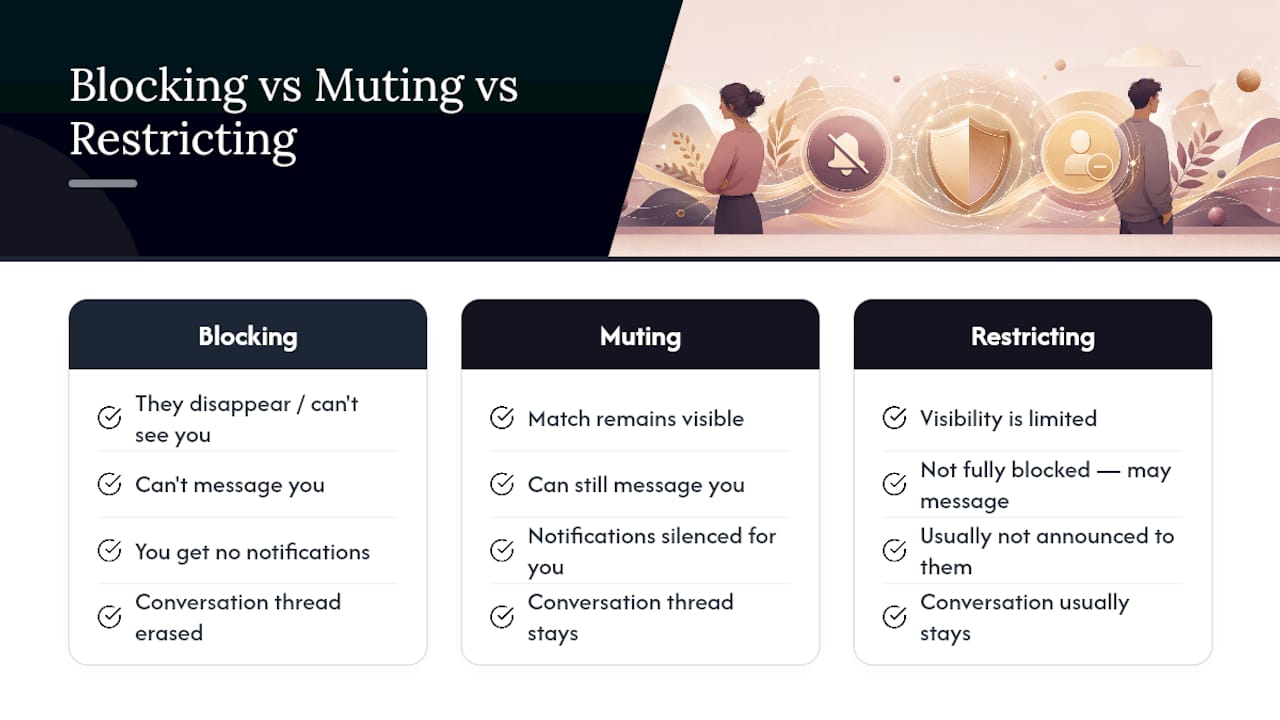
Muting, where it exists, silences notifications from a specific conversation without ending the match. You’ll stop getting pinged every time they message, but they can still write to you, and their profile stays visible if you go looking for it.
Restricting, a feature more common on general social platforms than dating apps specifically, sits somewhere in between. It limits what the other person can see or do without fully cutting the connection, and it often doesn’t notify them of the change.
For dating apps specifically, blocking is usually the tool that actually protects you. Muting just buys you quiet, not safety, since the person can still reach you if you ever open that conversation again.
Why Anonymity Matters Here
I’ve watched people torch their own case in family court by installing one spyware app out of desperation. It never ends well, and it never actually answers the question faster.
Reading someone’s messages or tracking their phone feels like control. It’s actually the opposite. It hands your partner ammunition against you over a suspicion that might turn out to be nothing.
An anonymous scan gives you the same peace of mind without any of that. If you want the deeper breakdown, read why snooping on dating apps can be illegal for worried partners. Then start a scan today instead of a risky one.
— Oleg
Get Your Answer Without the Risk
Spyware promises fast answers and delivers a nightmare instead. CheaterDetectorAI is the simpler alternative: an anonymous scan that checks public dating profiles across all the major apps, using only a name, photo, and a few basic details, no phone access required.
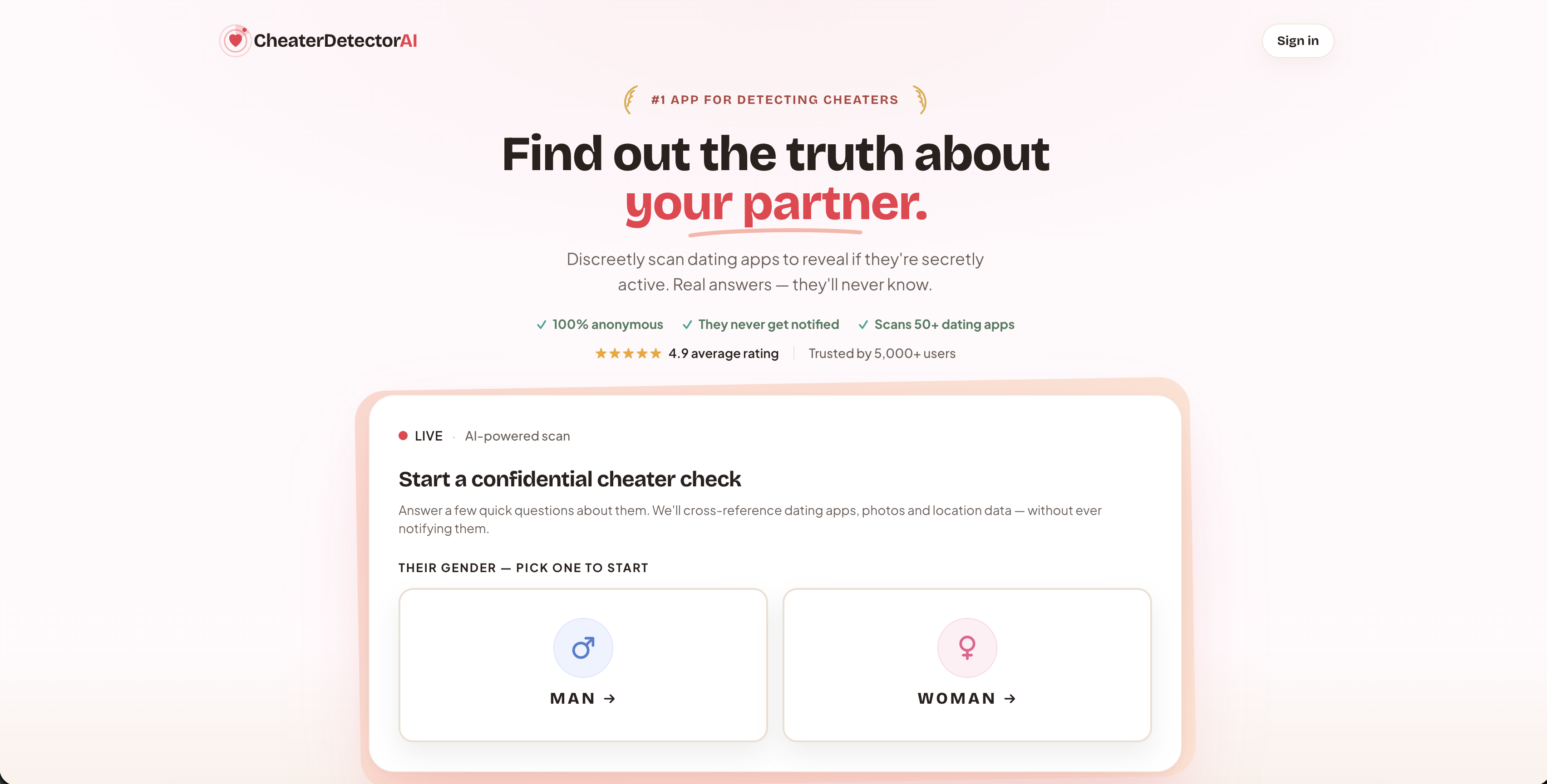
Every scan is encrypted and anonymous, meaning your partner never finds out you looked. The report comes back fast, showing matching profiles, public photos, and activity timestamps so you know exactly what you’re dealing with. The service has been used by many people and has received positive average ratings.
Search their name now and get a real answer within minutes. Run a deep person scan if you want the full report with photos and timestamps included. Or check their profile today if you just need a straight yes or no. Whatever you choose, stick to public information, not their phone.
This article is general information, not advice for your specific situation.
Sources
- Stalkerware: What To Know | Consumer Advice
- Can You Track a Spouse or Partner? Laws, Consent, and Penalties Explained
- Is it illegal to spy on your spouse? - San Diego Divorce Lawyers, APC
FAQ
Is It OK to Check if My Partner Is on Dating Apps?
Yes, searching public dating profiles using a name, photo, or username is fine. Installing spyware or logging into their private accounts is not.
Should I Block Someone on a Dating App Who Made Me Uncomfortable?
If someone crosses a line, whether that’s harassment, pressure, or explicit content you didn’t ask for, block them immediately and report the behavior at the same time.
How Do I Unblock Someone on a Dating App?
Most apps let you unblock through your settings menu, but the old conversation and match usually don’t come back, so you’ll typically need to match again from scratch.
Can CheaterDetectorAI See My Partner’s Private Messages?
No. CheaterDetectorAI only searches public dating profile data like photos and activity timestamps. It never accesses phones, private messages, or accounts.
What Should I Do if I Think Spyware Is on My Phone?
Don’t search for help on that device. Use a friend’s phone or a public computer, and call the National Domestic Violence Hotline at 1-800-799-7233 if you feel unsafe.